
Apple Business Is Free. Jamf's Problem Is That It Always Was
Apple Business launches April 14 as free MDM for any organization. It won't kill Jamf Pro, but it just priced Jamf's entire SMB segment out of existence.

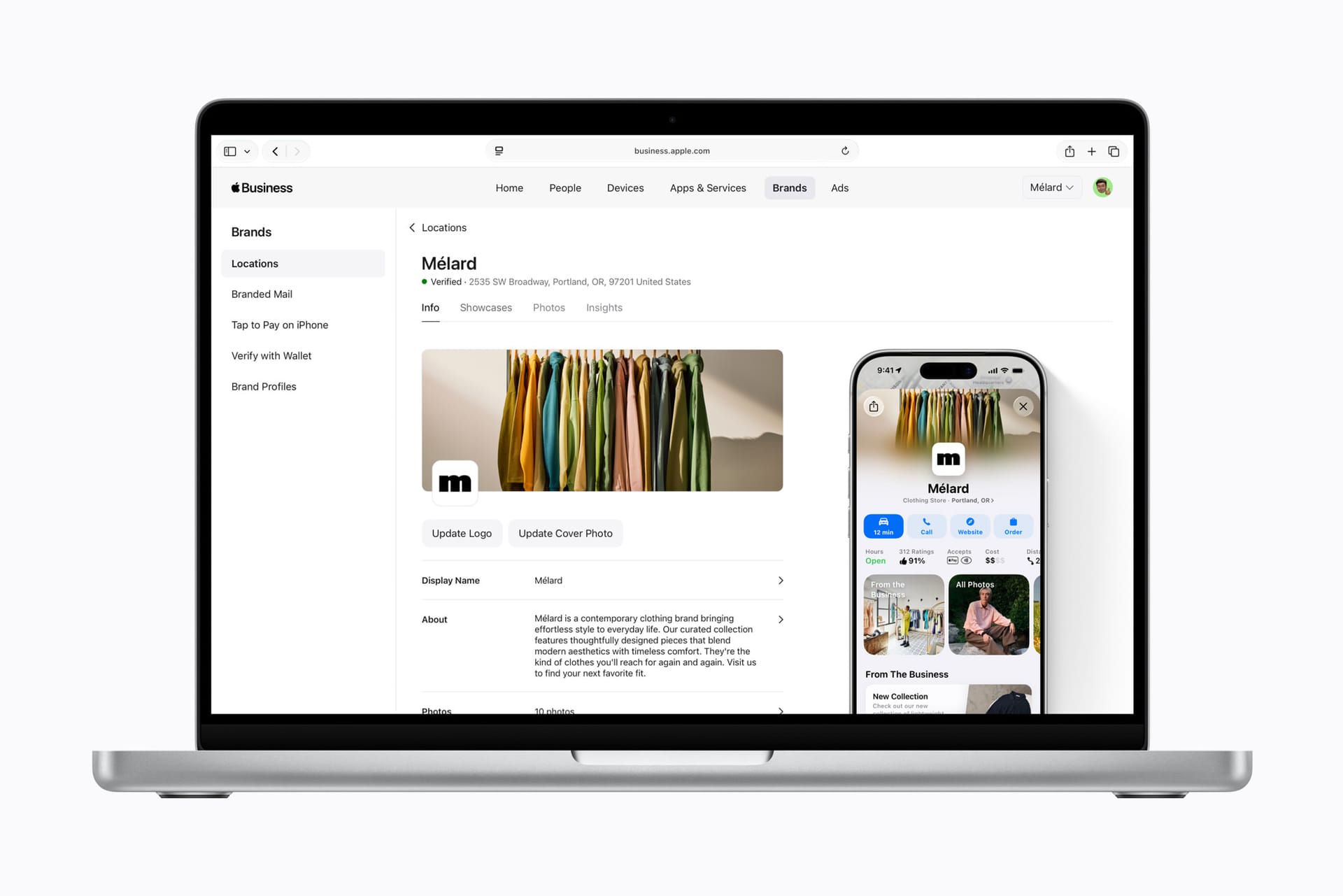
On April 14, Apple will flip the switch on Apple Business, a unified platform that consolidates three previously separate services into one free dashboard with built-in mobile device management, zero-touch deployment, business email with custom domains, and tools for managing your brand presence across Apple Maps and beyond. The tech press has largely treated this as a product launch story, a tidy consolidation play from a company that loves a clean interface. That framing misses the point entirely.
What Apple launched is a market-structure intervention. And the market it just restructured is the one that companies like Jamf and Mosyle spent years building a business around.
What Apple Business Actually Is
To understand the disruption, you need to understand what Apple replaced. Before April 14, a small business deploying a fleet of Apple devices had to navigate three separate platforms. Apple Business Manager handled device enrollment and app distribution. Apple Business Essentials, which cost $2.99 per device per month, layered on device management and AppleCare support. Apple Business Connect, free, managed how the business appeared in Apple Maps and other services. Three portals, overlapping features, confusing boundaries, and a billing relationship that required Apple to charge for capabilities it now considers table stakes.
All three are gone on April 14. In their place: a single dashboard, free at the core, that includes everything those three services offered and adds business email with custom domain support, a company directory, calendar delegation, and new advertising capabilities inside Apple Maps coming this summer.
The device management piece is where the conversation gets sharp. Apple Business now includes built-in MDM, the kind of capability that has historically required a third-party vendor. The flagship feature is Blueprints: preconfigured templates that let an IT administrator set a device's apps, settings, and security policies before it ever leaves the box. Combined with Apple's zero-touch deployment, which activates when devices are purchased through Apple or an authorized reseller, a new Mac or iPhone can arrive at an employee's desk ready to work with zero manual configuration. The Managed Apple Accounts system uses cryptographic separation to keep personal and work data isolated on the same device. Account provisioning integrates directly with Microsoft Entra ID and Google Workspace, so Apple isn't asking you to rip out your identity infrastructure. It just wants to sit on top of it.
This is not a feature add. It is Apple redrawing the line between what the platform provides and what you pay someone else to provide. And that line just moved significantly toward the vendor's territory.
The Market It Hits
The MDM industry has always had a clear geography. At the top, you have Jamf Pro and its enterprise-scale competitors: purpose-built platforms that expose deep configuration payloads, support compliance frameworks like HIPAA and SOC 2, integrate with EDR and SIEM tooling, run complex policy automation through scripting and smart groups, and manage tens of thousands of devices across distributed organizations. At the bottom, you had Apple's own Business Essentials: a basic, subscription-based device management tool explicitly positioned for small businesses that wanted something functional without calling in an IT consultant.
That bottom tier is gone. Apple just replaced it with something better, for free.
The organizations that lose a vendor decision today are identifiable. They are the ones running Apple-only fleets under roughly 50 to 100 devices, without dedicated IT staff, where the primary MDM requirement is device enrollment, app deployment, basic policy enforcement, and the ability to remotely wipe a lost MacBook. These organizations were paying for Mosyle at $1 per device per month, or Jamf Now at $4 per device per month, or Business Essentials at $2.99, to do things that Apple will now do for nothing. The calculus is not complicated: if Apple Business handles your actual management requirements, the $0 option wins.
Mosyle has long positioned itself as the accessible, SMB-friendly alternative to Jamf Pro's complexity and cost. Its pricing model, which starts at $1 per device per month and scales to $3 for the full security bundle, made sense when Apple provided zero management tooling for free. That positioning becomes significantly harder when the comparison is "Mosyle at $1" versus "Apple Business at nothing." Mosyle's survival argument now depends entirely on whether its added security capabilities, EDR integration, and managed service features justify a cost that Apple has priced at zero for the baseline.
Jamf's situation is structurally different, but the timing couldn't be worse.
The Jamf Problem Has Several Layers
Jamf went private on January 30, 2026, acquired by Francisco Partners in an all-cash deal valued at approximately $2.2 billion. The price represented a premium over its trading level, but also a stark fall from the roughly $4.6 billion valuation the company commanded after its 2020 IPO. Revenue growth had decelerated from nearly 40% annually to a projected 10 to 11% for 2025. The company cut 6.4% of its workforce in a July 2025 restructuring. By the time Francisco Partners closed the deal, Jamf was already a turnaround story operating under pressure.
Apple Business was announced approximately eight weeks after that deal closed.
This is not coincidence in any causal sense. Apple doesn't time product launches to destabilize specific acquiree due diligence processes. But the sequencing matters for understanding Jamf's strategic position now. Francisco Partners bought a business that derived its competitive moat from filling gaps in Apple's own platform. Apple has now closed some of those gaps. The private equity playbook for a software company in this position involves a combination of cost discipline, upmarket repositioning, and accelerated movement toward defensible niches. Jamf has been executing that play: pursuing FedRAMP High and DoD Impact Level 5 authorization, expanding its healthcare vertical with EMR integrations, and pushing its security ARR, which grew 40% year-over-year. These are smart moves. They are also reactive ones. Jamf is moving toward the markets Apple won't or can't serve, because those are the markets that can still justify the price.
The problem is that Jamf's installed base runs across every organization size. It manages 31 million devices across 74,000 organizations globally. Not all of those are enterprise accounts. Some of them are exactly the kind of SMB and lower-mid-market customers who are now looking at Apple Business and asking the reasonable question: what am I paying Jamf for?
The honest answer is nuanced, but the framing is damaging.
What Apple Business Cannot Do
This is where the press coverage has been uniformly shallow, and where the real story for IT decision-makers lives.
Apple Business is not a Jamf Pro replacement. Not even close.
Jamf Pro exposes a configuration payload depth that Apple's built-in MDM doesn't approach. Smart groups, which dynamically segment devices by criteria you define, let a large IT team apply targeted policies to subsets of a fleet without touching individual machines. Jamf's scripting capabilities let administrators automate complex, event-driven workflows that simply don't exist in Apple Business. The integrations matter: Jamf connects with CrowdStrike, Okta, ServiceNow, Microsoft Sentinel, and dozens of other enterprise tools through a mature marketplace. Jamf Protect provides dedicated endpoint detection and response for Mac. Jamf Connect handles identity and authentication in ways that go far beyond what Apple's Managed Accounts offer today. For regulated industries, Jamf produces the audit artifacts that compliance frameworks require and that Apple Business doesn't currently generate.
Put plainly: if you manage 5,000 devices across multiple sites with a mix of supervised and BYOD enrollment, a complex app licensing library, custom scripting for security baseline enforcement, and integration requirements into your ITSM and SIEM stack, Apple Business is not a replacement for anything you're running. You will still need Jamf Pro, or a comparable enterprise platform.
The article that writes itself as "Apple kills Jamf" is wrong. The article that's actually true is more precise: Apple kills the vendor justification below a specific threshold of organizational complexity. That threshold is lower than it used to be, and Apple just moved it.
There is also a timing issue that the press has largely ignored. Many of Apple Business's most compelling features require iOS 26, iPadOS 26, and macOS 26. The companion app, business email, calendar, and directory services all depend on operating system versions that won't ship publicly until September at the earliest. Apple is launching a platform in April whose headline productivity features are functionally unavailable until fall. What ships on April 14 is a device management consolidation with zero-touch deployment and Blueprints. The rest is a roadmap commitment.
That's not nothing. But it's also not the full picture that the announcement implied.
The MSP Wrinkle Nobody Is Talking About
There is a third stakeholder in this story who isn't making noise publicly: the managed service providers who built practices around Apple Business Essentials.
Business Essentials wasn't just a product Apple sold to end customers. It was something MSPs deployed on behalf of clients, billed through, and in some cases used as the anchor for recurring device management contracts. Those billing relationships end on April 14. Apple is discontinuing Business Essentials with no transition grace period. The monthly service fee stops that day. Existing data migrates automatically to Apple Business, which is the right call technically, but it leaves MSPs in the position of explaining to clients why a line item has disappeared and what, if anything, they're now paying for.
Some MSPs will navigate this cleanly: they were providing genuine value-added services around Business Essentials, and that doesn't change. Others were primarily billing for setup and administration of a tool the client could have managed themselves. Apple Business makes the latter position harder to sustain.
This is a subtext in the IT services market that won't generate headlines. MSPs are not going to publish essays about margin compression. But the forum conversations are already happening, and the frustration is real. Business Essentials was, by multiple practitioner accounts, a platform that required a disproportionate amount of phone-based support to accomplish basic tasks. Apple sunsetted it in favor of something better, and in the process disrupted the services revenue that had grown up around its friction.
The Broader Play
Zoom out far enough and Apple Business isn't really about MDM. MDM is a feature, not a business.
What Apple is building is an end-to-end commercial operating system for businesses that run on Apple hardware. The device management layer creates the IT foundation. The email and calendar services create organizational infrastructure. The Maps advertising and brand management tools, which represent a genuinely unique capability that neither Microsoft nor Google offers, create a direct line from Apple's consumer ecosystem to SMB customer acquisition. A restaurant that manages its iPhones through Apple Business, lists its location on Apple Maps, runs ads in Maps this summer, and accepts Apple Pay at the counter is running an Apple-native business stack from the device layer to the customer touchpoint.
That is a services story, not a hardware story. And services is where Apple's margin and growth strategy increasingly lives, with the segment generating $96 billion in fiscal 2025 and growing faster than any other part of the business.
The free MDM isn't charity. It's a land grab for the commercial customer relationship at every layer. Apple is making the device management decision obvious, locking the business into Managed Apple Accounts and the Apple platform, and then building paid services on top of that foundation: additional iCloud storage, AppleCare for Business, and advertising placements. The cost of acquiring a business as an Apple platform customer just dropped to zero. The lifetime value of that customer, through services sold on top of the free platform, is the actual business model.
Jamf and Mosyle have always known this risk in abstract. The platform provider with native access to the operating system can always outcompete a third party on the features the platform chooses to support. The question was always when Apple would choose to act. The answer, for the SMB segment at least, is April 14.
What happens above that line is still Jamf's territory, and probably will remain so. Enterprise IT does not consolidate to the cheapest option when the stakes are a regulated compliance posture, a distributed workforce, and a security team that needs audit trails. Those organizations will keep paying for Jamf Pro or its equivalents, and Francisco Partners will build a profitable private company around that segment.
But the story that Jamf can continue growing by selling down-market is over. Apple just priced that market at zero.
Written by

Apple Analysis Worth Your Inbox
Weekly Apple platform coverage with real editorial depth. iOS, macOS, hardware strategy, and the bigger picture



![Everything New in Apple's 26.5 Betas: RCS Encryption, Maps Changes, [Update]](/content/images/size/w1140/2026/03/iOS-26.5-Beta-release-announcement.png)







Member discussion