

Apple introduced the second-generation AirTag today, and unlike many "2.0" releases that feel more like incremental updates, this one addresses the original's most frustrating limitations. After nearly five years of the first-generation AirTag proving itself as the go-to item tracker, Apple has delivered upgrades that will genuinely improve the experience of finding your stuff.
The headline improvements come down to three areas: extended range, louder audio, and deeper integration with Apple's broader ecosystem. But what's notable here isn't just that Apple made improvements—it's that these improvements target the exact pain points users have been vocal about since 2021.
The Range Problem Gets Real Solutions
The original AirTag's Precision Finding worked brilliantly when you were close to your lost item, but getting to that point often meant wandering around hoping to get within range. Apple has addressed this with a two-pronged approach that should make the hunting process far less frustrating.
First, Precision Finding now works from 50 percent farther away thanks to the second-generation Ultra Wideband chip—the same hardware powering the iPhone 17 lineup and Apple Watch Series 11. If you've experienced the frustration of walking past your keys because you weren't quite close enough to trigger Precision Finding, this change alone justifies the upgrade.
Second, the Bluetooth range has been expanded through an upgraded chip. Apple didn't specify exact numbers, but broader Bluetooth range means your iPhone can detect the AirTag from farther away, reducing those dead zones where you know your item is somewhere in the house but Find My can't help you narrow it down.
This dual improvement to both UWB and Bluetooth range suggests Apple learned from years of real-world usage data. The original AirTag's range was adequate for small spaces but frustrating in larger homes or when searching outdoors.
Finally, You Can Actually Hear It
Perhaps the most universally complained-about aspect of the original AirTag was its speaker. It was technically audible but practically useless if your AirTag was buried in a bag, wedged between couch cushions, or anywhere that wasn't completely silent. The new model addresses this with a 50 percent volume increase and updated internal design that lets you hear it from up to twice as far away.
Apple also mentions a "distinctive new chime," which suggests they've rethought the audio signature itself. The original's chirp was high-pitched and easy to miss in noisy environments. A more distinctive sound pattern would help users identify their AirTag among other electronic beeps and notifications.
This might seem like a minor upgrade on paper, but anyone who's spent fifteen minutes searching for keys they knew were on the kitchen counter will appreciate the difference. The speaker was the original's most obvious shortcoming—fixing it was table stakes for a second generation.
Apple Watch Integration: Overdue but Welcome
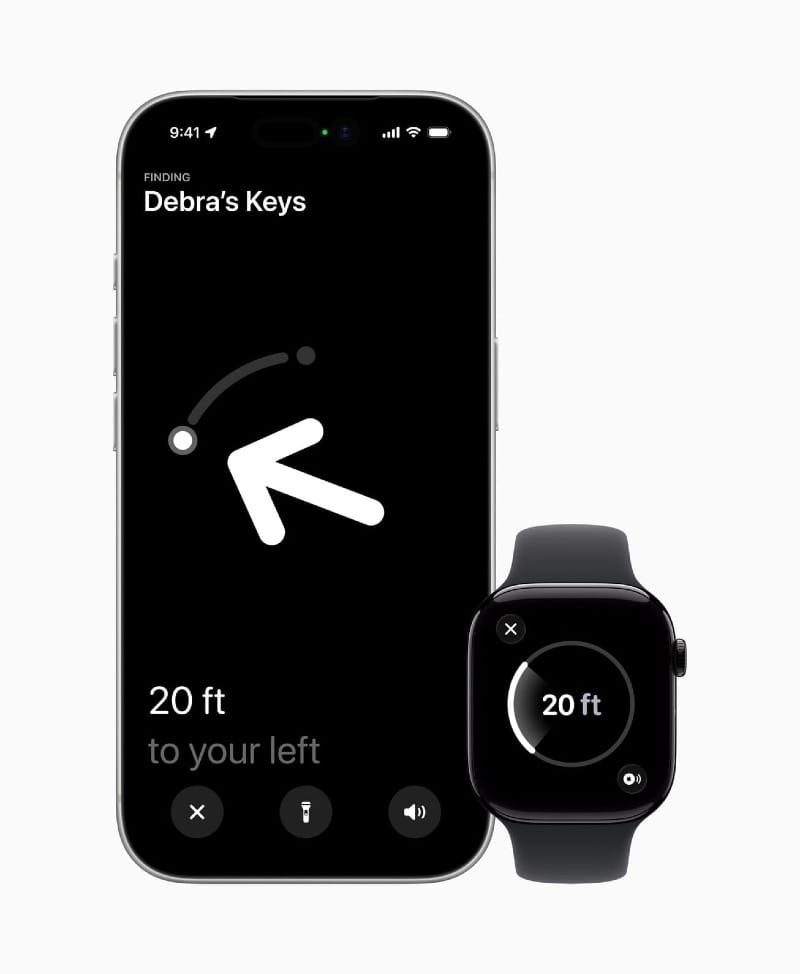
For the first time, Precision Finding works directly on Apple Watch Series 9 or later and Apple Watch Ultra 2 or later (running watchOS 26.2.1). This is one of those features that seems so obvious you forget it wasn't there before.
The practical benefit is enormous for anyone who frequently needs to find items while their iPhone is charging, in another room, or simply not in hand. Being able to locate your keys from your wrist as you're walking out the door is the kind of seamless experience Apple excels at when they get it right.
The limitation to Series 9+ watches makes sense from a hardware perspective—these models include the necessary UWB chip—but it does mean owners of older watches won't benefit from this feature even with the new AirTag.
Share Item Location: Proving Its Value
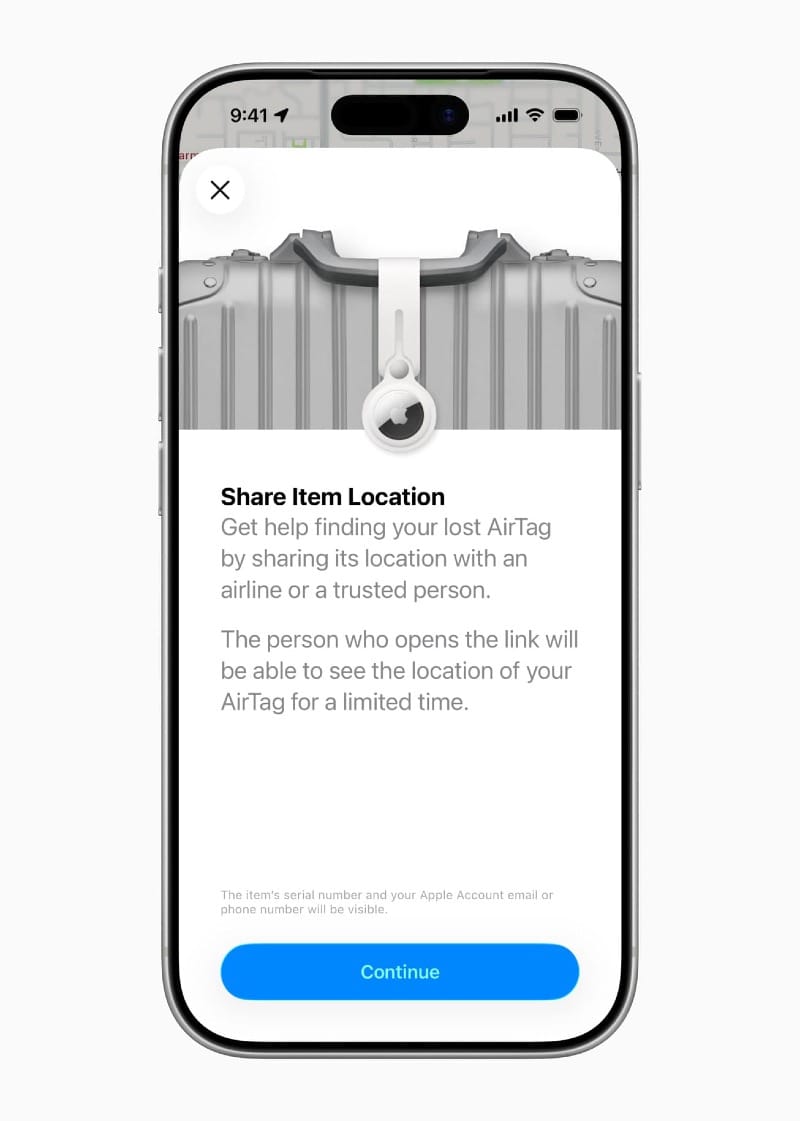
Apple's Share Item Location feature, introduced with iOS 18, gets prominent mention in today's announcement, and for good reason. According to SITA, the aviation industry IT provider, airlines using Share Item Location have seen baggage delays drop by 26 percent and "truly lost" luggage incidents decrease by 90 percent.
Those numbers are remarkable. They suggest that giving airlines visibility into where tracked luggage actually is—rather than relying on their own tracking systems—dramatically improves outcomes. The feature now works with over 50 airlines, and the new AirTag's compatibility is highlighted as a key selling point.
From an enterprise perspective, this kind of integration demonstrates what happens when Apple's hardware ecosystem connects with real-world workflows. Airlines get better data, customers get their bags back faster, and Apple strengthens the case for AirTag as more than just a consumer convenience product.
The Privacy Angle Remains Critical
Apple continues to emphasize AirTag's anti-stalking features, and this messaging is just as important today as it was in 2021—perhaps more so given the proliferation of tracking devices. The new AirTag maintains the original's privacy protections: no location data stored on device, end-to-end encryption, cross-platform alerts for unwanted tracking, and regularly rotating Bluetooth identifiers.
The clear positioning that AirTag is "designed exclusively for tracking objects, and not people or pets" addresses the legitimate concerns that emerged after the first generation's launch. Apple learned hard lessons about how even well-intentioned tracking technology can be misused, and they're not backing down from those safeguards.
Environmental Commitments and Compatibility
Apple's recycling percentages continue to impress: 85 percent recycled plastic in the enclosure, 100 percent recycled rare earth elements in all magnets, and 100 percent recycled gold plating in printed circuit boards. The packaging is entirely fiber-based.
Maintaining the same form factor means every existing AirTag accessory remains compatible. If you've invested in leather loops, key rings, or third-party cases, they'll work with the new model. This backward compatibility is smart business—it removes a friction point for existing customers considering an upgrade—and demonstrates that Apple doesn't iterate form factor just for the sake of change.
Pricing: Holding Steady
The new AirTag remains $29 for a single unit and $99 for a four-pack, matching the original's pricing. Free engraving is still available through Apple's website and app. Given the meaningful hardware improvements, this price consistency is notable. Apple could have justified a $5-10 increase, but holding the line makes the upgrade decision simpler for existing users and keeps AirTag competitive against alternatives like Tile and Samsung's SmartTag.
FineWoven Key Rings are available in five colors (fox orange, midnight purple, navy, moss, and black) for $35. The continued push of FineWoven accessories—despite mixed reception when Apple replaced leather products—shows Apple isn't backing down from their material choices.
Requirements and Availability
The new AirTag requires iOS 26 or iPadOS 26, which limits compatibility to relatively recent devices. Precision Finding on Apple Watch needs Series 9 or later running watchOS 26.2.1. These requirements make sense given the UWB chip dependencies but do exclude some users from key features.
Orders open today on apple.com and the Apple Store app, with retail availability later this week. The new model will also be available through authorized resellers.
The Bigger Picture
AirTag 2 represents the kind of refinement Apple does well when they resist the urge to reinvent products that already work. The core experience remains unchanged—AirTag is still a simple disc you attach to things you don't want to lose—but the improvements address genuine pain points identified over four years of real-world use.
The extended range makes finding things less frustrating. The louder speaker makes locating things more reliable. Apple Watch integration fits naturally into how people actually use their devices. Share Item Location proves that ecosystem integration can deliver measurable results beyond consumer convenience.
What's missing? There's no mention of replaceable batteries lasting longer, though the original's one-year battery life was generally acceptable. No water resistance rating improvement, though the original's IP67 rating handled most scenarios. No mention of improved mounting options or alternative form factors, though Apple seems content to let accessory makers handle those variations.
These aren't criticisms—they're observations about what Apple chose not to change. Sometimes the best product updates are the ones that improve what matters without complicating what already works.
For anyone managing lost items with a first-generation AirTag, the upgrade case is straightforward: everything you liked about the original gets meaningfully better. For those who found the original AirTag too limited in range or too quiet to be useful, this second generation might finally deliver the experience they were hoping for in 2021.
Apple's item tracking solution just got significantly more capable, and that capability comes at the same price as before. That's a win for users, whether they're tracking keys on a daily basis or luggage on a cross-country flight.


Discussion