

The entry-level iPhone has always carried a quiet asterisk. Get the affordable one, sure — but you'll give up ProMotion, the second camera, MagSafe, or some other feature that reminds you, at least once a day, that you bought the budget model. That's been Apple's playbook for years: keep the price lower, and justify it with meaningful capability gaps that nudge aspirational buyers toward the real lineup.
The iPhone 17e breaks that pattern in ways worth paying attention to. Not because it's suddenly the phone you'd recommend over everything else, but because the gap between Apple's affordable tier and its mainstream tier has narrowed to the point where the trade-offs demand a different conversation.
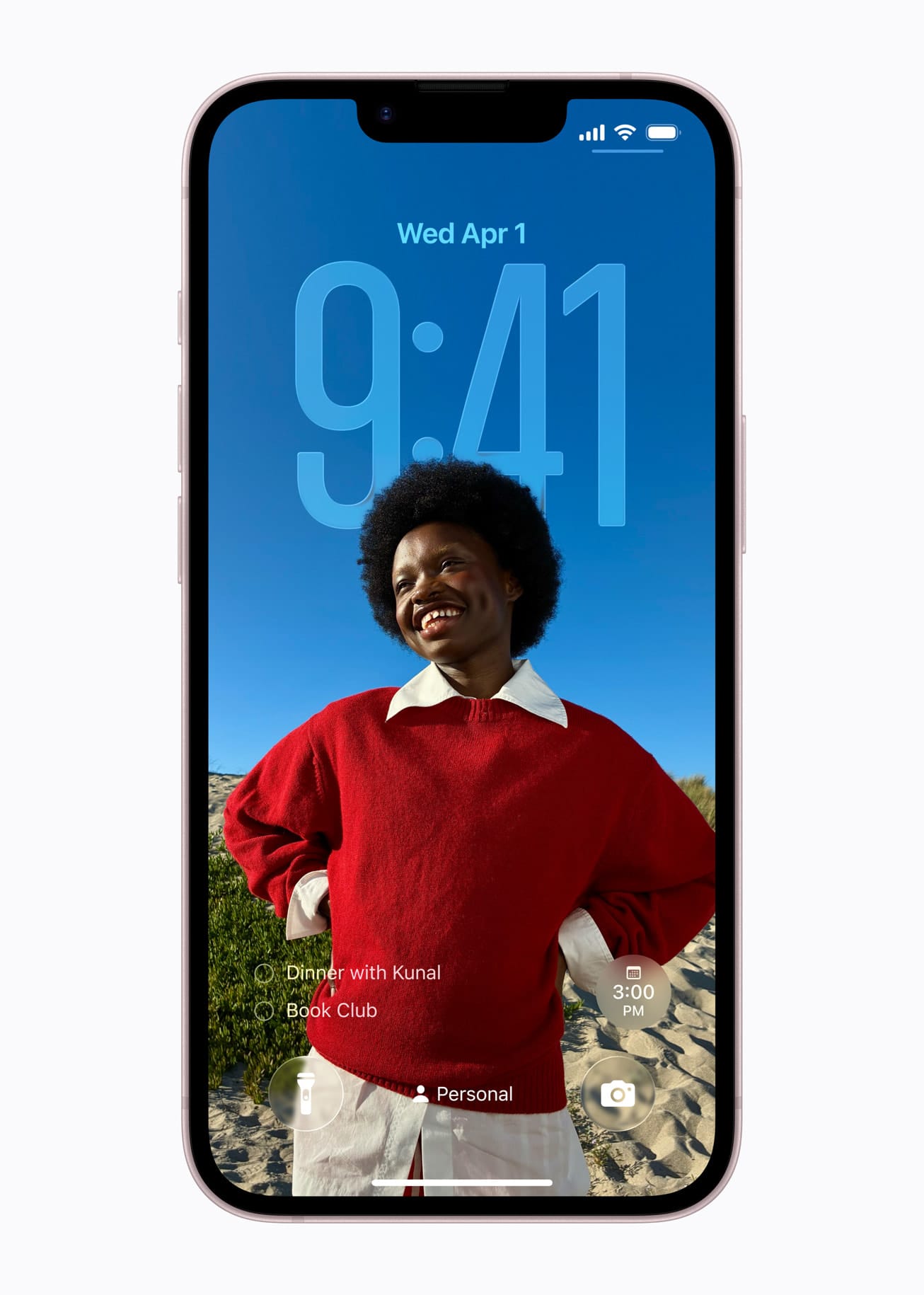
Apple announced the iPhone 17e today, March 2, 2026, with pre-orders opening Wednesday and units shipping March 11. It starts at $599 — the same price as the iPhone 16e before it — but ships with 256GB of storage as the base configuration, double what the previous generation offered. That alone reframes the value proposition. Buyers who talked themselves into the 16e's 128GB because it was "enough" are now getting twice the runway for photos, 4K video, and apps without paying a dollar more.
What the 17e Actually Is
At its core, the iPhone 17e is built around Apple's A19 chip — the same processor powering the standard iPhone 17 — on a 3-nanometer process. That's not the slightly-slower-older-chip compromise that defined earlier "e" and "SE" models. The neural engine, the CPU performance, the Apple Intelligence capabilities: they're all equivalent. A buyer coming from an iPhone 11 is getting hardware roughly twice as fast in CPU terms, and they're getting it in a device that costs $200 less than the standard iPhone 17.
Apple also moved the 17e to the C1X cellular modem, its second-generation in-house design that delivers speeds matching the iPhone Air and uses 30 percent less power than the modem in the iPhone 16 Pro. That's a meaningful infrastructure choice. The standard iPhone 17 actually runs Qualcomm's Snapdragon X80 modem — a capable chip, but a third-party one that Apple doesn't control. The 17e, positioned as the entry-level option, is running Apple silicon end-to-end in a way the standard flagship isn't. There's a quiet irony there worth noting.
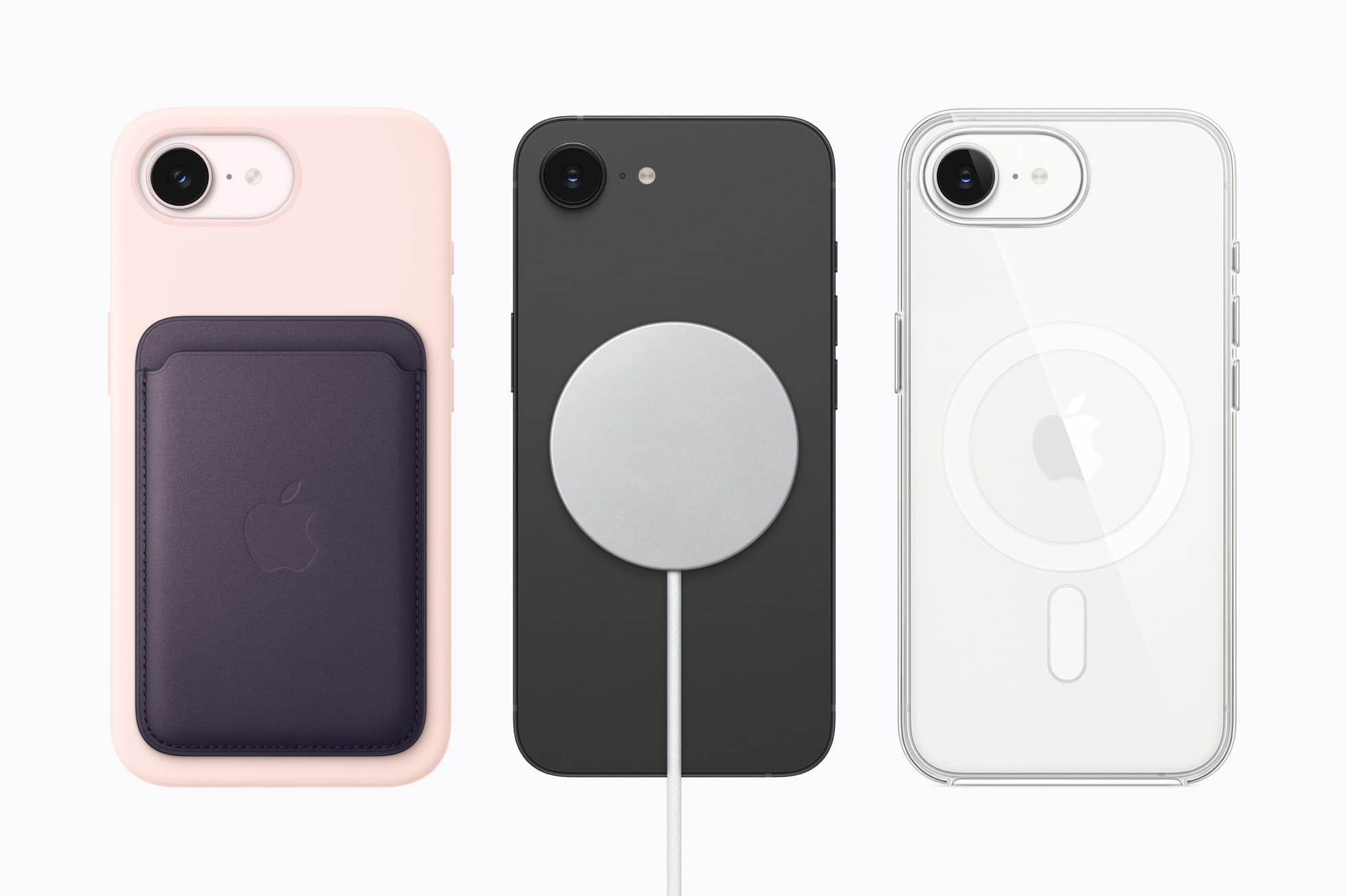
MagSafe arrives on the 17e for the first time in the "e" line, with wireless charging bumped to 15W versus the 7.5W Qi ceiling on the iPhone 16e. That's not just a convenience upgrade — it opens the entire MagSafe accessory ecosystem to buyers who previously couldn't access it at this price point. Cases, wallets, chargers, car mounts: the 17e user is now a first-class citizen in the MagSafe world.
The Camera Question
The place where the 17e most visibly diverges from the standard iPhone 17 is the camera system, and it's where the comparison gets genuinely interesting rather than simply favorable.
The iPhone 17 features a dual-camera system — a 48MP Fusion main lens and a 48MP ultra-wide — giving it both optical wide-angle shooting and true ultra-wide flexibility. The 17e has a single 48MP Fusion camera that uses pixel binning to deliver an optical-quality 2x telephoto, effectively functioning as two cameras in one. You get the main perspective and the tight crop. What you don't get is ultra-wide. For most people, in most shooting situations, this is an acceptable trade-off. For anyone who shoots architecture, landscapes, or tight interiors where ultra-wide is essential, it's a real limitation.
Portrait mode, Night mode, 4K Dolby Vision at 60fps, next-generation portraits that save depth information automatically — all present on the 17e. The advanced image pipeline that powers these features isn't a cut-down version. Apple didn't hobble the computational photography to differentiate the product; they simply gave the 17e one physical lens instead of two.
The display difference is more straightforward. The iPhone 17e ships with a 6.1-inch Super Retina XDR OLED panel, while the iPhone 17 stretches to 6.3 inches with ProMotion — Apple's adaptive 120Hz refresh rate that makes scrolling and animation noticeably smoother. The 17e's display caps out at 60Hz. That's a genuine perceptible difference in daily use, and it's the kind of thing that's easy to dismiss on paper and harder to ignore once you've used a 120Hz screen. Ceramic Shield 2 covers both devices, so durability is equivalent.
Who This Phone Is Actually For
The honest answer is: more people than the "entry-level iPhone" framing suggests.
Someone holding an iPhone 12 or 13 who wants the current software platform, full Apple Intelligence support, MagSafe, satellite connectivity, and modern camera performance doesn't need to spend $799 for the iPhone 17 to get those things. They need $599 and the 17e, and they'll get essentially the same experience in 85% of their daily interactions with the device.
The buyers for whom the iPhone 17 at $200 more makes clear sense are the ones who will genuinely use the ultra-wide camera, who scroll enough content that 120Hz ProMotion registers as a quality-of-life improvement, or who simply want the larger 6.3-inch display. Those are real differentiators — they're just more specific than "flagship versus budget."
What the 17e Tells Us About Apple's Strategy
Apple's decision to put the A19 in the 17e rather than recycling an older chip deserves more attention than it typically gets. Historically, the "e" and "SE" lines were where Apple made older silicon available to price-sensitive buyers, extending the useful life of a chip generation while keeping engineering effort minimal. The iPhone 17e represents a deliberate departure from that model.
Putting the current-generation chip at every price point means every iPhone 17e buyer gets full Apple Intelligence capabilities, the same on-device AI performance, and — critically — a longer runway before the device feels slow. Apple's own marketing leans into longevity: the device is positioned as something that "will stay fast, secure, and valuable for years to come." That framing maps directly to Apple's software support track record, and it also maps to the trade-in value argument Apple makes repeatedly. An A19 device bought in 2026 will receive software updates through at least 2031. An A16 device bought at the same price wouldn't carry the same forward-looking story.
The iPhone 17e is also the product that absorbs the buyers who would have seriously considered a mid-range Android alternative. Google's Pixel 8a, Samsung's Galaxy A55 — these devices compete at a similar price and offer genuine camera capability and software depth. Apple's response is essentially: the entry-level iPhone isn't a consolation prize anymore. It runs the same silicon as the flagship. It connects to the same accessory ecosystem. It gets the same software updates. The camera has one fewer lens. That's it.
Whether that argument lands for buyers weighing their options is, ultimately, a personal calculation. But the terms of the trade-off are more favorable than they've been at any previous "affordable iPhone" moment. For the first time in a while, recommending the entry-level iPhone to someone with a $599 budget doesn't feel like telling them to settle.
iPhone 17e pre-orders open March 4. Availability begins March 11. Starting price is $599 for 256GB in black, white, and soft pink.




Discussion