
The Most Powerful Camera in Space Right Now Fits in Your Pocket
NASA cleared the iPhone 17 Pro Max for Artemis II through a four-phase safety process, marking the first time a smartphone has been used on a crewed deep-space mission.

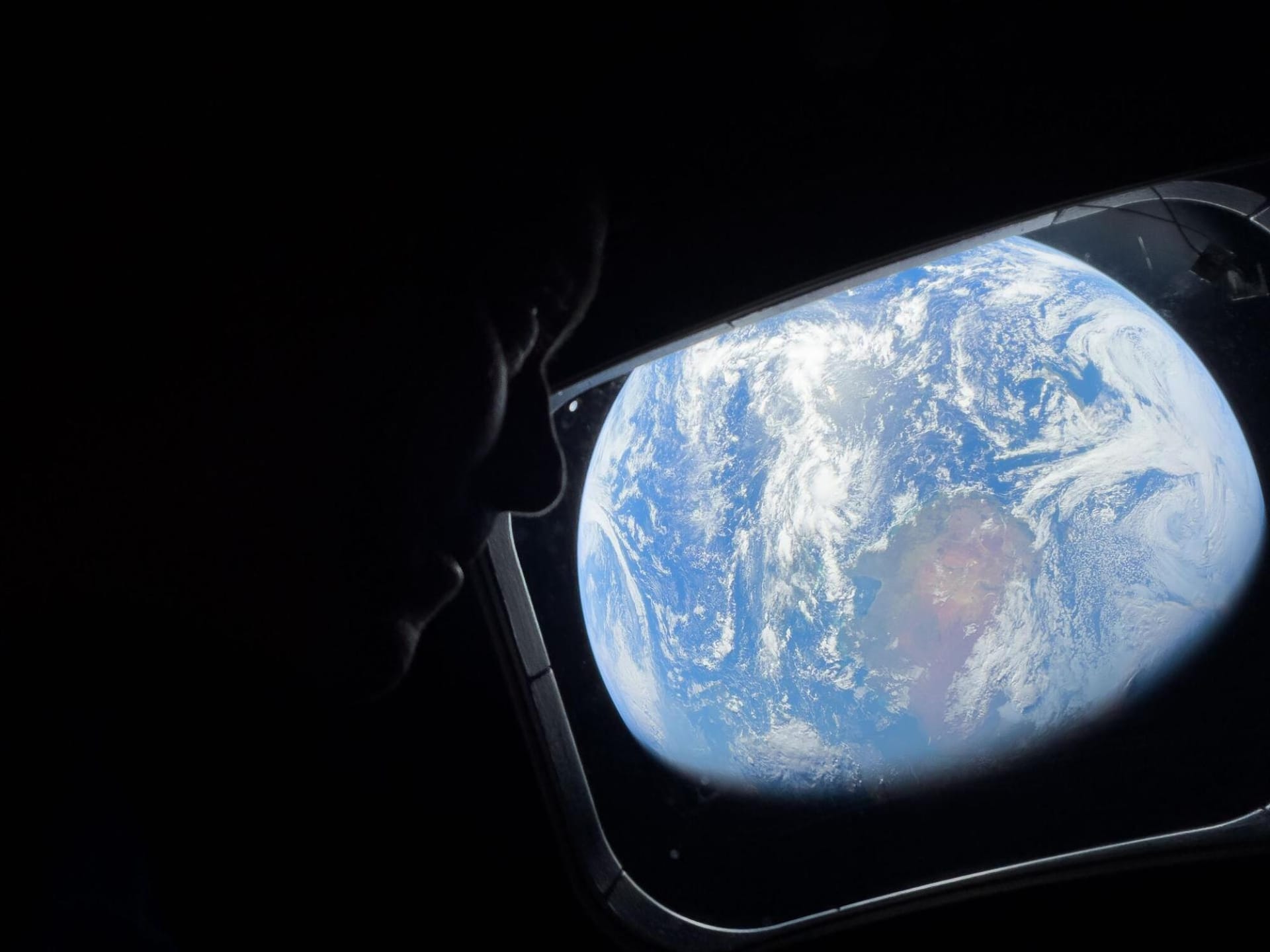
NASA launched its first crewed lunar mission in over 50 years on April 1, 2026. Aboard the Orion spacecraft, hurtling toward the Moon at roughly 25,000 miles per hour, you'll find two Nikon D5 DSLRs, four GoPro HERO 11 cameras, and a piece of imaging equipment the Apollo program could never have imagined: four iPhone 17 Pro Max units, one for each crew member. On day two of the mission, Commander Reid Wiseman and Mission Specialist Christina Koch used them to shoot portraits of each other floating in the cabin, Earth glowing enormous through the window behind them. Wiseman posted one to social media with four words: "There are no words."
The photos are remarkable. But the more interesting story isn't the images themselves. It's how those iPhones got there, and what it took for NASA to let them on board.
NASA's Hardware Problem
NASA has a well-earned reputation for flying old hardware. The agency's certification processes are notoriously slow, designed for an era when the cost of failure was catastrophic and the pace of consumer technology was measured in decades, not months. The Artemis II mission reflects this paradox in sharp relief. The newest standalone camera approved for the flight is a Nikon DSLR from 2016. The GoPros are a decade old. And yet sitting in the leg pocket of astronaut Jeremy Hansen's flight suit on launch day was a phone released last September.
The change traces back to early February 2026, when NASA Administrator Jared Isaacman announced via X that astronauts would "fly with the latest smartphones, beginning with Crew-12 and Artemis II." He framed it explicitly as a challenge to institutional inertia: "We are giving our crews the tools to capture special moments for their families and share inspiring images and video with the world. Just as important, we challenged long-standing processes and qualified modern hardware for spaceflight on an expedited timeline."
That last sentence is doing a lot of work. Expedited, for NASA, is its own kind of milestone.
The Four-Phase Gauntlet
Getting consumer hardware approved for spaceflight is not a rubber stamp. According to Tobias Niederwieser, an assistant research professor at BioServe Space Technologies, the certification process follows four phases. The first presents the hardware to a safety panel. The second catalogs every potential hazard the device could introduce. The third documents how those hazards will be mitigated. The fourth proves the mitigations actually work.
For a consumer smartphone, the hazard list is longer than you might expect. The obvious concern is broken glass. On Earth, shattered glass falls to the floor. In microgravity, it floats at face level. A shard could reach an astronaut's eyes, get lodged in a mechanism, or interfere with a system's range of motion in ways that are difficult to predict and harder to reverse. The iPhone 17 Pro Max features Apple's Ceramic Shield 2 on the front, which the company claims is the toughest smartphone glass available, but NASA couldn't simply take Apple's marketing at its word. The agency had to verify it under conditions Apple's own testing doesn't cover.
There's also radiation. Deep space exposes hardware to levels of radiation far beyond anything terrestrial durability testing simulates. NASA has to ensure devices won't degrade, malfunction, or interfere with spacecraft systems under that exposure. This is precisely why you'll still find G3 PowerPC processors running in low Earth orbit. Reliability across unusual environments beats performance in familiar ones, every time.
Apple itself was not part of the approval process. The company confirmed as much in a statement, while also noting that Artemis II represents the first time an iPhone has been fully qualified for extended use in orbit and beyond. Apple built the device; NASA decided whether it could fly.
What the iPhones Can (and Cannot) Do
The Artemis II iPhones are deliberately constrained. They cannot connect to Wi-Fi or Bluetooth, and they have no general internet access. Their role is strictly documentation: photography and video, nothing more. Velcro patches on the devices and various surfaces inside the Orion capsule keep them secured in zero gravity. During launch, at least one was stowed in a crew member's flight suit pocket.
This is a meaningful distinction. NASA did not put iPhones on this mission to run mission-critical software or replace any existing system. The agency added them because it recognized that its approved imaging gear, cameras and action cams that would feel at home in a museum exhibit, was leaving a documentation gap. The astronauts' personal experience of the mission, the candid moments between burns and procedures, the instinctive reach for a camera when Earth fills a window, had nowhere to go.
The resulting images confirm the instinct was right. Metadata from NASA's Flickr archive indicates the portraits of Wiseman and Koch were shot on April 2 using the iPhone's front-facing camera. They are not technically superior to the Nikon-shot imagery, but they capture something the professional gear rarely does: the human inside the mission. Koch and Wiseman aren't posed for history. They're just looking out a window at the planet they left behind.
The Precedent Being Set
This mission is the first time a smartphone has photographed Earth from deep space on a crewed mission. Samsung sent a Galaxy S24 to the edge of the atmosphere in 2024 via a high-altitude balloon, but that is a different exercise entirely. The Galaxy S24 did not have a human attached to it. It didn't float beside the window of an Orion capsule 100,000 miles from home and decide to take a picture.
NASA did fly iPhone 4 units on the final Space Shuttle mission in 2011, but those were experimental payloads, not crew-issued personal devices cleared for extended use. Artemis II is a categorical step beyond that.
The broader implication isn't really about Apple's marketing department, though you can be confident they're already building a campaign around footage that writes itself. The implication is that NASA's hardware certification wall, one of the most rigid barriers in any technology industry, is starting to accommodate the pace of the consumer market. That's a slow shift and a fragile one. The agency's caution exists for reasons that don't disappear just because a phone is popular. But Isaacman's explicit framing of the iPhone approval as a process challenge signals that NASA is at least asking whether the wall is in the right place.
Artemis II is a 10-day mission, and the crew is expected to break the all-time record for the farthest distance humans have traveled from Earth before looping back. When they do, there will be four iPhones pointed out those windows. Whatever they capture, it will have been earned through a process that took decades of institutional resistance to even attempt.
"Shot on iPhone" has appeared in Super Bowl commercials and on museum walls. Sometime this week, it will describe the farthest human photography ever made.
Written by

Subscribe to our newsletter
Subscribe to our newsletter to get the latest Apple updates and news

![Everything New in Apple's 26.5 Betas: RCS Encryption, Maps Changes, [Update]](/content/images/size/w1140/2026/03/iOS-26.5-Beta-release-announcement.png)





Member discussion