
For years, anyone with a web browser and a straight face could buy a Mac or iPad at Apple's education discount. No .edu email required. No ID upload. No verification of any kind. Apple's official policy said it audited purchases for compliance, but in practice the Education Store operated on something closer to a gentleman's agreement: you claim you're a student or teacher, Apple takes your word for it, and everyone moves on.
That era ended today.
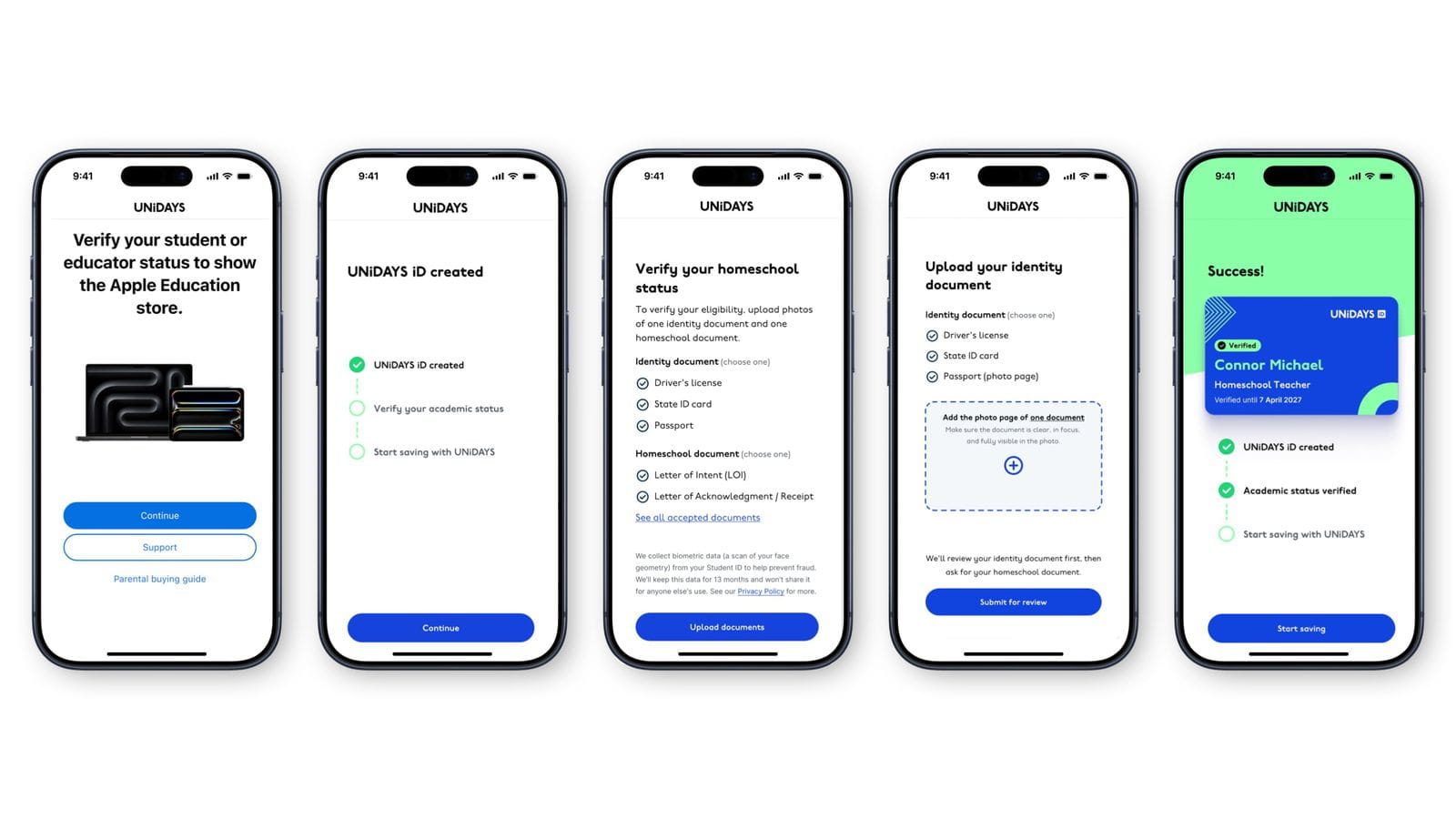
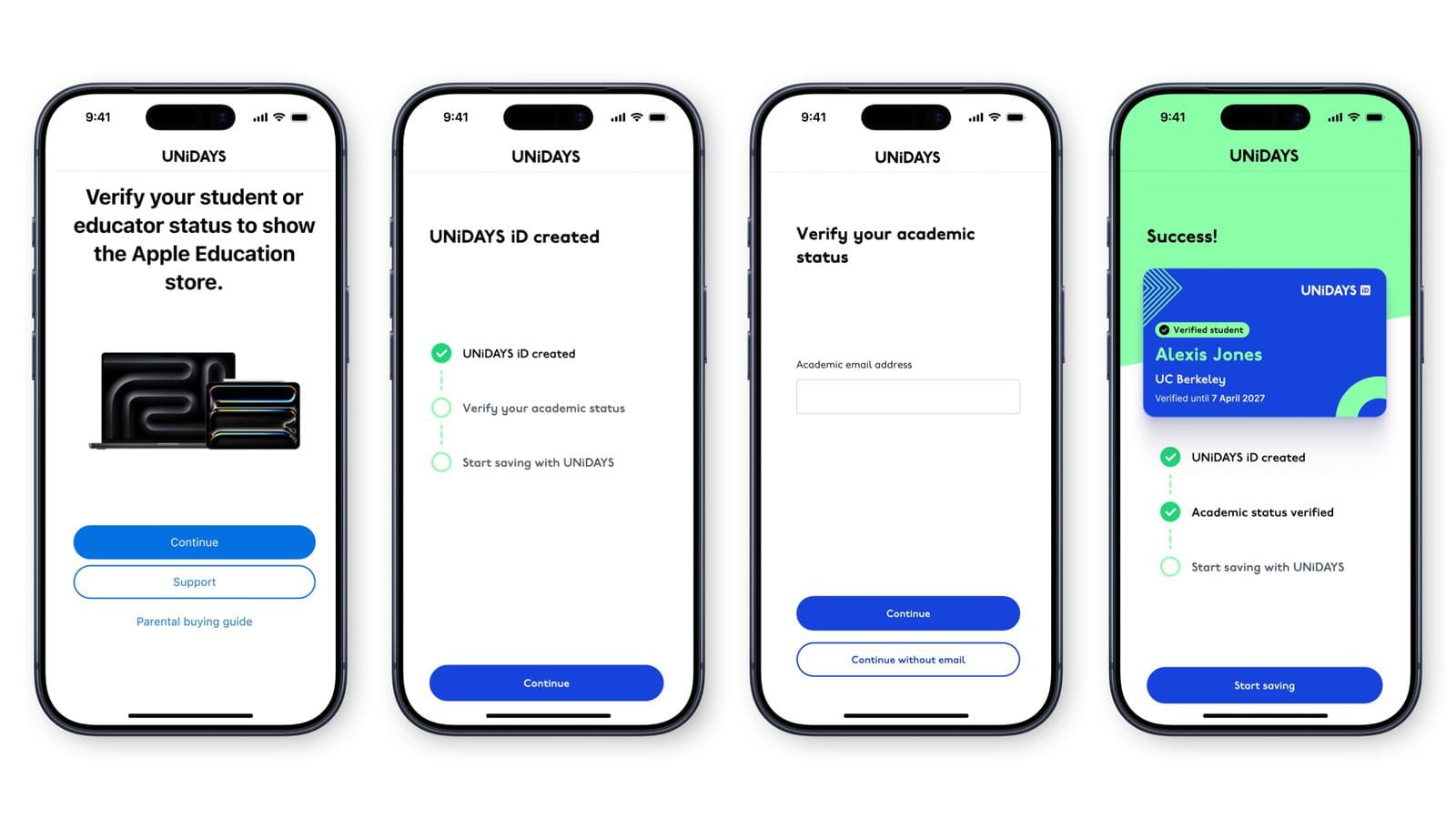
Apple is now requiring buyers in the United States, Canada, and Chile to verify their academic status through UNiDAYS before completing an Education Store purchase. Students and educators will confirm their eligibility via an institutional email address, a photo of their student or faculty ID, or another qualifying academic document. Homeschool families get a dedicated path too, submitting a government-issued ID alongside a Letter of Intent or Letter of Acknowledgment. Most verifications happen instantly; those requiring manual review get a decision within 24 hours.
The change is overdue. And the timing is not a coincidence.
The Honor System Was Never a Policy, It Was a Gap
Apple has had an Education Store for decades. The pitch is straightforward: discounted pricing on Macs, iPads, accessories, and now Apple Watch for students, faculty, and staff at qualifying institutions. What Apple never built, at least not in the United States, was any mechanism to enforce who qualified. The store was publicly accessible. The discounts were real. The gatekeeping was essentially nonexistent.
Apple took one prior run at fixing this. In January 2022, it briefly rolled out UNiDAYS verification in the U.S., only to pull it back two days later after complaints surfaced about the process failing for homeschool educators. That retreat left the situation exactly where it started: discounts available to anyone willing to click through without a second thought.
The three-year gap between that failed attempt and today's rollout suggests Apple wasn't ignoring the problem so much as waiting until the solution was actually ready. The homeschool verification pathway that stumbled in 2022 is now part of the standard flow, with a dedicated process rather than a workaround. Apple has clearly learned from that rollout.
Why Now Matters More Than Why At All
The more interesting question isn't why Apple finally added verification. It's why Apple chose this particular moment.
In March, Apple launched the MacBook Neo at $599, with an education price of $499. That $499 number was significant enough that Apple leaned into it publicly. It's the second Mac to hit that education price point, and it was positioned explicitly as a device to compete for students considering Chromebooks and Windows entry-level hardware. The MacBook Neo is a volume product in a segment where price sensitivity is real.
An education discount that anyone can access isn't really an education discount. It's a backdoor sale price. For a product Apple is actively pushing into the student market at a specific price to win competitive deals, allowing that price to be available universally without qualification undercuts the entire positioning. If the $499 MacBook Neo education price is available to anyone who clicks through, it isn't a program benefit for students, it's just a lower price with extra steps.
9to5Mac's Chance Miller made the same connection directly, noting the likely correlation between the MacBook Neo's launch and the new verification requirements. It's a reasonable inference. Apple rarely moves on operational changes like this without a business reason behind them.
What Actually Changes for Legitimate Buyers
For students, faculty, and staff at qualifying institutions, the friction is minimal. Creating a UNiDAYS ID, logging into a school portal, or uploading a photo of an ID card is a few minutes of effort at most, done once, with the verification persisting for future purchases.
The purchase limits Apple already had in place remain unchanged: one desktop or notebook Mac per year, one Mac mini per year, two iPads per year, two accessories per year. Those limits always existed on paper. Verification is what makes them mean something.
Apple has also expanded the Education Store's product catalog alongside this change, adding the Apple Watch Series 11, Apple Watch SE, and Apple Watch Ultra 3 for the first time. Students and educators in eligible markets can now get up to 10 percent off Apple's wearable lineup alongside the existing Mac and iPad discounts. Apple Watch's addition to the program across more than 20 countries is a separate move, but launching it alongside verification is smart sequencing. Expanding the benefit while simultaneously tightening its eligibility avoids the optics of just taking something away.
The Quiet Acknowledgment Hidden in This Change
Apple's sales policies always claimed it audited Education Store purchases for compliance. That language gave the appearance of enforcement without the infrastructure to back it up. Today's change is, implicitly, an acknowledgment that those audits weren't the protection Apple described them as.
That's worth sitting with for a moment. A company that presents itself as meticulous about its ecosystem, its retail experience, and its brand positioning ran one of its primary discount programs on the honor system in its largest market for years. The explanation that probably comes closest to the truth: the administrative cost and user experience friction of verification simply wasn't worth the revenue protection until the program grew to a scale where it was.
The MacBook Neo may have been what finally tipped that calculation. A $499 Mac designed to win educational volume is a different proposition than a $999 MacBook Air with a student discount. At the entry price point Apple is now competing at, every unqualified buyer using the education pricing is real dilution of a margin that was already thin.
The verification requirement is the right call, and it probably should have stayed in place after 2022 rather than being pulled back. Apple has finally built the process to support it properly. The question going forward is whether UNiDAYS can scale to handle the U.S. volume without the friction that caused problems the first time. The 24-hour manual review window suggests Apple has at least sized for the demand. Whether that holds in August, when the back-to-school rush hits, will be the real test.