

The Laptop Chip War Has Never Been This Competitive. Here's Who's Actually Winning.
Apple, Intel, AMD, and Qualcomm are all making genuine claims on the 2026 laptop market. Here's what the actual performance data says about who's winning and why.


For most of the last decade, buying a Windows laptop meant choosing between Intel and AMD with the occasional acknowledgment that Qualcomm existed somewhere on the periphery. Apple had its own lane. The lines were clear. The decision framework was simple. That structure is gone in 2026, and what has replaced it is the most genuinely competitive laptop silicon market since the transition from single-core to multi-core processors changed the industry twenty years ago.
Four architectures are now competing for the same buyer: Apple Silicon, Intel Panther Lake, AMD Gorgon Point, and Qualcomm Snapdragon X2 Elite. Each has a legitimate claim on a specific use case. None has a clean claim on all of them. The marketing from all four companies would have you believe otherwise, which is exactly why it's worth cutting through it.
Apple Still Wins Laptops. By a Lot.
The most important fact about the 2026 laptop chip landscape is that Apple Silicon's lead in mobile computing, which looked potentially temporary when M1 launched in 2020, has not closed. It has widened.
The M5 Pro and M5 Max deliver 30% higher multi-core throughput than M4 while maintaining the same 40-watt sustained power envelope. On single-core performance, where tasks like compiling code, running a browser with dozens of tabs, and snappy application launches live, no x86 competitor is close. Intel's Lunar Lake, which represented the company's most genuine mobile efficiency push in years, still loses to a fanless MacBook Air on single-thread workloads. That is not a rounding error. A passively cooled laptop with no fan, running on a battery, outperforming a premium Intel chip on the task that most daily computing runs on is a structural gap, not a benchmark quirk.
Mercury Research data published in January 2026 showed Apple Silicon's laptop market share had reached parity with AMD for the first time. That is a remarkable figure for a platform that exclusively ships inside Apple hardware. It means that somewhere between one in five and one in four laptops sold now runs Apple Silicon, without a single OEM partner, without a carrier deal, and at prices that used to be considered premium and are increasingly considered competitive.
The areas where Apple Silicon does not win are real and worth naming directly. Gaming is the most significant. The Mac gaming library has expanded substantially with Metal optimizations and the arrival of more titles via CrossOver and native ports, but if gaming is a primary workload, macOS restrictions and the absence of discrete GPU pairing mean Intel and AMD systems with dedicated Nvidia hardware remain the correct answer. Virtualization and enterprise cross-platform development have gotten easier on Apple Silicon, but organizations running legacy x86 applications through Rosetta 2 or Parallels are paying a complexity tax that pure Windows environments avoid. And the repairability gap is real: iFixit scores MacBook Pro M5 at 4 out of 10 while Intel laptop teardowns routinely score 6 to 8, which matters when you are managing hardware at scale.
Qualcomm Just Changed the Conversation
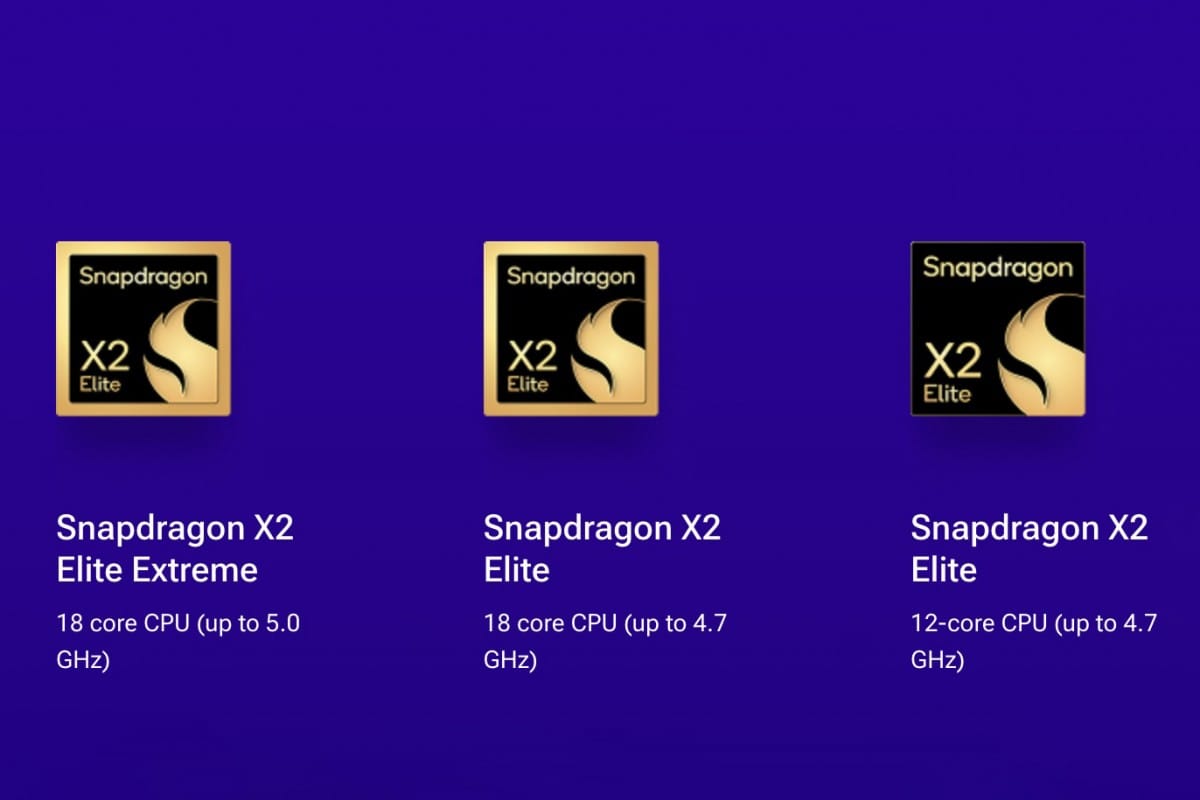
The arrival of Snapdragon X2 Elite as a genuine performance competitor is the most significant development in the Windows laptop market since AMD's Zen architecture forced Intel to take efficiency seriously in 2017.
Qualcomm's NPU story is where the numbers become genuinely startling. The Snapdragon X2 Elite ships with 80 NPU TOPS of AI processing performance, compared to 48 TOPS on Intel's Core Ultra 9 288V, the highest in the x86 lineup. On Geekbench AI benchmarks, the gap is described by reviewers who have tested both as not close. For the Microsoft Copilot+ PC certification that requires a minimum 40 NPU TOPS, Qualcomm is not just clearing the bar, it is lapping the field.
The broader performance picture is more nuanced. At sustained 22 watts, the X2 Elite delivers performance roughly comparable to Apple's M5 in multi-core workloads. Battery life in ARM-native applications approaches MacBook-level consistency, with Qualcomm's own testing showing 97 to 99 percent of plugged-in performance on battery, addressing the complaint that Intel laptop performance drops sharply when unplugged. The catch, and it is a real one, is application compatibility. ARM-on-Windows has improved dramatically with Prism emulation, but professional software with x86 dependencies still runs with overhead. Organizations standardized on specific enterprise applications need to verify compatibility before deployment rather than assuming it.
The business model shift Qualcomm made with X2 Elite is also worth noting: embedding RAM directly onto the chip, taking notes from Intel and AMD's integrated memory approach. This improves memory bandwidth dramatically for AI workloads, which is why the NPU performance gap is so pronounced. It also means RAM is not user-upgradeable, a trade-off that mirrors Apple Silicon's architecture and will frustrate the same buyers who object to it in MacBooks.
Intel's Real Position
Intel Panther Lake, built on the company's 18A process, is the most consequential chip Intel has shipped since its competitive position began eroding. The 18A process delivers up to 50% faster CPU performance and 50% faster GPU performance compared to Meteor Lake, with up to 40% better performance per watt. Those are meaningful numbers. They represent genuine progress on the efficiency gap that Apple Silicon exploited.
The problem is timing and trajectory. Intel's 18A is competitive with TSMC's N3B process on transistor density. Apple and AMD are lining up for TSMC's N2 process for their late 2026 and 2027 chips. Intel needs its 14A process, expected between 2027 and 2028, to reach parity with where the competition will be by the time Panther Lake ships broadly. Intel is running hard to stand still.
Where Intel remains genuinely strong is enterprise versatility. LGA 1851 socket compatibility, swappable RAM, M.2 NVMe slots, PCIe 5.0 support, and native Windows and Linux development environments represent a flexibility that neither Apple Silicon nor Qualcomm ARM provides. Core Ultra Series 2 systems in the Dell XPS 14, Lenovo ThinkPad X1 Carbon, and HP EliteBook 1040 give enterprise procurement something Apple cannot offer: a device that integrates cleanly into existing x86 infrastructure without translation layers, virtualization overhead, or software compatibility reviews. For organizations managing thousands of endpoints with legacy application dependencies, that is not a minor consideration. It is frequently the deciding factor.
Intel's desktop picture is cleaner. The Core Ultra 9 285K at $589 delivers 24-core configurations and performance that beats any current Apple chip on cost-adjusted multi-thread workloads. For workstations paired with discrete Nvidia GPUs for CUDA-dependent workflows, for Linux power users, for developers who need to target x86 environments, Intel desktops remain the correct answer and face no credible threat from ARM competitors in 2026.
AMD's Quiet Strength
AMD does not generate the headlines that Apple Silicon, Qualcomm, and Intel's comeback narrative attract, but Gorgon Point continues the trajectory that Zen architecture established: multi-core efficiency at price points that undercut Intel while matching or exceeding performance. The Ryzen AI HX 400 series brings 15 to 20 percent higher performance than the previous generation and a Radeon 890M integrated GPU that is approaching the territory where dedicated GPU pairing becomes optional for content creation workflows rather than required.
AMD's Strix Halo architecture, which ships in the Ryzen AI Max+ line, represents the most interesting wildcard in the laptop market. Integrated graphics performance at Strix Halo levels is beginning to compete with discrete laptop GPUs in the mid-range, which is not a scenario the GPU market has faced before. For creative professionals who use Lightroom, DaVinci Resolve, and Premiere without extreme workloads, AMD's integrated graphics trajectory in 2026 is worth watching more closely than any other factor in the Windows silicon landscape.
The Practical Decision in 2026
The summary that emerges from the actual performance data rather than the marketing materials is less dramatic than the "silicon bloodbath" framing the enthusiast press has favored, but more useful.
Buy Apple Silicon for laptop portability, battery life, and single-core performance if macOS fits your workflow and software stack. The efficiency lead is real, sustained, and not closing in the timeframe that matters for a purchase today.
Buy Qualcomm for Windows laptop efficiency and AI workload performance if your software is ARM-compatible and NPU performance is a priority. The X2 Elite is a genuine MacBook competitor in a Windows chassis for the first time, with caveats about application compatibility that require verification before deployment.
Buy Intel for enterprise flexibility, x86 compatibility, desktop workstation performance, and deployment into existing Windows infrastructure without compatibility questions. Panther Lake represents real progress, and the ecosystem advantages around repairability, serviceability, and legacy software support are not going away.
Buy AMD for value-optimized multi-core performance and the integrated GPU trajectory that is quietly reshaping what a laptop can do without a discrete graphics card.
The laptop chip war of 2026 is genuinely competitive for the first time in years. That is good for buyers. What it is not, despite the framing from every company's marketing team, is simple.