

Before WWDC, Everyone's Circling Apple's Health Moat
Oura built a clinical platform. Google killed Fitbit to read Apple Health on iOS. Apple quietly hardened its data layer. WWDC is six days away. The common thread isn't health tech.


The Briefing:
WWDC is six days away, and the most interesting thing happening in Apple's orbit this week has nothing to do with leaks. It has to do with leverage. Three stories landed this week that look unrelated on the surface and share the same underlying logic: Apple has become the platform everyone else is building around, not competing against.
Google retired the Fitbit brand on May 19 and replaced it with Google Health, a $2.1 billion acquisition now repositioned as a data aggregation layer that reads directly from Apple Health on iOS. That is not a pivot. That is a concession. Google decided that access to Apple's health data pipeline was worth more than trying to maintain a competing identity. The company that spent years insisting Android had a health advantage is now hooking into the other team's infrastructure to stay relevant.
Oura told a different story this week, but the subtext rhymes. The Ring 5 launch was the hardware headline, but the bigger announcement was the platform: Health Radar for longitudinal pattern analysis, GLP-1 Insights for medication-aware tracking, live workout support, and in-app physician access through a partnership with Sesame. None of that replaces Apple Health. It layers on top of it.
Meanwhile, Apple seeded the 26.6 beta cycle and brought the same BlastDoor sandboxing architecture that has protected iMessage since iOS 14 to Apple Maps. Quietly, methodically, Apple is hardening the data layer that everyone else is now building on.
Oura Just Turned a Ring Into a Health Platform
The Ring 5 is 40% smaller than its predecessor, but the hardware is almost beside the point.
 Justin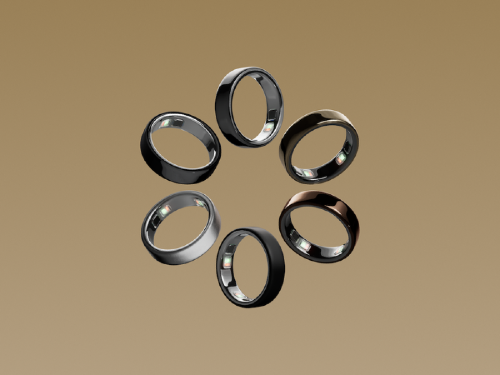
The Ring 5 cleared the hardware bar: 40% smaller by volume than the Ring 4, 6.09mm wide, 2.28mm thick, rebuilt sensing architecture, a 12% improvement in overnight HRV accuracy, and 24% better workout heart rate signal quality. It looks like a wedding band. It measures like a medical device. That story is worth reading on its own.
But Oura's bigger announcement was software. Health Radar gives members longitudinal pattern analysis across their biometrics. GLP-1 Insights adapts tracking for users on weight-loss medications, a segment no wearable has seriously addressed. Live workout tracking arrives for running, cycling, and walking. And through a new Sesame partnership, Oura members can now connect with board-certified physicians inside the app. The ring is becoming the front door to a clinical relationship. The question Apple will need to answer at WWDC is how Health is supposed to respond.
Apple Health at WWDC: Every story this week circles the same gap. Apple Health is the platform, but it is still primarily a data aggregator rather than an analytical engine. Oura is building clinical intelligence on top of it. Google is tapping it from outside. Apple has not yet told us what it wants Health to be. WWDC is six days away. That question is overdue for an answer.
Google Health Is a Concession Dressed as a Rebrand
Killing the Fitbit name was the easy part. What Google replaced it with reveals the actual strategy.
Justin
On May 19, the Fitbit app became Google Health. The icon changed, the branding changed, Fitbit Premium became Google Health Premium, and anyone who hadn't migrated their old Fitbit account to a Google account lost access, with full data deletion starting July 15. For longtime Fitbit users, it lands like a eulogy. For Google, it is a calculated repositioning of a $2.1 billion acquisition into something with actual platform logic. The tell is this: the new Google Health app reads Apple Health on iOS. Google is not building an alternative to Apple's health infrastructure. It's betting that aggregating data across ecosystems, including Apple's, is a more defensible position than trying to build a competing one.
That bet has implications for every health platform in the market, including Apple's. The full piece works through what Google's data strategy actually looks like and what the Fitbit era's end reveals about where health computing is headed.
Blocked Contacts Alert in iOS 26.6: Apple added a proper notification for when users hit the maximum blocked contacts limit, a ceiling that previously failed silently with no explanation. For anyone dealing with aggressive call spam, the fix ships with an actionable path to resolve it in Settings. Full details →
Oura Ring 5 Charging Case: Oura is shipping an optional Charging Case alongside the Ring 5 that extends total battery life to roughly one month of on-the-go charging. Made from recycled aluminum, it is sized like a matchbox and sold separately. Not a necessity, but worth knowing about if battery anxiety has been a barrier. Full breakdown →
Apple's 26.6 (Beta 1) Lands With Quiet Security Work
The last point release before WWDC is lean by design, but what's under the hood deserves attention.
Justin
Two weeks after iOS 26.5 shipped, Apple seeded the 26.6 developer betas across all six platforms. This is almost certainly the final point release of the iOS 26 generation before iOS 27 debuts at WWDC on June 8, so expect the cycle to stay tight: bug fixes, stability work, and security improvements rather than features. Beta 1 is already delivering on that promise in one meaningful way. Apple brought the BlastDoor sandboxing architecture, the same framework that has isolated and validated untrusted incoming data in iMessage since iOS 14, to Apple Maps. The framework creates a boundary around how Maps processes external data before it interacts with the rest of the OS. For a platform everyone from Google to Oura is now piping data through, the timing is not coincidental.
The Closing Remarks:
Apple ships its last cleanup release before the keynote, Oura builds a clinical layer on top of Apple's data infrastructure, and Google buries Fitbit to become an aggregator that reads Apple Health on iOS. The pattern is consistent: Apple built the health data layer that matters and has not yet shown its hand on what it will do with that position. In six days, we will have a clearer picture.
What is the one thing you are watching for in Apple Health at WWDC? Hit reply. I read every one.