


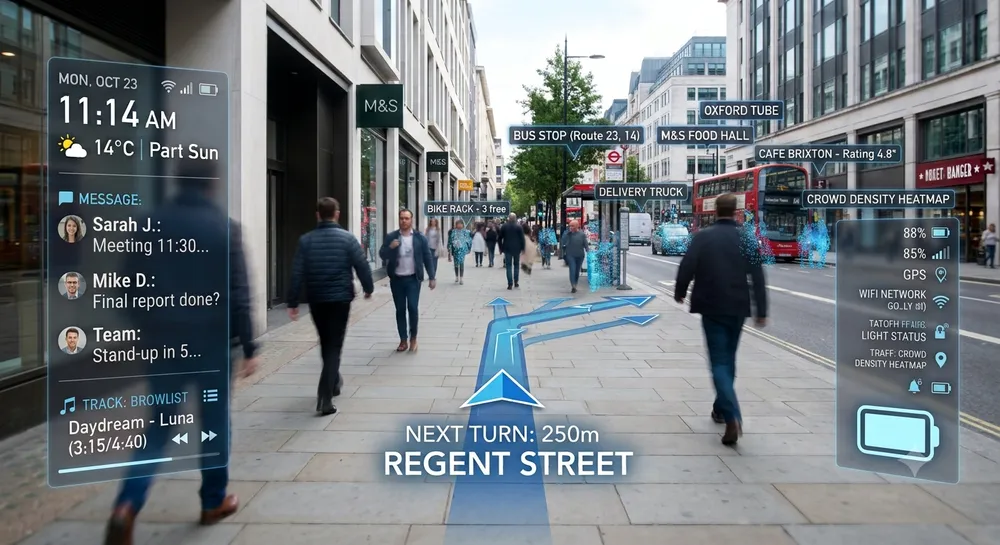


Smart glasses are no longer a concept. Meta sold over seven million pairs of Ray-Ban glasses in 2025, and the category that spent a decade being a curiosity is now a consumer product with a genuine audience. Apple is coming for it. The question worth sitting with before the product arrives is not whether Apple can build good glasses. It almost certainly can. The question is whether it has a plan for what those glasses feel like to the people who aren’t wearing them.
That problem has not been solved. Meta's version of it has been instructive, and not in a flattering way.
What the Ray-Ban Experiment Revealed
The Ray-Ban Meta glasses are, by most accounts, a well-made product. They're comfortable, they look like regular sunglasses, and the AI assistant that lives inside them has become genuinely useful to the people who wear them daily. Seven million units is not a niche result. But the trail of controversy the glasses have generated is inseparable from their design, and understanding that trail matters for what Apple is building.
In October 2024, two Harvard students demonstrated that footage from the Ray-Ban glasses could be combined with facial recognition software and public databases to surface a stranger's name, address, phone number, and relatives within roughly a minute of capturing their face. The students built the tool themselves, called I-XRAY, using a live Instagram stream from the glasses as the data source. Meta didn't build the facial recognition capability. The students engineered it around the glasses. The distinction was largely irrelevant to the public reaction.
What followed was a documented pattern of misuse. A woman discovered a video of herself, recorded by a stranger during a walk and posted online, had received nearly a million views. In October 2025, the University of San Francisco issued a warning after reports of a man wearing the glasses filming women on campus. Content creators used the hardware to record strangers for social media posts framed as dating advice, with subjects identified and harassed online. In February 2026, Swedish investigators reported that footage captured through the glasses and routed through AI features was being reviewed by human data annotators at a Meta subcontractor in Kenya, with workers describing footage of people undressing, credit card details, and other sensitive content captured without the wearer's awareness.
Meta's defense across all of this pointed to the LED indicator light, a small glow visible at the edge of the frame when the camera is recording. The light exists. Reviews consistently describe it as easily missed in daylight. Meta confirmed a tamper-detection system to prevent users from physically covering the LED with tape, which addresses one specific vector of misuse and leaves the broader problem fully intact.
The glasses are designed to be visually indistinguishable from ordinary sunglasses. That is not an accident and the source of every problem above.
Apple's Design Inheritance
Apple has thought about this. The evidence is in the Vision Pro, a product with very different form factor challenges but a directly relevant approach to the same underlying tension: how does a device that sees the world signal what it's doing to the people around it?
The answer Apple built was EyeSight, an external display on the front of the headset that renders the wearer's eyes in real time and shows a distinct animation when the device is capturing video or photos. The idea behind it was explicit: people near a Vision Pro wearer should be able to tell whether the device can see them and whether it's recording. It was a social signaling system built into the hardware. Apple's own support documentation describes it plainly: EyeSight signals to those around you that you're recording or taking photos.
EyeSight worked as a concept before it worked as an execution. The external display added cost and weight to a product that was already too heavy for extended wear. The rendered eyes were unsettling to many people in practice, described by reviewers as uncanny rather than reassuring. Jason Snell, reviewing the Vision Pro for Six Colors, noted that externally indicating status is important and then added, with characteristic directness, that it probably didn't require the added cost and weight of a whole display. EyeSight understood the question. The answer cost too much and unsettled the people it was meant to reassure.
The smart glasses don't have a display. They can't have EyeSight. What they'll have instead is the LED indicator approach Meta already tried, or something Apple has not yet revealed.
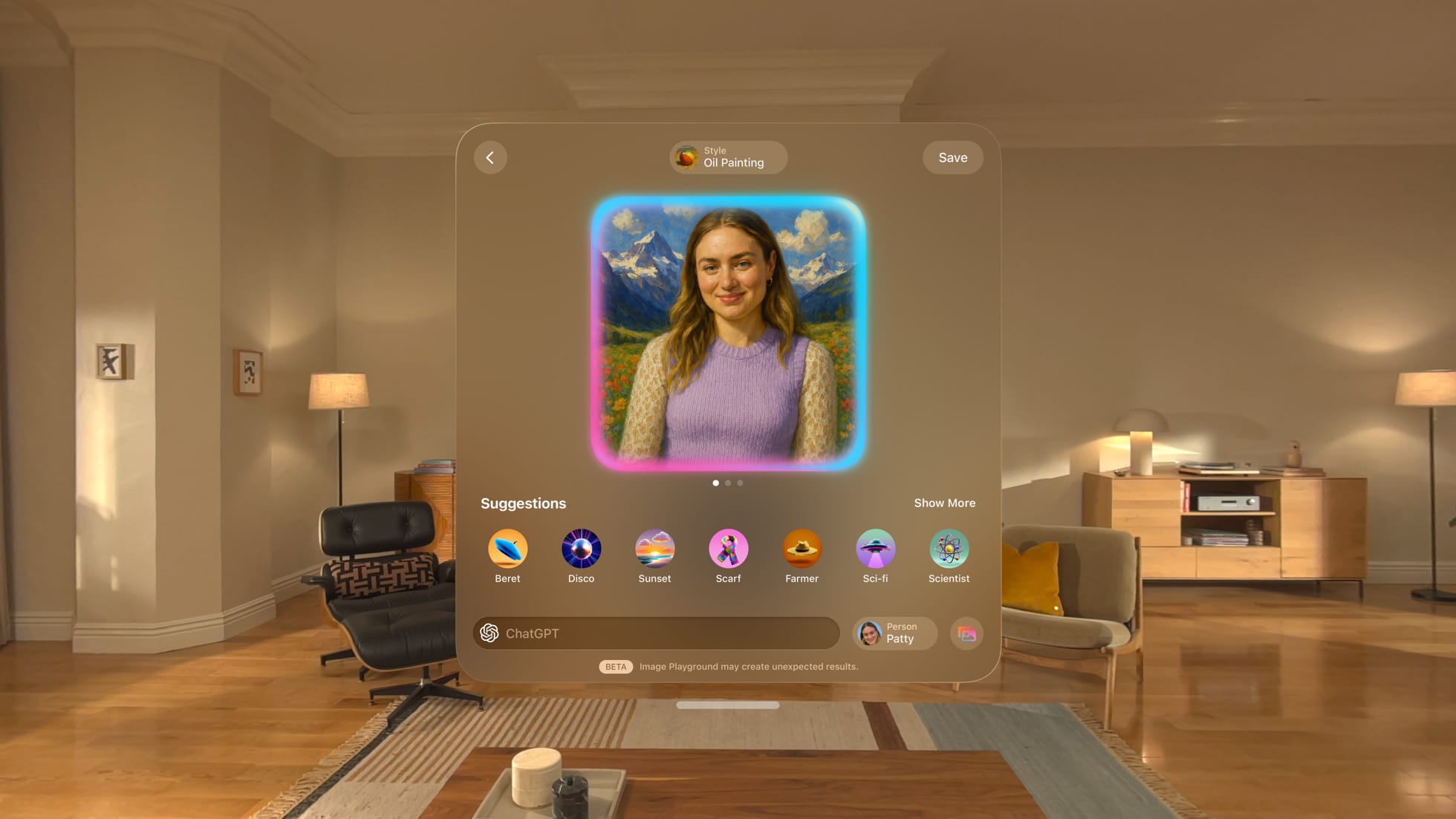
The Interaction Apple Has to Design
The N50 glasses, as currently reported, are four frame styles in premium acetate with an oval camera module that includes LED indicator lights. The oval shape is deliberate, a visual identity distinct from Meta's circular Ray-Ban cameras. The LED lights presumably serve the same disclosure function Meta's indicator serves.
Whether Apple has engineered anything beyond that indicator is unknown. What's known is that the LED approach has a documented failure mode: it requires bystanders to know what the light means, to notice it, and to interpret it correctly in real time. That's a lot of cognitive work to put on people who didn't choose to be near a camera.
The deeper design problem is that an audio-first interface, which is what the N50 is, creates a social awkwardness that runs perpendicular to normal conversation. Using Siri through the glasses means speaking out loud to a device in the presence of other people. The currently reported feature set includes phone calls, live translation, contextual Siri queries, photo and video capture, and real-time scene understanding. Most of those features require the user to either speak, listen, or have the camera active. All of them play out on someone's face, in proximity to other people, in situations ranging from a restaurant to a doctor's waiting room to a school pickup.
The Gizmodo reporter who raised this did so from a specific experience: checking out of a medical appointment and realizing the receptionist was wearing Ray-Ban glasses. The discomfort was immediate and instinctive. She was only listening to music, as it turned out. But the absence of any reliable way to know that is the problem. "Those aren't filming, right?" is not a reasonable social burden to place on people who are just trying to pick up a prescription.
Apple enters this with advantages Meta didn't have. It controls the full software stack, which means it can build signaling directly into the OS layer rather than relying on a light most people won't notice. Its relationship with the iPhone means the glasses can communicate state to surrounding devices in ways a standalone product cannot. Its privacy positioning, built carefully over a decade of public messaging, gives it standing to make design commitments that Meta's ad-revenue model structurally can't. Bloomberg has reported that delays in the N50 development reflect Apple's focus on improving visual AI performance and ensuring smoother Siri interaction before shipping. The social design question goes unaddressed in that framing, at least publicly.
What a Well-Designed Answer Looks Like
The most useful thing Apple could do is treat the social interface of the glasses as a primary design deliverable rather than an afterthought addressed by a small LED. That means a recording indicator visible from multiple angles, not just the front. It means an audio cue bystanders can recognize. It means a Siri invocation pattern that doesn't require the wearer to speak loudly into the air in a way that reads as strange or aggressive to people nearby. And it means building the camera-active state into a physical interaction, like a deliberate button press, rather than allowing ambient capture that the wearer might trigger accidentally.
Apple has done this kind of social contract design before. The camera shutter sound on iPhone is the simplest example: a deliberate friction introduced specifically so that recording is audible to people nearby. Removing it requires going to silent mode, which most people don't do in social contexts. The behavior was designed purposefully. EyeSight on Vision Pro was designed, imperfectly, for the same reason.
The N50 is a smaller device with fewer display options. But Apple has a year of production runway before these reach consumers, and the social UX problem is not a hardware constraint. It's a design priority. Getting it right matters more for this product than the frame styles or the acetate colors or the Siri response latency, because all of those things affect how the glasses work for the person wearing them. The social layer affects how they land for everyone else.
That's a much larger audience, and it's the one Apple hasn't addressed yet.
The Apple smart glasses, internally codenamed N50, have not been officially announced. All product details referenced above are based on supply chain reporting and analyst forecasts current as of July 2026.













Comments