

Oura Ring 5 and a Platform Overhaul: Everything Announced Today
Oura Ring 5 is 40% smaller than its predecessor, but the bigger story is the platform: Health Radar, GLP-1 Insights, live workout tracking, and in-app physician access.


Oura had a big morning. The company didn't just launch a new ring. It announced a comprehensive expansion of its software platform, one that starts to look less like a fitness tracker and more like a continuous health monitoring system with a path to clinical care. If you use an Oura ring, today's announcements change what the product actually does. Here's a clear-eyed breakdown of everything.
The Hardware: Oura Ring 5
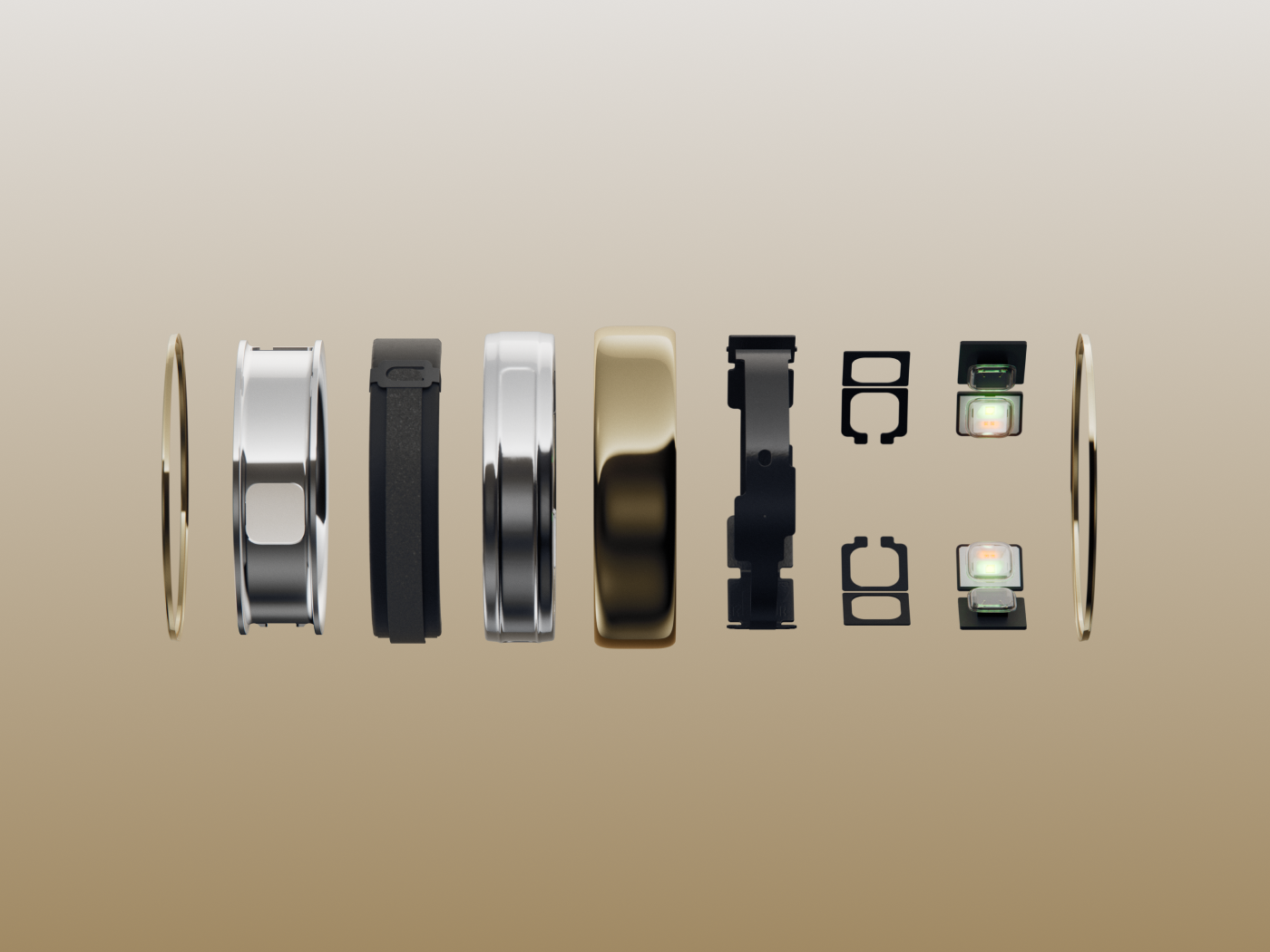
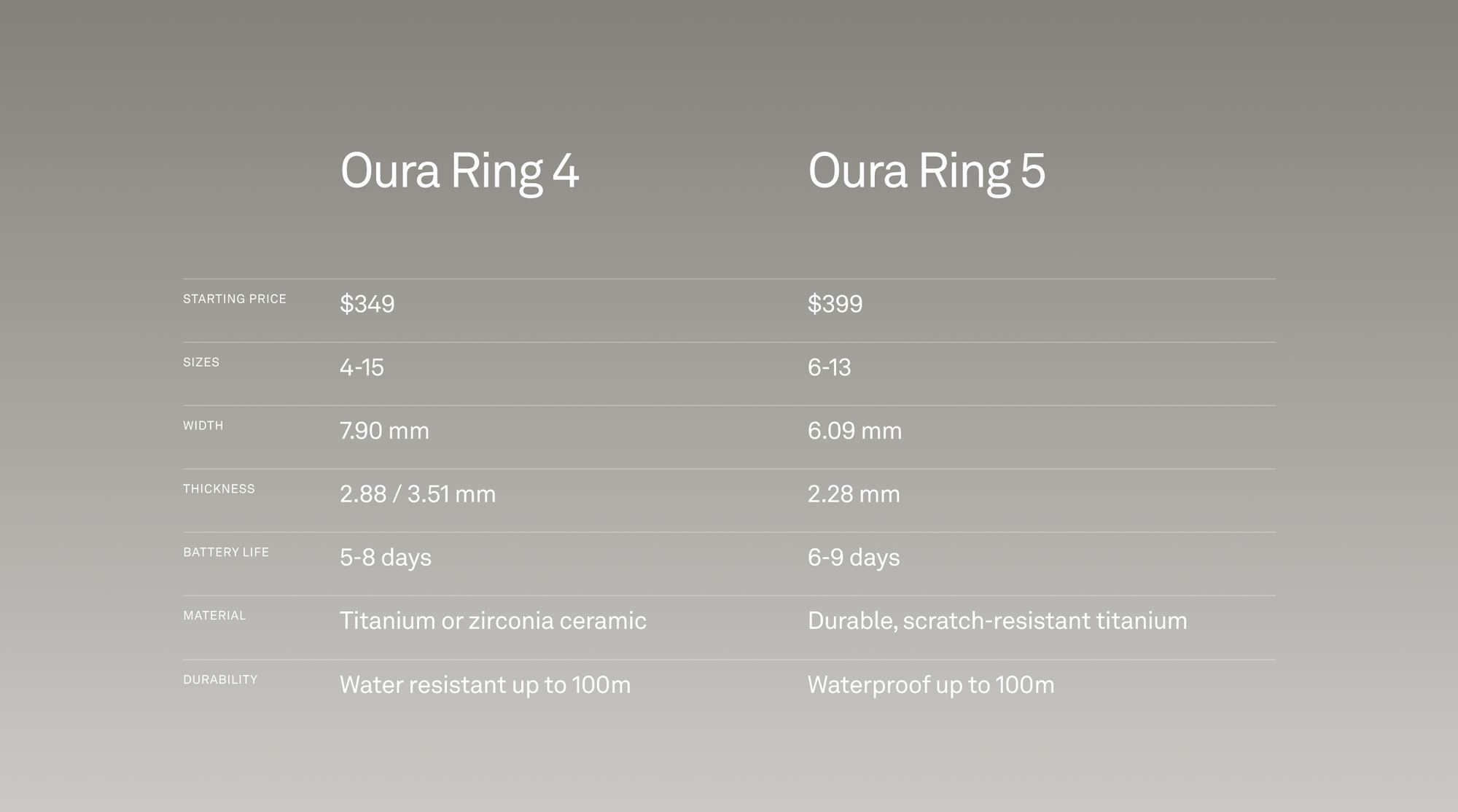
The headline product is the Oura Ring 5, and the primary story here is size. Oura calls it the world's smallest smart ring, and the numbers back that up: the Ring 5 is 40% smaller by volume than the Ring 4, measuring 6.09mm wide and just 2.28mm thick. For context, that's roughly the profile of a standard wedding band. People who previously found the Ring 4 too bulky, or who wanted something that didn't announce itself as a health gadget, now have an option that genuinely looks like jewelry.
What makes this interesting from an engineering standpoint is that Oura didn't just shrink the mold. The team rebuilt the sensing architecture from scratch. The new ring features redesigned low-profile sensor domes that improve contact with your skin, more efficient LEDs, and 12 distinct signal pathways rather than the fewer pathways in previous designs. That last point matters particularly for accuracy across different finger shapes and skin tones, which has historically been a challenge for optical-based health trackers.
The accuracy gains are specific and worth noting: overnight HRV measurement improved 12% compared to Ring 4, and workout heart rate signal quality improved 24%, translating to a 19% improvement in accuracy for activities like running, cycling, and walking. Those aren't rounding errors. The engineering team achieved this partly by rotating the LEDs 180 degrees to shorten the light paths, and by using a larger photodiode component to compensate for the reduced space. Smaller ring, more accurate data.
Battery life lands at 6 to 9 days per charge, which is consistent with Ring 4. An optional Charging Case (sold separately) extends that to roughly one month of total battery with on-the-go charging, a matchbox-sized accessory made from recycled aluminum.
The ring comes in six titanium finishes: Gold, Deep Rose, Brushed Silver, Stealth, Black, and Silver. It's waterproof to 100 meters. Pricing wasn't announced in the posts reviewed, but the ring is available now through Oura's store.
One note on compatibility: all of the software features announced today are also available to members running Ring Gen3 or Ring 4 hardware. You don't need to buy Ring 5 to access the new app features.
The Software: What's Actually Changing
This is where the announcement gets more substantial. Oura is rolling out several new features across its app, some shipping in early June, others starting in late June. Here's what each one actually does.
Health Radar
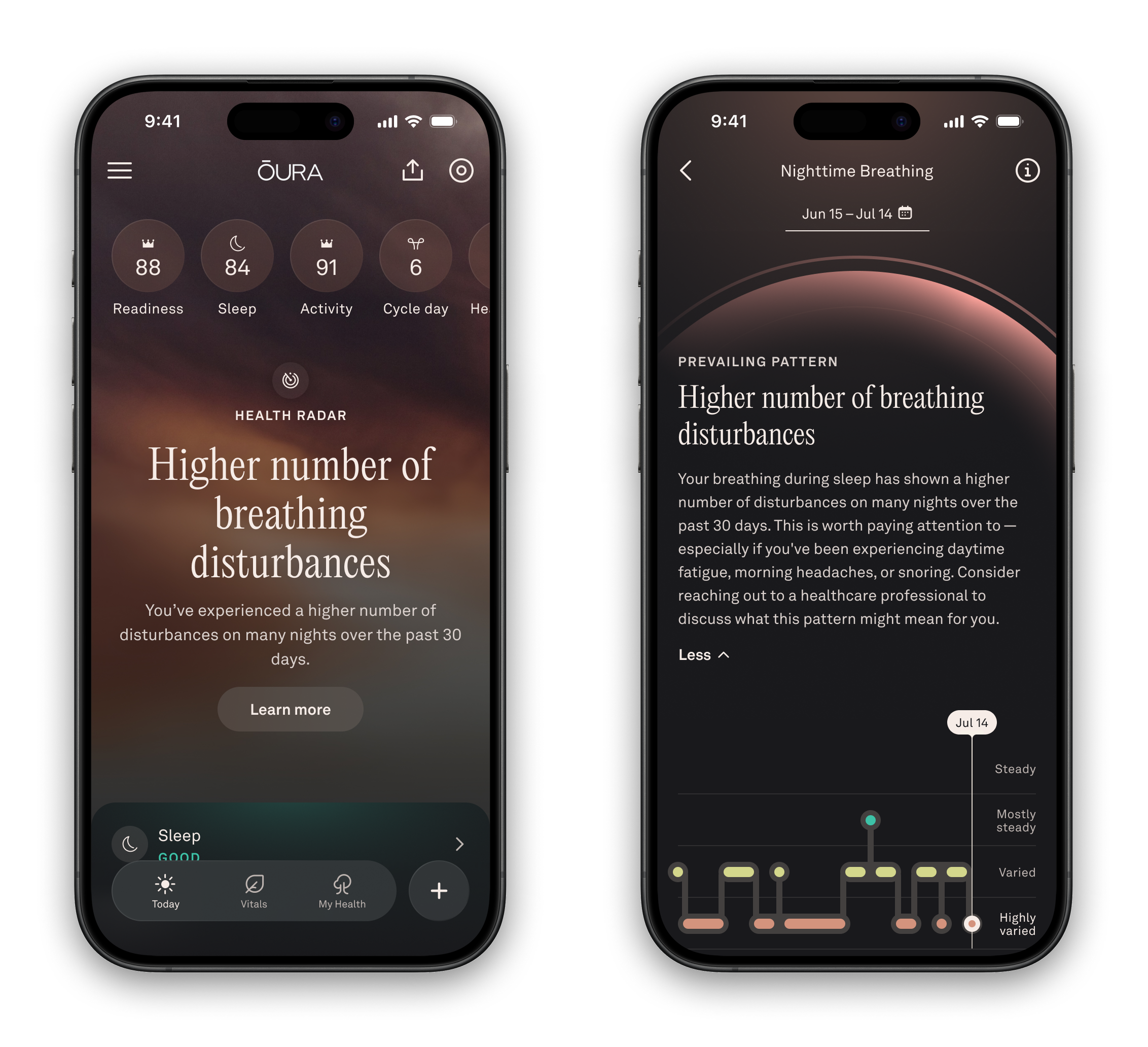
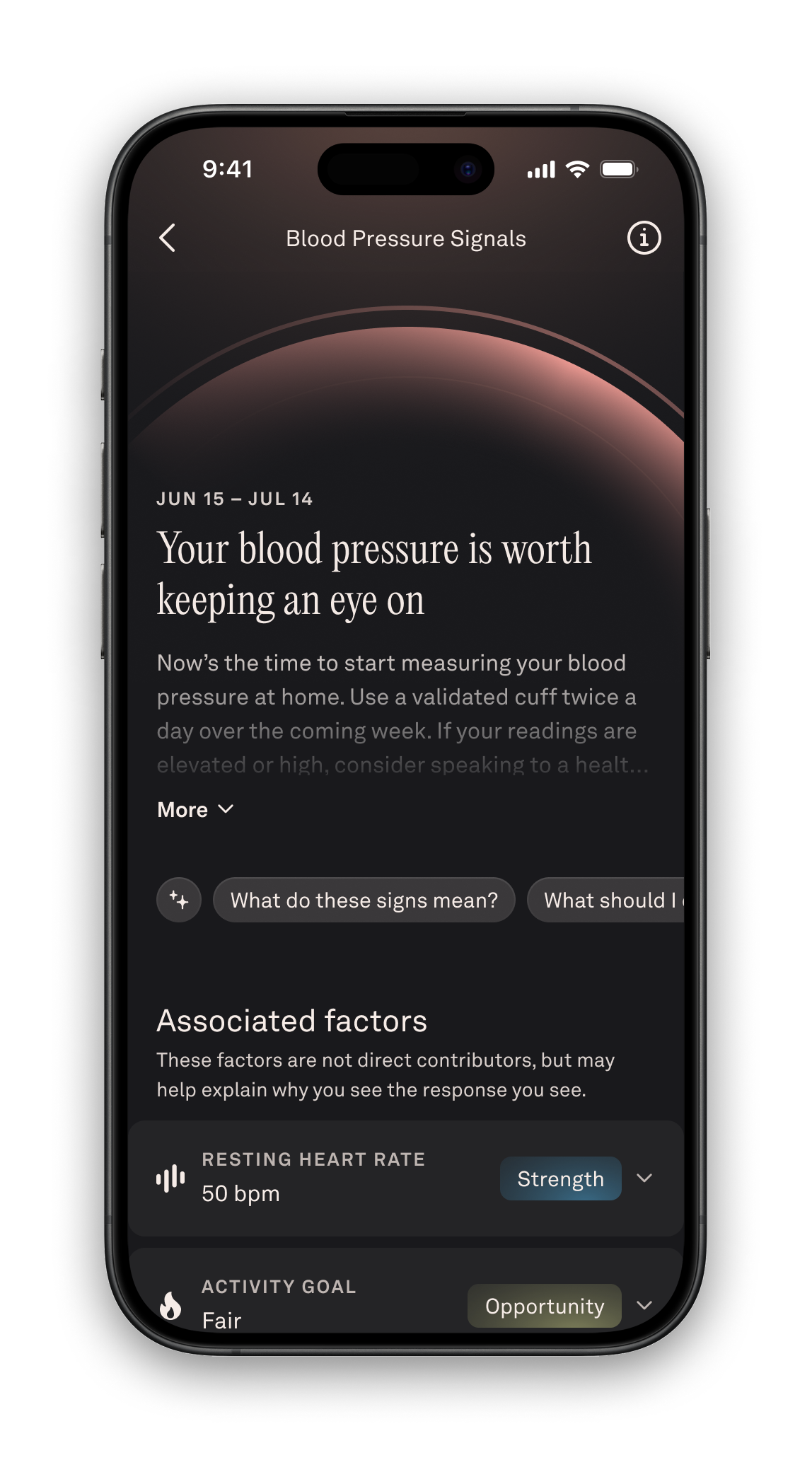
Health Radar. Credit: Oura
Health Radar is the biggest software addition and the one that most clearly signals where Oura is trying to go as a company. The idea is proactive monitoring: rather than checking your stats after the fact, Health Radar runs in the background continuously and surfaces patterns that might be worth your attention before they become a problem.
It builds on an existing feature called Symptom Radar and adds two new capabilities.
Blood Pressure Signals watches for changes in your overnight cardiovascular patterns over rolling 30-day windows. It's not a blood pressure cuff. The ring doesn't measure blood pressure directly. What it does is track patterns in your nighttime pulse data that have been associated with blood pressure variation. When your body's overnight "dipping" pattern (the normal drop in cardiovascular activity during sleep) starts to look different from your baseline, the feature flags it. Think of it as a canary: it doesn't diagnose anything, but it notices when something in your cardiovascular overnight patterns has shifted and tells you to pay attention. You can also log readings from a traditional blood pressure cuff directly in the Oura app, which lets you build a historical record and have more informed conversations with your doctor.
Nighttime Breathing provides a 30-day rolling view of how often your breathing gets disrupted during sleep. Most people have no idea whether their breathing is irregular at night unless they've done a formal sleep study, which requires equipment, scheduling, and usually a clinical referral. The Oura version isn't a diagnostic tool, but it builds a picture over time of whether your breathing patterns are consistent or whether you're experiencing frequent disturbances, and flags when the pattern warrants a conversation with a healthcare provider. Oura has also partnered with ResMed (the leading home sleep health company) so that if the feature detects a higher-than-normal level of breathing disruptions, members can connect directly to ResMed's resources, including virtual care options.
Health Radar begins rolling out in June 2026 to US, UAE, and India members with Ring Gen3 and newer.
Counsel Health Integration (Oura Labs)
Alongside Health Radar, Oura is introducing a new feature through its Oura Labs experimental channel: an integration with Counsel Health, an AI-assisted primary care platform.
Here's what this actually means in practice. When Health Radar surfaces a pattern worth looking into, Oura Advisor (the app's existing AI assistant) can now connect you to Counsel. Through that connection, you can message with Counsel's medical AI for free. It analyzes your Oura biometric trends alongside whatever symptoms you describe and provides initial guidance. If you want to go further, you can pay to message with a licensed, board-certified physician who can review your data, ask follow-up questions, suggest a course of action, and even prescribe medication.
The value proposition is that the physician already has context: your biometric trends, your Symptom Radar logs, your Health Radar flags. You're not starting from zero explaining your health situation. Everything runs in a HIPAA and SOC 2-compliant environment.
Counsel rolls out via Oura Labs starting June 16, available in most US states.
GLP-1 Insights
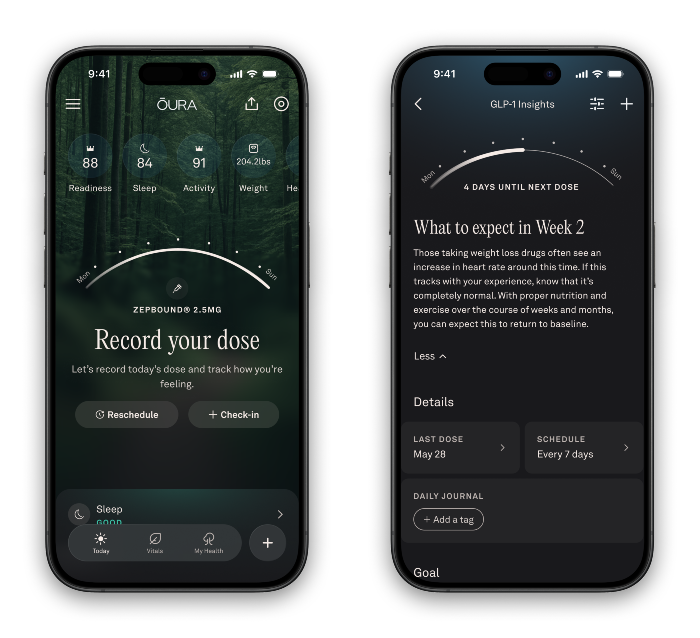
GLP-1 medications like Ozempic, Zepbound, and Wegovy have become one of the most widely prescribed drug classes in recent history. Oura estimates that global adoption will surpass 100 million people by 2030. The problem these users face is fragmentation: they're juggling separate apps to track their dose schedule, side effects, weight changes, and biometrics.
This is actually one of the more significant additions in today's announcement, and it's worth pausing on why. Dedicated GLP-1 tracking apps already exist (Shotsy, Pep, MeAgain, Glapp), and they do a reasonable job of dose reminders and side effect logging. What none of them can do is connect that medication timeline to what's actually happening inside your body. They track inputs. They have no idea what your heart rate variability looks like the day after your weekly injection, whether your sleep quality is degrading in a pattern that correlates with your dosing cycle, or how your recovery scores trend as your dose titrates upward. That requires continuous biometric data, and years of your personal baseline to make it meaningful. That's what Oura has and dedicated GLP-1 apps fundamentally cannot replicate.
GLP-1 Insights consolidates all of that inside the Oura app. Members on these medications can log their dose and schedule, track common side effects like nausea or fatigue alongside when doses were taken, and monitor weight over time, with weight trends displayed alongside sleep, activity, and recovery data rather than in a separate silo. The app supports importing weight data from smart scales via Apple Health or Google Health Connect.
What makes this more than a logging interface is the Oura Advisor integration. The AI now understands your medication schedule as context for interpreting your data. If your Readiness Score consistently drops in the 48 hours after a weekly injection, Advisor can flag that pattern and help explain what might be driving it. The ring isn't doing anything new here medically. It's applying the existing biometric data through a lens that accounts for your medication cycle.
Oura is also expanding the broader metabolic picture with CGM Integration (for members with continuous glucose monitors, their glucose data appears alongside all other Oura signals), a Meals feature for logging food and seeing how diet choices connect to recovery and energy, and Lab Uploads launching June 30 that let members import bloodwork results (like HbA1c and fasting glucose) directly into the app.
GLP-1 Insights rolls out in June 2026 to US, UAE, and India members with Ring Gen3 and newer.
Live Activity Tracking
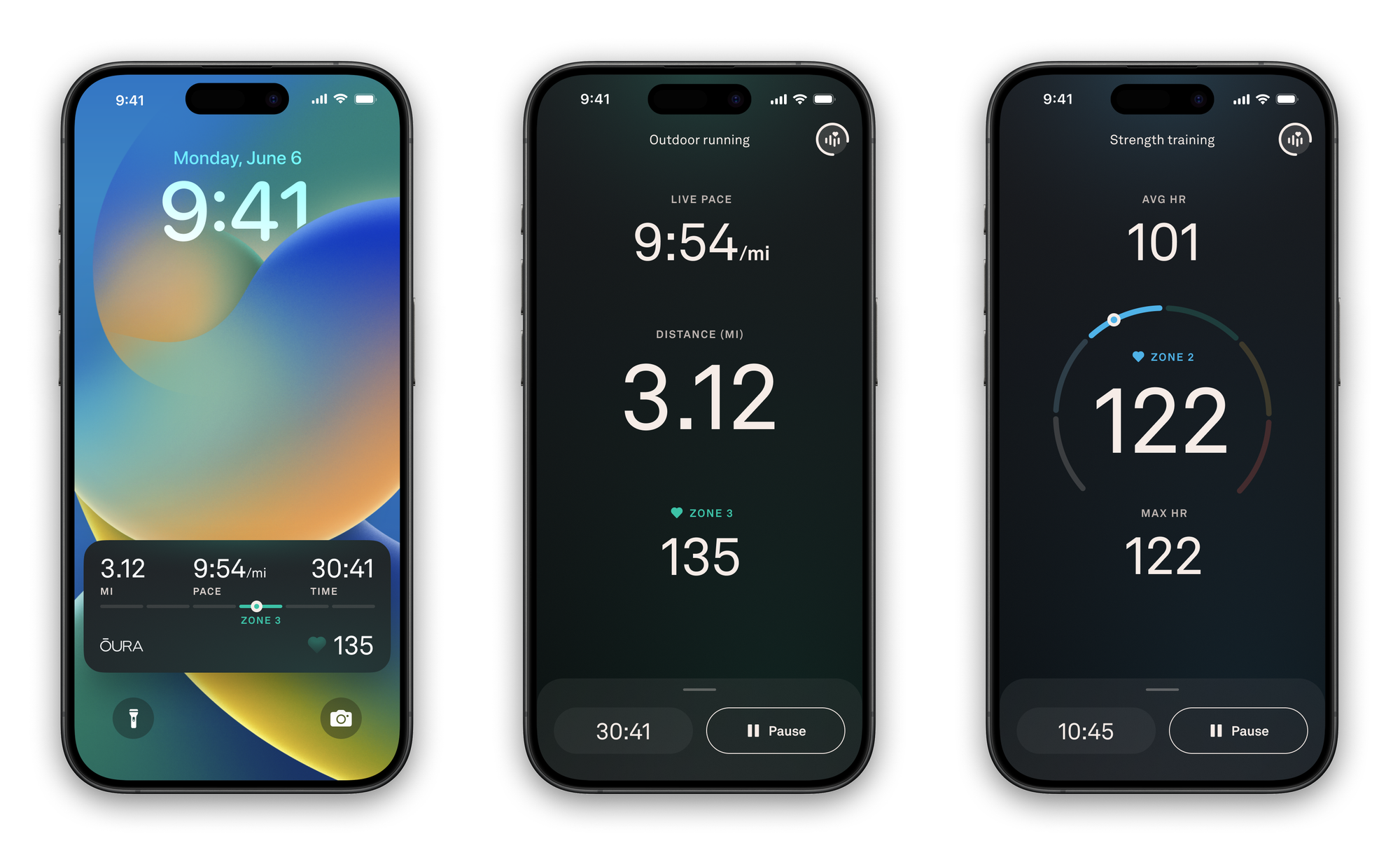
This is the feature that fills the gap Oura members have complained about for years. Until now, the ring was great for telling you what happened during your workout after the fact, but it wasn't a tool you could glance at mid-run to check your current pace.
Live Activity Tracking changes that. You start a workout directly in the Oura app, and from that point forward you get real-time heart rate, pace, and distance updated as you move. A lock screen widget keeps your stats visible without requiring you to open the app. GPS data from your phone drives the pace and distance tracking, and your full route map appears in the post-workout summary.
The feature also adds Bluetooth heart rate monitor support, including Apple AirPods Pro and chest straps like Polar. That means if you take your ring off to do something like weightlifting or a contact sport, you can still get accurate real-time heart rate data through a paired device, and all of it flows into your Oura scores and metrics as if you were wearing the ring the whole time.
Automatic Activity Detection is also getting improved accuracy across 40+ activities, with particular attention to lower-motion workouts like yoga and pilates that previous detection sometimes missed.
Live Activity Tracking launches June 4 globally for Ring Gen3 and newer.
Data Deletion and Locate
Two smaller but practically useful features round out the launch.
Data Deletion lets you remove your health data from a specific time window without deleting your account or losing your broader history. This is a genuine quality-of-life addition for privacy-conscious users who might want to scrub a period of data (say, during a time they were sharing a device or a period they simply don't want retained).
Locate is exactly what it sounds like: a way to find a misplaced ring or charging case. Put the device in search mode and track it down nearby. For a small device that's easy to set on a nightstand and forget, this is the kind of obvious feature that should have shipped years ago.
Both features launch June 4 globally for Ring Gen2 and newer.
The Bigger Picture
The Ring 5 hardware is a meaningful improvement: smaller, more accurate, and better looking than what came before. But the hardware isn't really the story of today's announcement. The story is that Oura is assembling something more ambitious: a continuous monitoring layer that doesn't just tell you how you slept or how well you recovered, but that actively watches for health signals, translates them into actionable guidance, and now connects you directly to licensed physicians when the data suggests you should follow up.
Whether that vision fully delivers in practice depends on execution, and several of these features arrive as "coming soon" or via Labs experiments rather than fully polished rollouts. But the direction is clear. Oura is betting that the most valuable thing it can do with your biometric data isn't a daily score. It's catching something important before you'd ever think to see a doctor about it.
Read us first
See more TBTL when you search Google
Add Tech Between the Lines as a preferred source and our Apple coverage shows up more often in your Top Stories. It takes one tap, and you can change it anytime.
Prefer TBTL on Google