


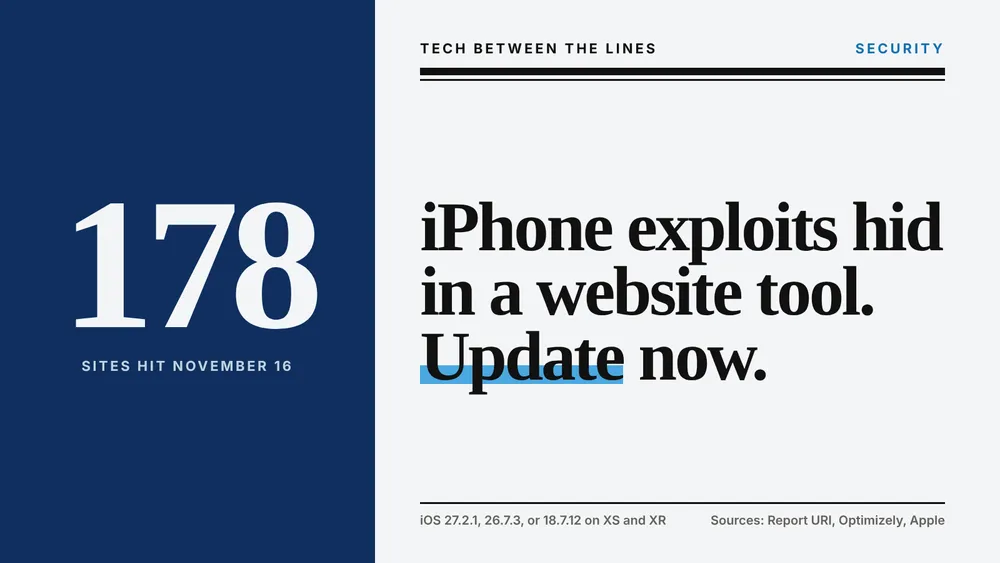

If your iPhone or iPad isn't on the latest version of iOS, install the update before you browse anything else. On Monday, November 16, an attacker used a hole in Optimizely, a tool big companies use to test changes on their websites, to slip malicious code onto sites run by at least 178 organizations. On iPhones and iPads running older versions of iOS, that code tried to break into the device through the browser, with no link to tap and nothing to download. Simply loading the page started it.
Security researcher Scott Helme of Report URI found the code and published his findings on November 16. He found 188 infected scripts belonging to 178 organizations, and says the real number is probably higher. His list includes Zoom, the BBC, CNN, Salesforce, IKEA, HSBC, Equifax and Peacock. Optimizely confirmed on its status page that "an unauthorized party exploited a vulnerability in Experimentation" to add malicious JavaScript to some customer projects, and says it has fixed the vulnerability and removed the injected code.
Update first, then check your cards
Open Settings, tap General, then Software Update, and install whatever it offers. According to Apple's security releases page, the newest versions came out on Monday, November 9: iOS 27.2.1 and iOS 26.7.3 for iPhone 11 and later, and iOS 18.7.12 for the iPhone XS, XS Max and XR. Report URI says the attack kit's own code comments treat iOS 18.7.3 and later and iOS 26.3 and later as patched. That comes from the attackers' notes, not from Apple, so the safe move is the newest version your iPhone can run. If you're unsure which one to pick, our Should I Update? page has the call for every version.
The same script also went after people on any device. It swapped cryptocurrency wallet addresses for the attacker's own, skimmed card numbers typed into some site forms (Report URI says cards entered in separately hosted payment frames were out of its reach) and stole cookies that weren't protected from scripts. If you paid by card on one of the affected sites on November 16, keep an eye on your statements. If you sent crypto that day, check that the address you pasted is the one you meant to use. Report URI counted about $7,040 reaching the attacker's wallets on November 16.
Coruna and DarkSword, on big brand websites
The iOS code picked its attack by version. Devices on iOS 13 through iOS 17 were sent Coruna, iOS 18 devices were sent DarkSword, and iOS 26 devices got a third chain that, according to Report URI, only identified the device. DarkSword is the same kit that pushed Apple to offer iOS 18.7.7 to iPhones that could already run iOS 26 in April 2026. Now it was showing up on the websites of household names.
Nobody has confirmed that an iPhone was actually compromised. Hudson Rock told SecurityWeek that successful exploitation hasn't been demonstrated, and it also saw scripts from three other web services loading related iOS code as early as November 13. Report URI says pages served to iOS 18.6 and earlier reloaded every 60 seconds to try again, which adds up fast on an old phone with a news tab left open.
The affected organizations' own servers weren't breached for this to happen. Their visitors were served an exploit through a script those sites trusted. If you manage iPhones for a company, that's the case for enforcing a minimum iOS version in your device management instead of leaving updates to each user. Fixes like the iOS 18.7.11 patch Apple shipped in October 2026 only help the phones that install them.
Optimizely's status page doesn't explain how the attacker got into so many unrelated customer projects. The company told BleepingComputer the flaw was in its account signup process, according to MacRumors. Expect more questions for every testing and analytics vendor whose code runs on checkout and login pages, and keep automatic updates turned on in Settings, General, Software Update in the meantime.




Comments