

Oura Ring 5 Review: The Best Upgrade Is the One That Has Nothing to Do With Software
A five day Disneyland and Legoland trip put the Oura Ring 5's comfort and battery claims to the test. The hardware delivered. The new software features are a mixed bag so far.


I've been wearing the Oura Ring 4 long enough to know its least endearing quality: after a stretch of hours, my finger wanted it off. Not because of the data, not because of the app. Because of the ring itself. The gen 4 is 2.88mm thick and weighs between 3.3 and 5.2 grams depending on size. That's not enormous in isolation, but on a finger you're using all day (making a fist, gripping a steering wheel, resting your hand on a desk) you feel it. I took mine off more than I should have for a device whose entire value proposition depends on continuous wear.
The Ring 5 fixed that. I know because I tested it the hard way: five days at Disneyland and Legoland, riding everything, gripping everything, sweating through California in early summer, and never once thinking about taking it off. It also just looks less like a gadget. The gen 4 still read as "smart ring" at a glance. The Ring 5 reads as a ring.
The Comfort Case Is Closed
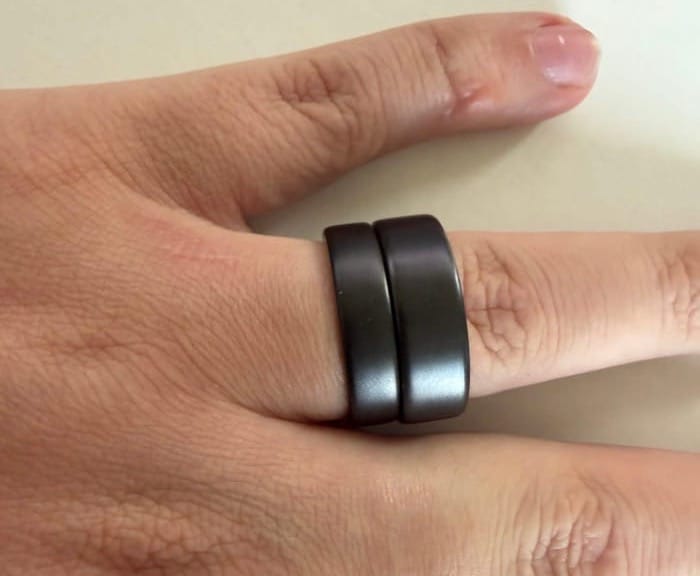
Oura calls the Ring 5 the world's smallest smart ring, and the spec sheet backs that up. It's 40% smaller than the Ring 4, measuring 2.28mm thick and 6.09mm wide, down from the previous generation's 2.88mm. Weight dropped to between 2 and 2.69 grams. Numbers like that read as marginal until you actually wear the thing, and then the difference stops being subtle.
Theme park trips are a real stress test for a ring. You're gripping restraint bars, clenching through drops, getting your hands wet on water rides, sweating in line for an hour, then doing it again. The Ring 4 would have made itself known on a trip like that. The Ring 5 didn't. Across five days of Disneyland and Legoland, comfort was never an issue, not once, despite the rides and the heat and the constant hand use that trip involves. That's the most demanding context I've put this ring through, and it passed without me thinking about it, which is exactly the point.
One thing worth flagging before you assume your old size carries over: Oura recommends re-sizing for the Ring 5 even if you already own a Ring 4, and the geometry change means that recommendation isn't just boilerplate. My size stayed the same between generations, but it's clearly not universal. Forums and Reddit threads are full of people who landed on the same size and others who had to size up or down. Order the sizing kit. Don't assume.
The Ring 5 also reintroduces low-profile sensor domes on the interior, which the gen 4 had eliminated in favor of a flat inner surface. They're less prominent than the Gen 3's bumps, and across five days of heavy use, I never noticed them.
Durability held up just as well. I'm wearing the Stealth black finish, which uses a Diamond-Like-Carbon coating that Oura markets as its hardest, most scratch-resistant option. Between the rides, a day at the beach with sand working its way into everything, and the general abuse of plane travel and a five day trip, I checked the ring afterward and found no scuffs, scratches, or visible wear. That's not a long-term verdict on the coating, but it's a clean first showing for a finish that's going to see plenty of wear if you wear it daily.
The water rides and beach day weren't a gamble, either. The Ring 5 is rated fully waterproof to 100 meters, an upgrade from the Ring 4's water resistance rating. That's the kind of spec that sounds like marketing language until you're the one not thinking twice before a log flume or a swim. I didn't have to think about it once.
Battery Life Held Up Without a Charger in Sight
This is where the Ring 5 actually surprised me. I charged to 100% before leaving, packed the ring and nothing else, and wore it continuously through the entire trip. We left on a Monday and got back the following Saturday. When I checked the battery on return, I still had about 40% left.
That's six days of continuous wear, including the kind of all-day activity tracking and movement a theme park trip generates, with charge to spare. Oura rates the Ring 5 at six to nine days, and this was real-world use at the demanding end of that range, not a controlled idle-on-a-desk test. I didn't bring the charger because I didn't need to, and that's a meaningfully different experience than the Ring 4, which I'd plan around more carefully.
The Software Is Still Catching Up to the Hardware
The hardware did its job disappearing. The software side is more mixed, and a few weeks in, a handful of things stand out, for different reasons.
Accuracy is the first thing worth tempering expectations on. Oura markets the Ring 5's redesigned sensors as its most accurate generation yet, but that hasn't matched my experience on every metric. I wear an Apple Watch Ultra on the same arm, and the Ring 5 consistently undercounts steps compared to it on identical days. That's not unique to this generation, and it tracks with what other people comparing the two devices have found: a finger-worn ring misses steps any time your hand isn't swinging freely, whether that's pushing a cart, carrying a bag, or gripping a steering wheel. The Ring 5's more powerful LEDs may well be more accurate for heart rate or sleep staging, where Oura has a stronger independent track record, but step counting is still a weak spot, and I wouldn't take Oura's "most accurate generation yet" framing at face value across the board.
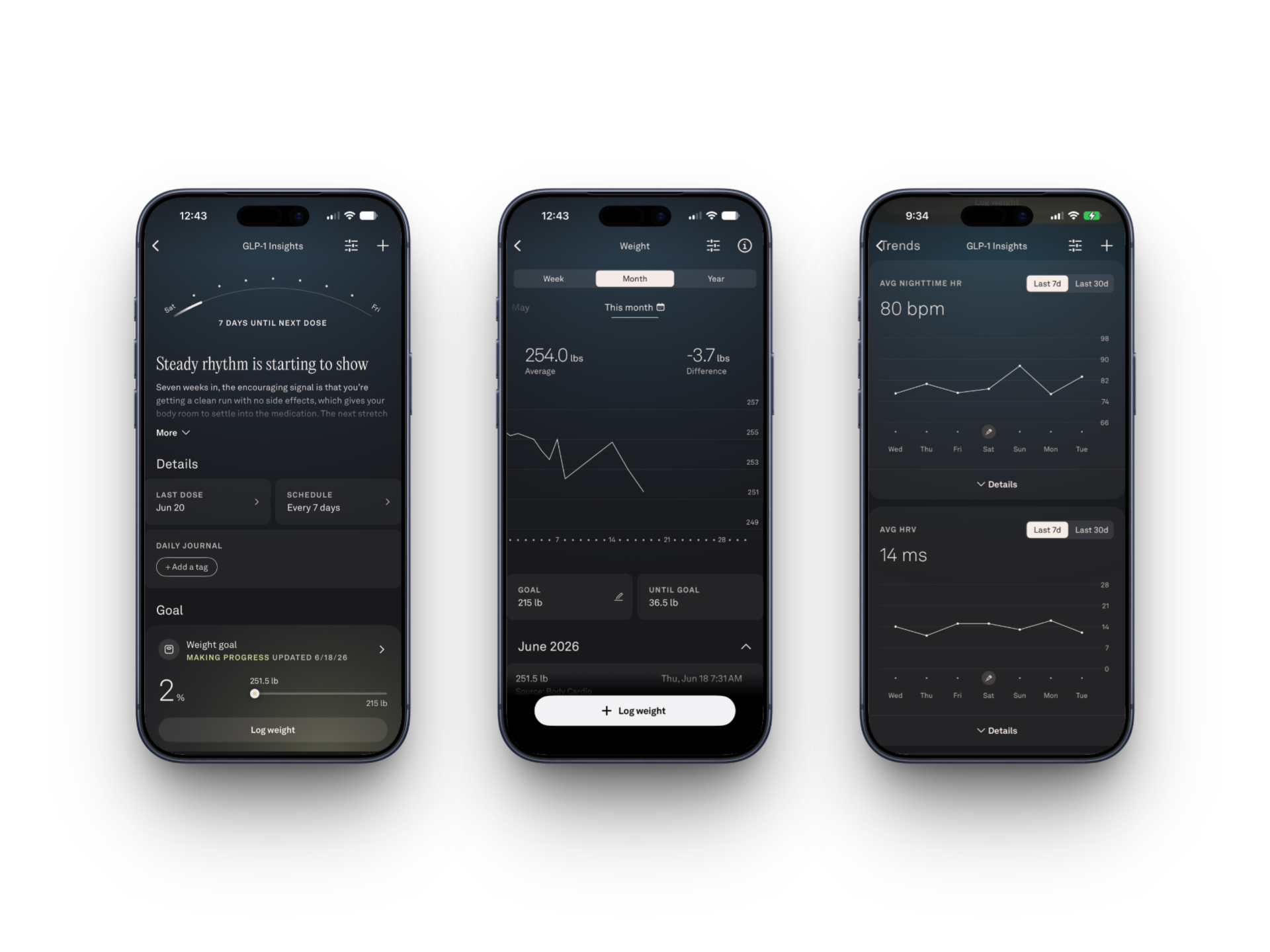
GLP-1 Insights is the one Oura is leaning on hardest in its marketing, framed as a unified, longitudinal view of medication, side effects, and biometrics. In practice, it's a lot thinner than that framing suggests. What you actually get is dose logging, side effect notes, and weight tracking sitting next to your existing Oura data. That's not nothing, but it's closer to a dose tracker with some context layered on than the comprehensive medication-and-biometric picture Oura describes. If you're already disciplined about logging doses elsewhere, this doesn't replace much. If you want the ring to meaningfully interpret how a dose is affecting your sleep or readiness in a way you couldn't already infer yourself, it's not there yet.
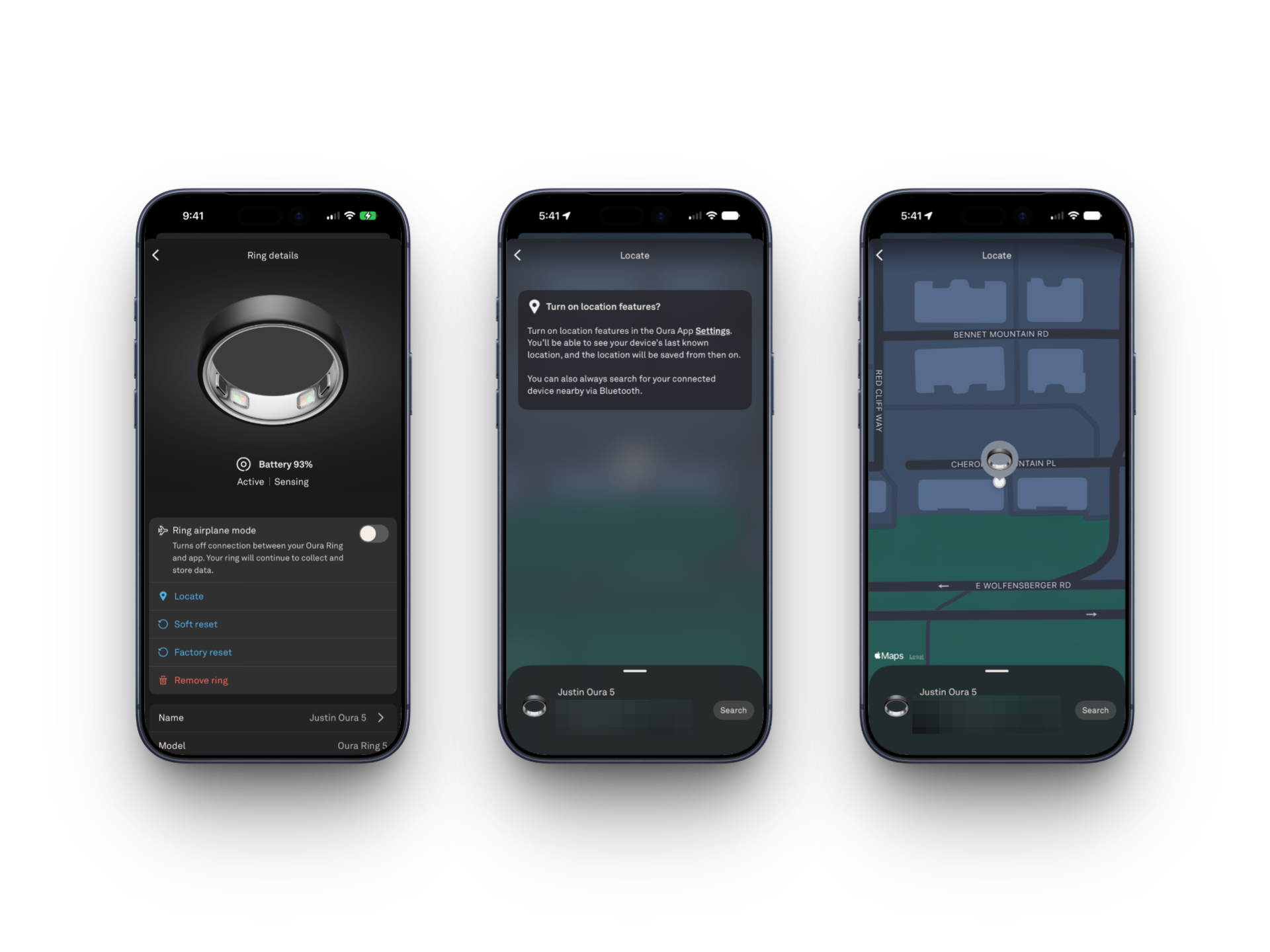
The new Locate feature is the opposite case: genuinely useful, with a catch that's worth flagging. Being able to pull up your ring's last known location if you've misplaced it is a real, practical feature, and on the one occasion I needed it, it worked exactly as expected. The catch is how it behaves once you've granted access. Rather than checking your location briefly and then stepping back, the app holds onto an active location request the entire time it's open. A feature you use rarely shouldn't need to keep pulling location continuously just because the app happens to be in the foreground. I'd rather see it request location only when you actually open the Locate feature, even if that means a slightly less fresh result in the rare moment you need it.
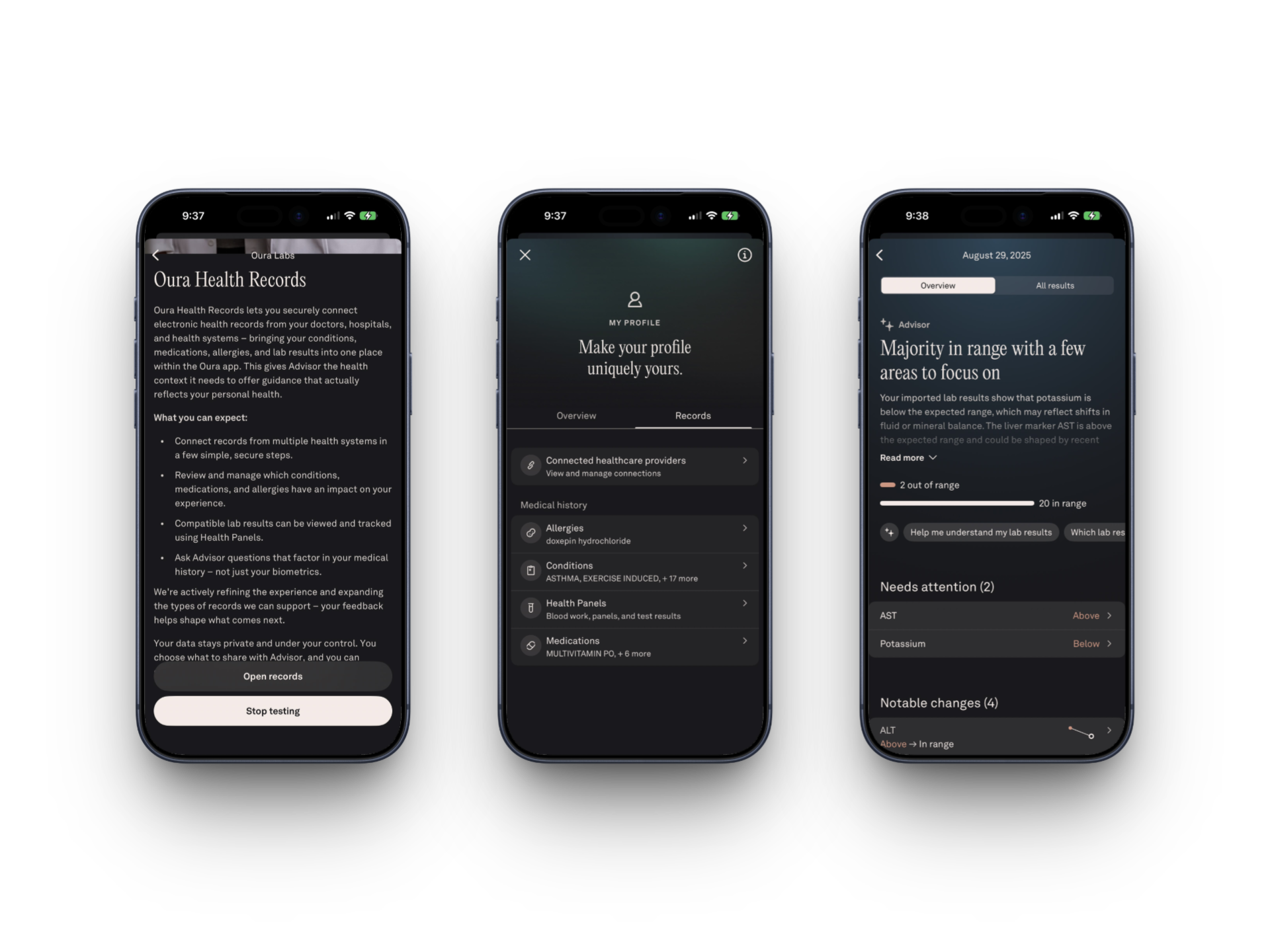
Lab Uploads has been the least reliable of the new features so far. Oura partners with a service called Flexpa to pull your records directly from healthcare providers, and the connection has been inconsistent. Whether it links to your provider correctly and whether it actually surfaces your most recent records both seem to vary. In my case, most of what came through was old data rather than anything current. And even when records do upload successfully, I haven't found anything in the app that actually does something with them yet. No insights, no context layered against my Oura data, nothing. Right now it's a one-way import with no payoff on the other end. Worth noting: when the import does work, it can pull in your medication list along with everything else. But that's where it stops. More on that below.
Health Radar, including Blood Pressure Signals and the rest of the clinical features Oura announced alongside this launch, is still in the early stages of its phased rollout. That's a fair reason to hold off judgment, but it also means a chunk of what Oura is positioning as the Ring 5's biggest differentiator simply isn't fully evaluable yet.
The Bigger Gap: There's No General Medication Tracking
Here's the thing that's stuck with me more than any single feature, working or broken. Oura built out an entire tracking experience for GLP-1s this launch, dosing, side effects, weight, all of it tied back to your biometric signals, and that's a real, deliberate product decision. But it only exists for GLP-1s. If you're managing anything else, you're on your own.
There's a near miss buried in here, too. When Lab Uploads actually works, the imported records can include your medication list. So in theory, Oura already knows what I'm taking. In practice, that knowledge doesn't do anything. The medications just sit there as imported data, the same as any other record field. There's no dosing log, no side-effect tracking, no correlation against sleep or heart rate, nothing that distinguishes a medication entry from a lab value pulled from the same import. Oura has the data. It just hasn't built anything on top of it.
I'm currently trialing multiple medications for a medical condition, and the thing I actually want is the thing Oura built for GLP-1 users specifically, just generalized to any drug. I want to log a medication and a dose, and see it sit next to my Oura data the same way GLP-1 Insights does. I don't have that, and having my medication list passively imported doesn't get me there either. One of the medications I'm on appears to be spiking my heart rate overnight, and I can see that in my sleep data after the fact, but there's no way inside Oura to actually tie the two together. I'm left eyeballing dates in two different places and doing the correlation myself.
That's a real gap, not a nitpick. Oura has the infrastructure already built. GLP-1 Insights proves the company can connect a medication schedule to biometric trends and surface it cleanly, and Health Records proves the company can already pull a medication list into the app. Neither piece is reaching the other. There's no technical reason that has to stay locked to one drug class. For anyone managing a chronic condition, a new prescription, or just trying to figure out if something they're taking is affecting their sleep or heart rate, this is exactly the kind of insight Oura is otherwise built to provide, and currently doesn't.
Where This Leaves Things
The hardware argument for the Ring 5 is done. It's smaller, it's lighter, it survived the most physically demanding stretch I could throw at it without a single comfort complaint, and the battery comfortably outlasted a week-long trip with no charger along for backup. If you found the Ring 4 anywhere from mildly annoying to genuinely uncomfortable, this generation solves that problem outright. Just don't assume your old size carries over, and don't take Oura's accuracy marketing as gospel across every metric. Mine still undercounts steps next to a wrist-worn tracker on the same arm.
The software argument is less settled. GLP-1 Insights oversells what it currently delivers, Locate holds location longer than it needs to, Lab Uploads is a coin flip that doesn't do anything useful yet even when it works, and the bigger health features Oura is betting the platform's future on are still rolling out in pieces. The bigger miss, though, is what Oura hasn't built at all. The infrastructure for medication-aware tracking clearly exists, since GLP-1 Insights proves it, but it's locked to one drug class when plenty of people managing other conditions would benefit from the exact same thing. None of that undoes the hardware win, but it does mean the full picture of what you're paying $399 to $499 plus $5.99 a month for isn't finished yet.
I'll keep updating this as Health Radar and the rest of the rollout reach my account. For now: buy it for the ring. The software is still a work in progress.
Pros
- 40% size and weight reduction makes all-day wear genuinely unnoticeable, even through heavy physical activity
- Reads as an actual ring rather than a gadget, even up close
- Battery comfortably lasted six days of continuous use on a single charge with margin to spare
- Sensor redesign reintroduces low-profile domes without reintroducing the discomfort of earlier generations
- Stealth finish's Diamond-Like-Carbon coating showed zero scuffs or scratches after rides, sand, and travel
- Fully waterproof to 100m, an upgrade from the Ring 4's water resistance rating, so beach days and water rides aren't a gamble
Cons
- Step counting still undercounts noticeably compared to a wrist-worn tracker on the same arm, despite Oura's accuracy claims for this generation
- GLP-1 Insights markets itself as a comprehensive medication view but functions closer to a basic dose tracker
- Locate holds an active location request the entire time the app is open, rather than checking briefly and releasing it
- Lab Uploads via Flexpa has inconsistently connected to providers and mostly surfaced old records rather than current ones, with no in-app insights once records do upload
- Several of the launch's headline software features are still in staged rollout and not yet fully testable
- No general medication tracking exists outside of GLP-1 Insights; Health Records can import a medication list but does nothing with it once it's there
- Sizing isn't guaranteed to carry over from the Ring 4, so don't skip the new sizing kit