

Tim Cook has delivered a lot of WWDC keynotes. The one on June 8 will be his last.
Apple confirmed in early 2026 that Cook will hand the CEO role to John Ternus on September 1. Ternus, the current head of hardware engineering and the executive responsible for Apple Silicon, will inherit the company just in time to ship whatever Cook announces next week. That timing is not accidental. WWDC is where Apple previews the software. The iPhone launch in September is where Apple ships it. Cook presents the vision on June 8. Ternus delivers it in the fall. The handoff is built into the calendar.
That context matters for understanding what is actually at stake next Monday. This is not a normal WWDC. It is the closing argument of the Cook era's AI chapter, delivered by a CEO who has spent two years explaining why Siri is about to get better. The question on June 8 is not what Apple will announce. Most of that is already known. The question is whether the announcement will be credible.
What Apple Is Actually Bringing
The centerpiece of WWDC 2026 is a rebuilt Siri. Not an updated Siri. A replaced one.
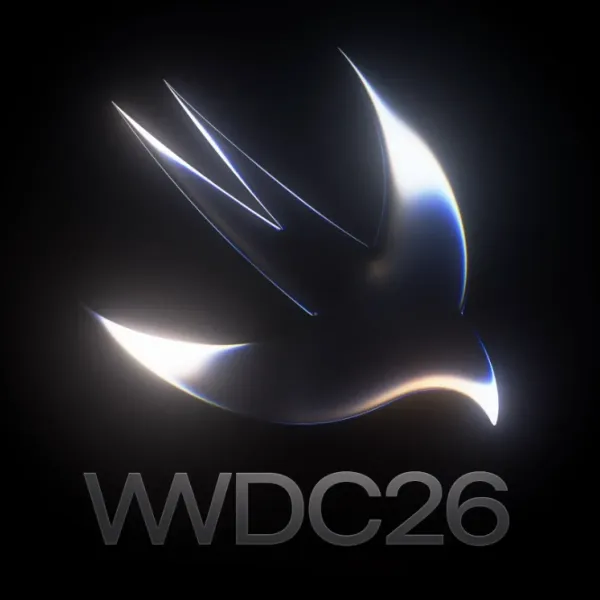
Bloomberg's Mark Gurman has reported extensively that iOS 27 introduces a dedicated Siri app with a conversational interface, persistent conversation history, and Dynamic Island integration. When you trigger Siri, the Dynamic Island will display a "Search or Ask" prompt with a glowing cursor that mirrors the WWDC 2026 branding. The interface is dark-themed throughout, with no confirmed light mode option, and the redesign extends across the app in ways that make it look, for the first time, like something built for the current decade.
The engine underneath the new interface is more significant than the interface itself. On January 12, 2026, Apple and Google jointly announced that the next generation of Apple Foundation Models will be built on a custom 1.2-trillion-parameter Google Gemini model. Apple is reportedly paying approximately $1 billion per year for access. That same Siri release opens the platform to third-party AI through a new Extensions framework, allowing Claude, ChatGPT, and other models to integrate more deeply than the shallow SiriKit hooks that have frustrated developers for years. The full Siri 2.0 reveal is being held for June 8, with the rebuilt assistant targeting a fall release inside iOS 27.
iOS 27 as a whole is what Gurman has described internally as Apple's "Snow Leopard" release: a cycle built around stability, bug elimination, and quality refinement rather than feature stacking. That framing is a direct acknowledgment that iOS 26 shipped with enough problems, overheating, battery drain, UI glitches and keyboard failures that Apple needed a full major version cycle to address them. The Siri redesign is the exception to the Snow Leopard rule. Everything else in iOS 27 is quieter: a redesigned AirPods settings section, improved Genmoji and Image Playground quality, better autocorrect, Wallet's new "Create a Pass" feature for digitizing physical tickets, Visual Intelligence reading nutrition labels directly into the Health app.
macOS 27 follows the same refinement logic with one specific fix that Mac users have been waiting for. The Liquid Glass design language that debuted with macOS Tahoe looked right in Apple's promotional materials and broke down on every LCD Mac in production. The problem is structural: Liquid Glass was designed with OLED displays in mind, and the Mac lineup runs almost entirely on LCD panels that render translucency and glass effects poorly. Control Center and Finder sidebars became harder to read. Apple is preparing what Gurman calls a "slight redesign" that corrects the shadows and transparency issues. Liquid Glass is not going away. macOS 27 is just making it work on the hardware Apple actually sells.
The Credibility Problem
Apple has now announced a transformative Siri at three consecutive WWDCs.
The 2024 keynote introduced Apple Intelligence and the promise of a deeply personal, context-aware assistant. The 2025 keynote walked back the timeline and reframed the missing features as "coming later." iOS 26 shipped with a version of Siri so limited that the external partner Apple brought in to fill the gap, OpenAI, is now consulting lawyers over a potential breach-of-contract claim. Per Bloomberg, OpenAI entered its integration deal expecting billions in subscription revenue generated by ChatGPT access through Siri. The revenue has not materialized. The integration was so narrow that users had to explicitly say "ChatGPT" to invoke it, the in-Siri responses were substantially worse than the standalone app, and the Settings subscription path was buried well enough that most users did not know it existed.
That is the backdrop against which Apple will stand up on June 8 and tell developers and users that Siri is, this time, genuinely different.
The Gemini foundation helps make the case. A 1.2-trillion-parameter model licensed for $1 billion per year is a serious infrastructure commitment, not a press release. Apple does not spend at that scale on things it intends to half-ship. The Extensions framework, if it opens the platform with real API depth rather than another layer of shallow hooks, gives developers reason to believe the ecosystem is finally worth building for. And the Snow Leopard framing, setting expectations for refinement rather than revolution across the rest of the OS, is honest in a way Apple's AI announcements have not always been.
But the Gemini deal also carries its own irony. Apple built its AI strategy around privacy, on-device processing, and the argument that your data never needs to leave your device. That story gets harder to tell when the core of your new Siri is a model built by Google, the company whose entire business model depends on knowing everything about you. Apple will have answers to that. Private Cloud Compute, routing transparency, on-device versus server-side processing boundaries. The answers may well be good ones. They will also need to be specific, because "Apple cares about your privacy" is no longer sufficient as a response to a billion-dollar Gemini licensing deal.
The Extensions Question
The most important announcement at WWDC 2026 will probably receive the least keynote time.
The Siri Extensions framework, which allows third-party apps to integrate directly with Siri's conversational layer, is the thing that determines whether any of this matters to the people who build on Apple's platform. SiriKit, the predecessor, was so limited in what it allowed developers to do that most serious apps either ignored it or built workarounds. If Extensions delivers genuine API depth, Apple Watch apps, health platforms, productivity tools, and AI services can become part of the Siri experience in a way that changes how people actually use the assistant day to day.
If Extensions is another set of shallow hooks dressed up as openness, the developer response will be the same quiet abandonment that followed every Siri API expansion since 2016.
The distinction will not be clear from the keynote. It will become clear in the weeks after, as developers examine the documentation and decide whether to build.
What the Developer Betas Will Show
WWDC keynotes are optimized for announcement, not demonstration. The first developer beta of iOS 27 will be available the afternoon of June 8, and that is where the real assessment begins.
Siri's conversational quality, the depth of the Extensions API, whether the new dark interface actually renders well across device sizes, how the Liquid Glass fixes behave on different Mac hardware, whether the Snow Leopard stability improvements are real or aspirational, none of those questions get answered on the keynote stage. They get answered over the following weeks as developers and beta testers put the software through conditions no demo environment reproduces.
Cook's final WWDC as CEO deserves credit for the things Apple is clearly getting right: a serious AI infrastructure investment, an honest framing of the OS cycle, and a Siri redesign that at least looks like it was designed by people who had used a modern AI assistant. Whether it works is a different question, and the answer arrives on September 1, the same day Ternus takes the job.





Comments