



When Siri arrived on the iPhone 4S in October 2011, it felt like the future had landed early. A conversational assistant, living on a pocket computer, that could understand natural language and take action. The crowds who watched that launch event were excited. Apple had just handed the mass market something that science fiction had been promising for decades.
Fifteen years later, Siri is allegedly about to get the upgrade it was supposed to be.
On Monday, June 8, Apple opens WWDC 2026 with a keynote carrying the tagline “All Systems Glow.” That phrasing isn’t accidental. According to Bloomberg’s Mark Gurman, the glowing aesthetic is a direct signal that Siri is the centerpiece of the show, redesigned as a full chatbot with a standalone app, Dynamic Island integration, and a dark, luminous visual identity that matches the event’s own branding. Apple rarely telegraphs its hand this openly. The fact that it did suggests the company knows exactly what’s at stake.
A Two-Year Detour
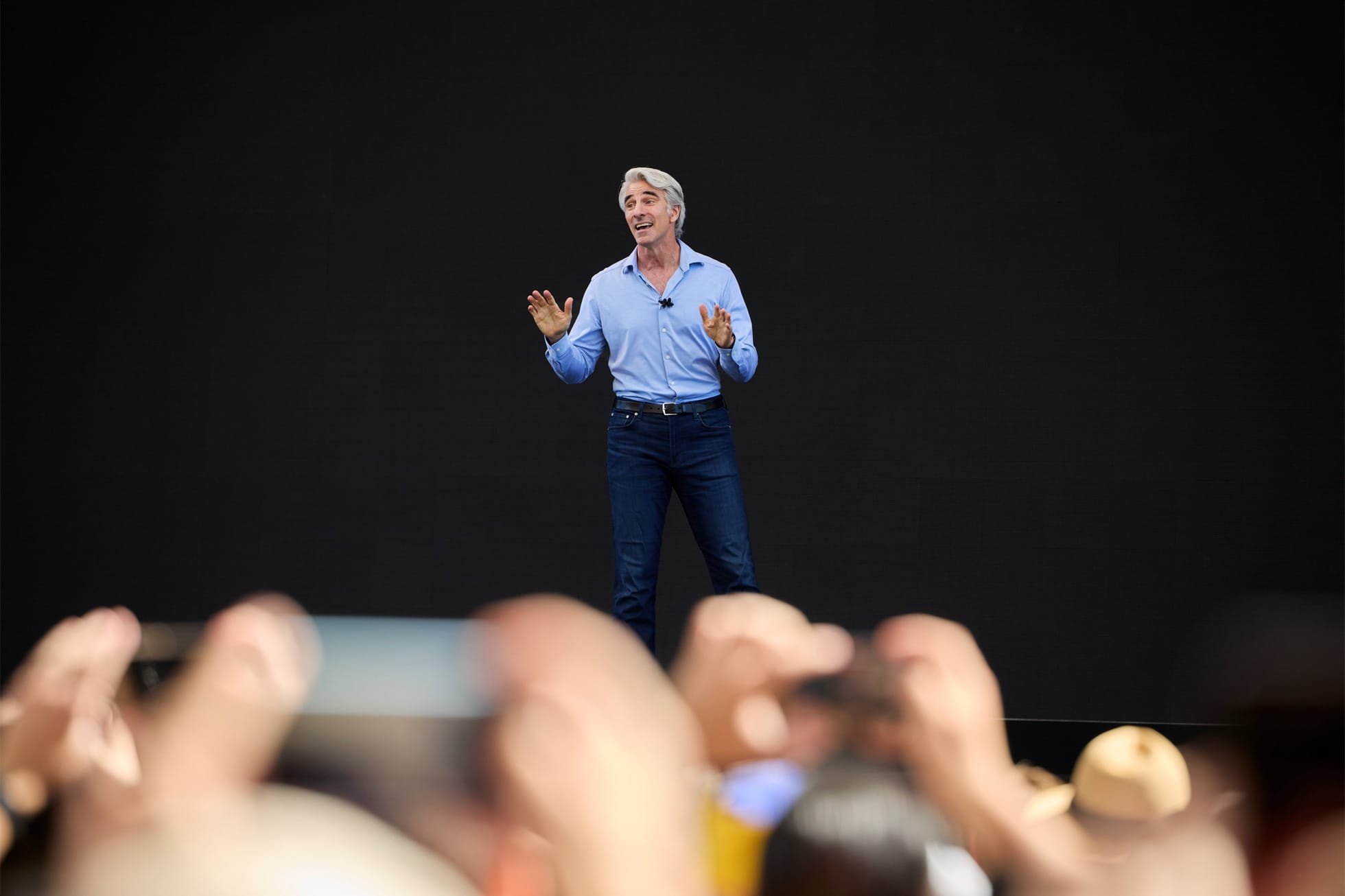
The honest answer requires going back to WWDC 2024. That was when Apple unveiled Apple Intelligence (the umbrella brand for a reimagined AI strategy) with Siri at its core that could understand personal context, take actions across apps, and see what was on your screen. It was a genuinely compelling vision. The demo showed Siri reading your Mail to figure out when a family member’s flight landed, cross-referencing Messages, then surfacing the relevant information without the user having to string together three separate apps. It looked like the assistant that Apple had always implied Siri would eventually become.
Then it didn’t ship.
In March 2025, Apple formally confirmed the delay, pushing the contextual Siri features such as Personal Context, On-Screen Awareness, and In-App Actions to an unspecified future date. The company also pulled the ads promoting those features from circulation. Robby Walker, Apple’s senior director overseeing Siri, reportedly told staff at a Siri division all-hands that the delays were “ugly” and “embarrassing” and that promoting the features publicly before they were ready had made things worse. The spring 2026 target floated by Gurman’s sources later slipped as well. As of today, it will be the third time Apple has failed to deliver on a promised Siri timeline since that 2024 WWDC keynote.
Apple took a huge reputational hit. In May 2026, Apple agreed to a $250 million class-action settlement, one of the largest consumer false-advertising settlements in tech history, resolving claims that it had marketed Siri capabilities that simply didn’t exist at the time of purchase. Customers who bought an iPhone 15 Pro or any iPhone 16 model between June 2024 and March 2025 may be eligible for payouts ranging from $25 to $95 per device. Apple denied wrongdoing, attributing the settlement to a desire to “stay focused on doing what we do best,” but the filing speaks for itself.
That’s the backdrop for Monday’s keynote. No pressure.
What Apple Is Actually Showing Us
Set aside the skepticism for a moment and look at what’s reportedly coming, because the scope here is genuinely significant.
Mark Gurman’s reporting describes a standalone Siri app modeled on iMessage; a dedicated interface for back-and-forth conversations, with support for file uploads, conversation history synced across devices via iCloud, and automatic chat deletion on schedules of 30 days, one year, or never. The privacy controls mirror what Apple already offers in Messages. For a company that has spent years positioning privacy as a product differentiator rather than a footnote, building auto-delete directly into the assistant’s core interaction model is a pointed design choice.
The interaction model itself is being rebuilt. Swiping down from the top center of the display will open a system-wide “Search or Ask” bar, replacing the old bottom-of-screen invocation. Activating Siri by voice or button press will surface a pill-shaped animation inside the Dynamic Island, with results appearing in a translucent card. Pulling down on that card enters the full conversation view. It’s a structural rethink of how Siri fits into the iPhone’s spatial logic. From a UX standpoint, using the Dynamic Island as the ambient container for an ongoing AI interaction is one of the more elegant ideas Apple has had in years.
Under the hood, the Gemini partnership announced in January 2026 provides the foundation. Apple licensed Google’s models after its own AI efforts proved insufficient for the conversational quality it needed. Google Cloud’s Thomas Kurian confirmed the arrangement publicly at Google Cloud Next 2026 in April, calling it “a monumental partnership” and confirming that Gemini technology will power the next generation of Apple Foundation Models and a more personalized Siri. The deal is reportedly valued at approximately $1 billion per year.
And beyond Gemini, iOS 27 is expected to introduce “Extensions” , which are a framework letting users route specific queries to third-party chatbots including ChatGPT, Claude, and Gemini directly within Siri’s interface. Where Apple’s previous ChatGPT integration required explicitly handing off a query, Extensions would allow users to set preferences for which model handles what. That’s a significant architectural shift: Siri as an AI operating system rather than a single model.
The Privacy Problem Nobody’s Fully Answered Yet
Apple has not clearly explained what happens to conversations processed through Gemini’s models, or whether Google’s cloud infrastructure handles any part of that work. The company has stated that the new Siri will use Private Cloud Compute, (its existing framework for processing AI queries in isolated, stateless compute nodes) but has reportedly been, in Gizmodo’s characterization, “sheepish” about specifying whether the same chips, data centers, and security architecture used for current Siri features apply here.
This matters.
Apple built years of brand equity on the premise that what happens on your device stays on your device. Google is a company whose core business is built on data. Partnering with it creates a trust tension that a keynote slide cannot fully resolve. Apple’s answer seems to be that Gemini is the engine and Siri remains the face, with Private Cloud Compute serving as the firewall between the two. Bloomberg reports Apple plans to make privacy the centerpiece of its June 8 presentation, presumably to address exactly this concern.
That presentation needs to be specific. Vague commitments about privacy won’t land the same way they did five years ago. Users have seen features delayed, ads pulled, and a $250 million lawsuit settled. What Monday’s keynote needs to deliver on this front is architecture and diagrams, not charm and taglines.
The “Beta” Label Problem
One detail buried in Gurman’s pre-WWDC reporting deserves more attention than it’s gotten. Internal test versions of iOS 27 reportedly label the new Siri as “beta” and include a toggle allowing users to revert to the old assistant. That label is expected to carry through to the public developer beta and potentially to the fall release alongside iOS 27.
That’s a complicated signal. On one hand, shipping with a beta label is Apple being transparent about a product it knows isn’t finished, and after the 2024 debacle, transparency has obvious value. Siri itself launched under a beta label in 2011, a designation Apple quietly removed in 2013. Precedent exists.
On the other hand, this is a feature that was announced at a keynote two years ago, marketed in national advertising campaigns, settled in federal court, and now arriving with a “preview” badge. At some point, communicating ongoing development starts to feel less like honest product management and more like indefinitely deferred accountability. Apple needs to own that tension on stage.
Optomisticaly, the beta label creates a permission structure. It tells developers and users that the product will evolve, that feedback is being collected, and that the fallback exists. Reports suggest Apple may even gate the newest Siri capabilities behind a waitlist at launch to manage server load and collect structured feedback before a full public rollout. That’s cautious, but it’s also responsible.
Perhaps Liquid Glass should have been labelled as Beta, too.
What “Good” Actually Looks Like Here
What does a successful WWDC 2026 Siri announcement look like, from a user experience and design standpoint?
It looks like coherence. The Dynamic Island integration, the standalone app, the system-wide gesture, and the conversation history need to feel like a single, unified product and not three separate features that got shipped in the same release. The risk with a rebuild this large is that the seams show. The best version of this announcement is one where someone picks up an iPhone on Monday afternoon, installs the developer beta, and finds that Siri feels immediately, intuitively different.
It looks like reliability over breadth. The failure mode for AI assistants is promising everything and delivering something inconsistent. Apple doesn’t need to announce forty new Siri capabilities on Monday. It needs to announce the ones it can actually execute, and then execute them. The personalized Siri demo from 2024 was compelling precisely because it showed a specific, practical task done well. That’s the model. Show less, and nail it.
And it looks like privacy mechanics, not privacy marketing. Explaining that Siri conversations auto-delete after 30 days is good. Explaining exactly what Gemini processes, where that processing happens, and what data never leaves Apple’s infrastructure is better. The audience Apple has lost over the past two years still cares about this company and its products. They’ve earned a clear answer.
The Stakes
WWDC 2026 doesn’t arrive in a vacuum. TechRadar’s Lance Ulanoff has described this keynote as Apple’s last realistic opportunity to close the gap with competitors. ChatGPT has had two more years of development since Apple announced its plans. Gemini has shipped on a billion Android devices. The market hasn’t been waiting.
The redesign is reported to be the most significant change to Siri since its introduction in 2011. That framing is either deeply exciting or an indictment of the past fifteen years, depending on your mood. Both have merit.
What’s clear is that Apple is betting the credibility of its entire AI strategy on what gets announced Monday morning. The settlement is settled. The delays are documented. The Gemini partnership is confirmed. All that remains is the product itself and the live-streamed, globally watched, developer-beta-downloadable moment of truth that determines whether any of this was worth the wait.
Siri launched as a promise in 2011. On Monday, it gets one more chance to keep it.











Comments