


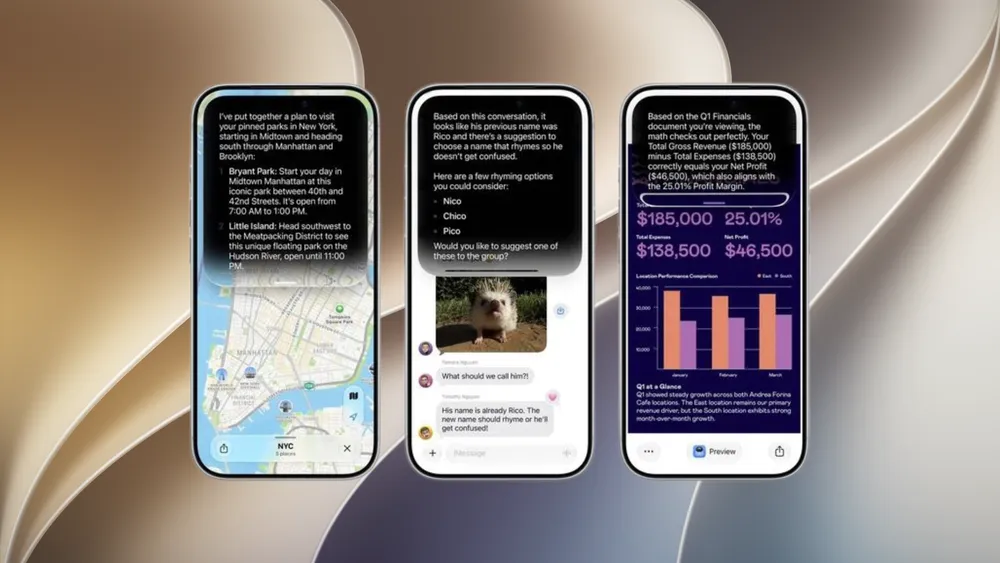


For more than a decade, one question trailed Apple: would it build its own search engine and take on Google? The speculation traces to 2014, when Apple's web crawler Applebot first surfaced, and it went mainstream in 2020, when the Financial Times reported Apple was ramping up an alternative to Google search. As recently as last September, Bloomberg reported Apple was building an AI web-search tool for Siri, codenamed World Knowledge Answers, that executives described internally as an answer engine.
On Monday, Apple answered the question, and the answer was no. It did not build a search engine. It built that answer engine and put it inside Siri. The shipped feature wears its own description: the new Siri draws on "broad world knowledge" to answer questions from the web. The project Bloomberg flagged nine months ago arrived under all but its codename.
Brad covered whether Apple would get Siri right (WWDC 2026 Is Apple's Last Chance to Get AI Right). This is the other question, the one I work on. The new Siri does plenty: it reads your messages, drafts your email, takes actions across your apps. What this piece is about is narrower, the web answers, a rebuilt Siri reading the open web and replying directly, and Apple is making it the default assistant across its entire base of devices.
Here is the mistake about to be made everywhere. People see the Siri name, remember the assistant that set timers and misheard them, and scroll past. That is the wrong read. What Apple unveiled is a new answer surface bound for the largest install base in consumer tech, and it will decide what those people hear about your brand. The feature desk, Brad included, will cover what Apple showed and whether it works. This is the part for marketers: a new surface is coming, and almost no one has clocked it, because it is wearing a name they wrote off years ago.
Siri is now an answer engine, and it ships on the largest install base in consumer tech
Apple confirmed on stage that Siri AI can draw on current world knowledge, pull information from the web, and return answers as cards. The sentence sounds small. The distribution behind it is not.
Apple reported more than 2.5 billion active devices in its most recent quarter (Apple, fiscal Q1 2026, reported January 2026). Counterpoint Research puts the active iPhone base alone above one billion, nearly one in four smartphones in use worldwide (Counterpoint, 2025 data). Siri is the default assistant across all of it, and Apple is wiring it to answer from the web.
Compare that to where standalone AI sits today. ChatGPT reported more than 900 million weekly active users (OpenAI, February 2026). Google's Gemini app reported more than 900 million monthly active users (Google, May 2026). Large numbers, and still a fraction of the people holding an iPhone who have never opened either app on purpose. Pew Research found that a majority of US adults, around 73 percent, are open to letting AI assist with everyday tasks, even as far fewer use it regularly (Pew Research Center, fielded June 2025, 5,023 US adults). The willingness is broad. The habit is not yet universal. A default-placed answer engine is the thing that converts willingness into habit, because the user never has to choose it. It ships switched on.
So here is the practical event. A large share of the questions that used to become a Google search, and a click to somebody's website, will resolve inside a Siri card without the browser ever opening.
This is a Gemini story wearing an Apple interface
Apple was direct about one thing. The new Apple Foundation Models were built through what it called a deep collaboration with Google, using the technology behind Gemini, running on device and on Apple's Private Cloud Compute (Apple keynote, June 8 2026). Siri is the face. Gemini is a large part of the engine.
That carries a consequence most of the coverage will skip. If Siri's web answers are produced by Gemini-derived models, then what surfaces in a Siri answer is likely governed by the same retrieval and ranking behavior that governs Google's own AI answers, rather than by a new Apple search index built from scratch. That is an inference. Apple may well layer its own orchestration on top. But the direction is clear enough to act on. If you have been working to show up in Google's AI answers and in Gemini, you have already been working, in part, on Siri. Apple did not hand the market a brand new surface to learn. It wired in the one that already exists.
There is an irony worth sitting with, and it connects to the privacy questions Brad raised. Apple spent years telling people that what happens on your phone stays on your phone, and it has now built its most consumer-facing answer layer on top of Google's models. Apple also kept Gemini's name out of the written announcement, leading on Apple Foundation Models and its privacy promise, while the Google collaboration stayed on the keynote stage. Whatever you make of that trade, it tells you where the retrieval intelligence lives.
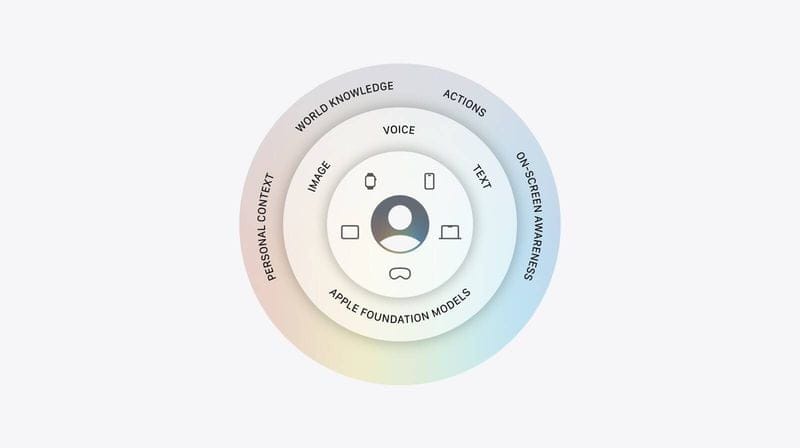
What Siri now decides about your brand
Strip out the platform talk and here is the practical picture. When someone asks Siri about your category, Siri produces the answer, and that answer is what they walk away believing. It runs through three channels, and you have leverage on each.
The web answers are your addressable surface. When Siri pulls from the web to answer, your content can be the thing it repeats, the source it builds the answer on. The work that earns that is the work that earns citations anywhere: clear, self-contained answers to specific questions, written so a machine can lift one passage and have it stand on its own. Pages that bury the answer under a wall of preamble do not get pulled. Pages that state it plainly do. Siri shows its sources on the card and links out to them, so being the source it draws from earns both the mention and the visit. Being that source is the prerequisite for either.
The local and action path is its own channel. Apple demoed Siri setting a destination in Maps and handling commercial tasks. When Siri brokers a local choice, the pick comes from Apple's own data, not the open web, so your presence in Apple Maps and Apple Business Connect becomes a Siri-visibility lever with nothing to do with your website. For a restaurant, a clinic, a tour operator, that channel decides whether Siri ever says your name.
Underneath both is what the model already believes about you. Every AI assistant answers partly from what it absorbed in training and partly from what it looks up in the moment. If the trained-in picture of your brand is wrong, outdated, or missing, Siri starts from that error before it retrieves a single page, and a fresh page may not override it. That is the part most marketers never check, and it is the part that decides what Siri says about you when no one is optimizing the answer. Fixing what it looks up is one job. Fixing what it already thinks is the slower, larger one. Both now run at Apple's scale.
The number that tells you what the default is worth
If you want a sense of the stakes, look at what the default position costs when someone has to pay for it.
In the US antitrust case against Google, unsealed records and testimony showed Google paid Apple roughly 20 billion dollars in 2022 to be the default search engine in Safari, along with a 36 percent share of the search ad revenue that placement generated (US v. Google, unsealed court records). The Department of Justice's case describes Google holding around 90 percent of US search through agreements that made it the preset default across billions of devices (DOJ, US v. Google).
That is the market price of a default answer slot on Apple's hardware. Twenty billion dollars a year, because the default is where the users are and most of them never change it. Apple just built its own answer engine into that same position, on that same hardware, and paid no one for the placement. Whoever owns the answer on an iPhone owns the most valuable default in consumer search. As of Monday, that is Apple, with Google's models doing the reading.
What the feature coverage will miss
The keynote answered Brad's question. Apple showed up with a real product after two rough years, and the reviews will litigate how good it is. That is the coverage you will see everywhere this week.
Here is the part that coverage skips. A default answer engine is headed for the largest install base in consumer tech, it is built on the same Gemini technology behind Google's AI answers, and it will mediate what billions of people are told about your category before a browser ever opens. The name is doing the work of hiding the thing.
There was one feature detail worth watching, and the developer beta answers it. When Siri answers from the web, its cards show their sources and link out to them. That makes the open web a new place to be found and to earn a visit, reaching the public this summer and the full release this fall with iOS 27. The catch is smaller, not gone. Most of what a model pulls never makes the card, and a link on the card is not always a tap, so the work is to be the source Siri cites, not just the content it reads. Either way the answer gets built, and either way it is built on you.
Written from Monday's announcement and the developer beta available today, which shows Siri's web-answer cards citing and linking their sources. I will update it as the public beta and release show how that holds at scale.







Comments