



Two and a half years ago, Apple shut down its car project. A decade of work, billions of dollars, and the company walked away without shipping so much as a hubcap. The conventional read at the time was that Apple had lost the automotive war before firing a shot, ceding the dashboard to Google's Android Automotive while automakers like GM actively ripped CarPlay out of their EVs.
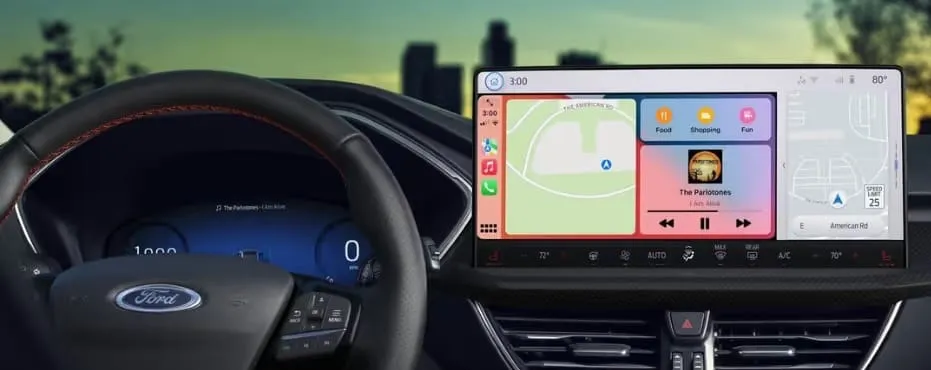
On July 23, Apple announced something that reframes that entire story. Apple Maps will be embedded directly into Ford's upcoming Universal Electric Vehicle Platform, starting in 2027, through a new developer kit called MapKit for Automotive. Not projected from an iPhone. Not running through CarPlay. Built into the vehicle itself, styled to match Ford's software, working for every driver whether they own an Apple device or not.
Read quickly, this is a navigation partnership. Read carefully, it's Apple finally answering the question that killed the car project and haunted CarPlay ever since: how does Apple get inside the vehicle when automakers have decided the vehicle's software is theirs? The answer, it turns out, was never a car. It was infrastructure.
What was actually announced
The mechanics are straightforward. Ford's UEV Platform, the architecture underneath its promised $30,000 midsize electric pickup and the affordable EVs that follow, will use Apple Maps as its native navigation system. Drivers get turn-by-turn directions with natural language guidance, real-time traffic and incident data, search with detailed place cards, and EV-specific routing that handles battery preconditioning before charging stops.
Two details in the press release deserve more attention than they'll get. First, Ford's Latitude AI team will use road-level data from Apple Maps to develop the next generation of BlueCruise, Ford's hands-free highway driving system, targeting a full on-ramp-to-off-ramp experience. Apple isn't just drawing the map on the screen. It's supplying the road model underneath Ford's autonomy ambitions.
Second, the language around exclusivity is doing a lot of quiet work. Jim Farley says Ford is honored to be "among the first" to embed Apple Maps directly into a vehicle. Apple describes MapKit for Automotive as an SDK that "allows automakers," plural, to embed and customize Maps. This is a product launch wearing a partnership announcement as a costume. Ford is the first customer, not the whole story.
CarPlay, for what it's worth, stays available on Ford vehicles. That detail matters more than it appears, and we'll come back to it.
The GM problem, solved differently
To understand why this matters, go back to 2023, when GM announced it was dropping CarPlay from its EVs. The reasoning was never really about user experience, whatever the press releases claimed. It was about control. The dashboard is becoming the most valuable screen an automaker owns, the gateway to subscription revenue, services, and the data that feeds driver assistance systems. Handing that screen to a phone-mirroring protocol meant handing Apple the customer relationship.
Apple's first response to that anxiety was CarPlay Ultra, the deeper integration that takes over every screen in the vehicle, including the instrument cluster. It shipped in 2025 with Aston Martin and has struggled to attract mainstream automakers since, for the obvious reason: it asks carmakers to surrender more of the vehicle to Apple, which is precisely the thing they were pushing back against. CarPlay Ultra answered automaker resistance by demanding a bigger footprint. Predictably, most declined.
MapKit for Automotive inverts the pitch. Instead of Apple's interface swallowing the car, Apple's data layer disappears into it. The automaker keeps its own software identity, its own design language, its own customer relationship. Ford's navigation will look like Ford. What Ford gets underneath is two decades and billions of dollars of mapping investment it no longer has to replicate or license from Google, whose Android Automotive package tends to arrive as an all-or-nothing operating system decision.
That's the strategic elegance here. Google's automotive play asks carmakers to adopt Google's stack. Apple's new play asks them to adopt a component. Components are an easier sale to companies that just spent five years insisting they're software companies now.
Maps without an iPhone attached
There's a milestone buried in this announcement that Apple's press release doesn't dwell on: for the first time at meaningful scale, Apple Maps will serve people who own no Apple hardware at all. A Ford driver with an Android phone in their pocket will navigate with Apple Maps every day, probably without thinking about it.
Apple has spent years quietly turning Maps from a punchline into a legitimate platform. The rebuilt map data, the Look Around imagery, the business place cards, and more recently the expansion of Maps into a surface for local business advertising. As covered in the Apple Business platform analysis, Apple has been assembling the pieces to compete with Google's local search and advertising business, and Maps is the surface where that competition happens.
Now extend that logic to the dashboard. Every place card a Ford driver searches, every restaurant, charging stop, and store surfaced through in-vehicle search, is an Apple Maps result rendered on a screen Apple didn't have access to last year. Apple says it does not collect location details or map activity in a way that ties back to individual users, and that privacy posture is genuinely differentiating in an industry that treats vehicle telemetry as a revenue stream. But privacy about individuals is not the same as absence of strategic value. The value is the surface itself: Apple Maps becomes the discovery layer for local businesses inside vehicles sold at Ford's volume, and Apple controls what that layer can do next.
This is the services strategy on wheels. Apple doesn't need to sell the car, the dashboard, or even the operating system. It needs its services woven into the places people actually spend time, and Americans spend about an hour a day in their cars.
The autonomy angle nobody is pricing in
The Latitude AI detail is the part of this announcement that will look most significant in five years. Building a hands-free driving system requires an obsessively accurate, constantly refreshed model of the road: lane geometry, speed limits, construction, exit configurations. That data is brutally expensive to create and maintain, which is why serious autonomy efforts either build their own mapping operations or buy access to someone else's.
Apple built one. It was arguably the most valuable asset to come out of the car project, the fleet of sensor-laden vans that have been photographing and lidar-scanning roads since 2015. When Project Titan died in early 2024, that mapping operation didn't. It kept driving.
Now Apple is monetizing it as a supplier to other companies' autonomy programs, starting with BlueCruise. That's a fundamentally better business than building a car ever was. Apple absorbs none of the liability, none of the manufacturing risk, and none of the regulatory exposure of shipping an autonomous vehicle, while making itself load-bearing infrastructure for the companies that do. The car project's ghost just got a job.
What to watch next
The obvious question is who signs next. Apple's SDK framing all but promises additional automakers, and the most interesting candidates are the ones who publicly distanced themselves from deep Apple integration. If a brand that walked away from CarPlay Ultra turns up embedding MapKit for Automotive, that will confirm the read that Apple's mistake was the interface demand, not the ambition.
Watch the CarPlay relationship, too. Apple keeping CarPlay available on Ford vehicles alongside native Maps sounds redundant until you see the hedge: if automakers eventually squeeze CarPlay out entirely, the way GM did, Apple's services no longer leave with it. MapKit for Automotive is Apple building a second door into the car so that losing the first one stops being an existential threat.
And watch the terms. Nothing in this announcement explains the business model: whether Ford pays Apple, whether Apple pays for placement, or whether both sides consider distribution its own reward for now. Whoever holds pricing power in that arrangement in 2030 will tell you who actually won the dashboard.
The car project failed because Apple tried to own the whole vehicle. MapKit for Automotive succeeds by owning the one layer every vehicle needs. Apple spent a decade trying to build a car, and it took shutting that project down to figure out how to get into every car instead.







Comments