

iPhone 18 Pro vs iPhone 18 Pro Max: Which One Should You Buy?
The iPhone 18 Pro and Pro Max share the same A20 Pro chip and cameras. The real choice comes down to battery life, size, weight and $100. Here is how to decide.

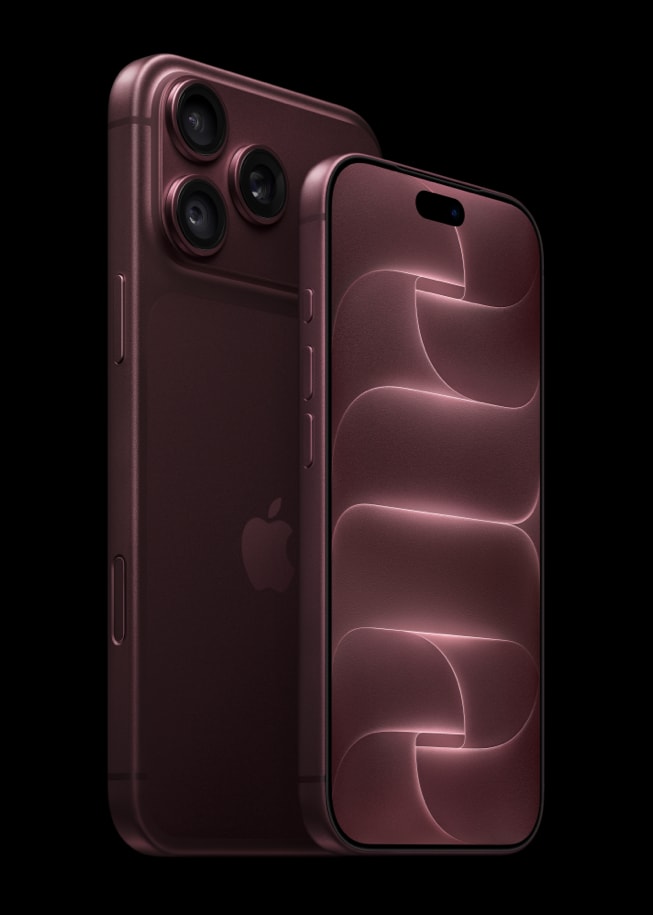
If the iPhone 18 Pro and iPhone 18 Pro Max have the same chip, the same three cameras and the same variable aperture, what exactly does the extra $100 buy? It is the question almost everyone asks in an Apple Store this fall, and the answer is simpler than the spec sheet makes it look.
Apple built one phone in two sizes. The A20 Pro, the 48MP camera system, the display technology and the software are identical. What changes is how big the screen is, how long the battery lasts and how much the phone weighs in your pocket. I've carried the Pro Max every day since launch, so some of what follows comes from living with the bigger one.
The short answer
Buy the iPhone 18 Pro Max if battery life is the thing you complain about most, or if your phone is where you watch video and read. Buy the iPhone 18 Pro if you use your phone with one hand, carry it in a front pocket, or want the exact same camera and performance for $100 less and 38 fewer grams.
iPhone 18 Pro vs iPhone 18 Pro Max at a glance
| Spec | iPhone 18 Pro | iPhone 18 Pro Max |
|---|---|---|
| Starting price | $1,199 | $1,299 |
| Display | 6.3 inch OLED, 2622 x 1206 | 6.9 inch OLED, 2868 x 1320 |
| Brightness and refresh | 3,000 nits outdoor, ProMotion up to 120Hz | Same |
| Battery, typical use | Up to 24 hours | Up to 30 hours |
| Video playback | Up to 36 hours | Up to 45 hours |
| Weight | 211 g (7.44 oz) | 249 g (8.78 oz) |
| Size | 150.0 x 71.9 x 8.75 mm | 163.4 x 78.0 x 8.75 mm |
| Chip | A20 Pro | A20 Pro |
| Main camera | 48MP Fusion, variable aperture f/1.48 to f/4 | Same |
| Telephoto | 48MP 4x, plus 8x optical quality | Same |
| Ultra Wide and front | 48MP Ultra Wide, 18MP Center Stage front | Same |
| Fast charging | 50% in about 15 min wired | Same |
| Wireless charging | MagSafe and Qi2, up to 25W | Same |
| Storage | 256GB, 512GB, 1TB, 2TB | Same |
| Colors | Black, silver, glacier, burgundy | Same |
| Water resistance | IP68, 6 meters for 30 minutes | Same |
Highlighted rows are where they differ. Battery ratings are Apple's figures for US eSIM models.
What's exactly the same
Start with what you don't have to choose between, because it covers most of what makes these phones worth buying. Both run the A20 Pro, Apple's first chip built on a 2 nanometer process, with a 6 core CPU, a 7 core GPU that Apple says is up to 40 percent faster than last year's, and a new vapor chamber that keeps performance up during long gaming sessions and video exports.
Both have the same 48MP Fusion Main camera with a physical variable aperture that moves from f/1.48 to f/4, the same 48MP Ultra Wide, and the same 48MP 4x Telephoto that also reaches 8x at optical quality. If you want to get the most out of that aperture, our guide to the iPhone 18 Pro's variable aperture walks through when to leave it on Auto and when to take control.
The displays share the same 460 pixels per inch, ProMotion up to 120Hz, Always On, and a 3,000 nit outdoor peak. Both have the smaller Dynamic Island that can show three Live Activities at once, Camera Control, the Action button, MagSafe and Qi2 charging up to 25W, IP68 water resistance and satellite features. In the US, both are eSIM only, and both get the full Siri AI experience in iOS 27.
So there is no better camera model or faster chip model this year. If someone tells you the Pro Max takes better photos, what they really mean is that it has a bigger screen to look at them on.
Battery life is the real difference
Apple rates the iPhone 18 Pro for up to 24 hours of typical use and up to 36 hours of video playback. The Pro Max is rated for up to 30 hours of typical use and up to 45 hours of video playback, which Apple calls the largest battery life increase it has ever delivered on an iPhone. That is a 25 percent gap on paper, and it is the single biggest reason to choose the bigger phone.
In my own use, the Pro Max gets through a full day of everything I throw at it without me thinking about the battery at all. The smaller Pro will still carry most people through a normal day. Heavy days are where the gap shows up: navigation, video calls, hotspot use and a lot of camera time. If you regularly turn on Low Power Mode by late afternoon, that's your answer.
Charging is the same on both. With a 60W capable USB-C cable and a 60W or higher adapter that supports Adjustable Voltage Supply, either phone reaches 50 percent in about 15 minutes. Apple's MagSafe Charger with a 35W or larger adapter gets you to 50 percent in about 30. Our charging picks list the cables, adapters and stands we use.
Size and weight: 38 grams you will notice
The Pro is 71.9mm wide and weighs 211 grams. The Pro Max is 78.0mm wide and weighs 249 grams, 16 grams more than last year's 17 Pro Max, making it the heaviest Pro Max Apple has made. Both are 8.75mm thick.
Those numbers show up in predictable ways. The Pro is still a phone you can use comfortably with one hand, reaching most of the screen with your thumb. The Pro Max is a two handed phone for most people, and you feel its weight more in a jacket or front pocket than in your hand. I notice it most at the end of a long day, rarely while I'm actually using it. If you already carry a Pro Max, none of this will surprise you. If you're coming from a smaller iPhone, hold both before you decide.
The display: more room, same quality
The 6.9 inch Pro Max screen has 2868 by 1320 pixels, compared with 2622 by 1206 on the 6.3 inch Pro, at the same pixel density. Image quality doesn't change. You simply get more of it: more of an email or article on screen, a larger video, and a bigger viewfinder when you're shooting. If your phone is your main screen for video, reading or editing photos, the Pro Max earns its size. If you mostly message, browse and take pictures, the Pro's screen is plenty.
Price and storage
The iPhone 18 Pro starts at $1,199 and the Pro Max at $1,299, both with 256GB, and both come in 512GB, 1TB and 2TB versions. Each starting price is $100 higher than last year's 17 Pro and 17 Pro Max.
If you'd rather pay monthly, Apple's financing works out to $49.95 a month for the Pro and $54.12 for the Pro Max over 24 months, and Apple Trade In credits range from $175 to $885 for an iPhone 13 or later. We've also broken down Apple Upgrade, Apple's newer lease option, and AppleCare One if you're covering several devices in one household.
Which one should you buy?
Get the iPhone 18 Pro if you want the full Pro camera and performance in a phone you can use with one hand, you carry your phone in a front pocket, or you'd rather put $100 toward a good case and charger. The camera is identical, so you give up nothing in photos or video.
Get the iPhone 18 Pro Max if battery anxiety is part of your day, your phone doubles as your TV, e reader or travel screen, or you're coming from a Plus or Pro Max and already know you like big phones. For anyone who can live with the weight, it's the one I'd pick, because battery life is the thing you feel every day long after the excitement of a new camera fades.
Still deciding whether to upgrade at all? We compared the iPhone 18 Pro with the iPhone 17 Pro feature by feature, with advice for anyone on an iPhone 16 Pro, 15 Pro or older. And if you've seen reports of early bugs, our iPhone 18 Pro problems tracker covers what iOS 27.0.1 fixed and what it didn't.
Protect it on day one
Whichever size you choose, a phone this expensive deserves a case from the start, and the new burgundy finish shows fingerprints within minutes. The iPhone 18 Pro section of our Gear Guide has cases at three price points, from Nomad's Horween leather to OtterBox and ESR, plus Moment's camera case for anyone treating the 18 Pro as their main camera.
Apple has rarely made the Pro versus Pro Max choice this clean. With identical cameras and chips, the decision comes down to how far your phone has to go between charges and where it has to fit. Answer those two questions honestly and either one is the best iPhone you can buy that doesn't fold.
Read us first
See more TBTL when you search Google
Add Tech Between the Lines as a preferred source and our Apple coverage shows up more often in your Top Stories. It takes one tap, and you can change it anytime.
Prefer TBTL on Google