


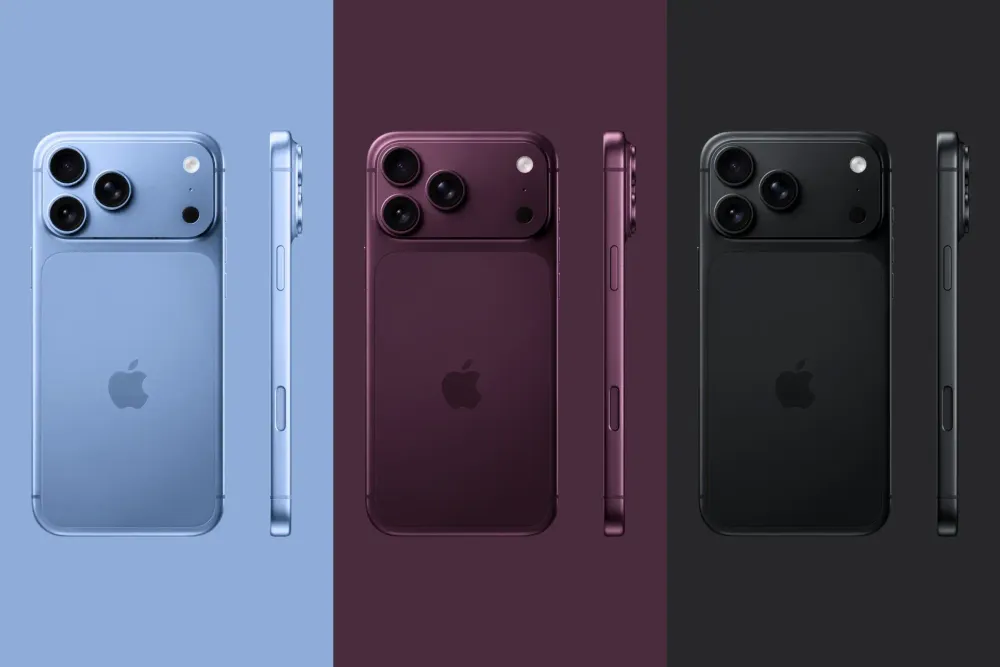


John Ternus stood on the Steve Jobs Theater stage on September 9, 2026, eight days into the job, and did the one thing almost every preview piece said he wouldn't do. He wrapped the keynote, thanked the crowd, and then paused. "But actually, there's one more thing." The theater had spent the prior two hours watching a fairly conventional hardware refresh: new iPhones, new watches, new earbuds. Nobody in that room was still waiting for a surprise. Then Ternus revealed the iPhone Duo, Apple's first foldable phone, and the crowd did what Apple crowds haven't done in years: they lost it.
That single moment tells you more about what this event needed to be than any spec sheet does. Ternus took over as CEO on September 1, succeeding Tim Cook, who moved into the executive chairman role after fifteen years running the company. Cook's final keynote was WWDC in June. This was Ternus's first as the person actually in charge, and he used the oldest trick in Apple's playbook, the "one more thing" reveal that Steve Jobs invented and that Apple has used sparingly since, to put his own stamp on the job. It worked. Whatever else came out of Cupertino, the story of September 9 is a new CEO who understood the assignment.
Four product lines got announced: the iPhone 18 Pro and Pro Max, the iPhone Duo, the Apple Watch Series 12 and Ultra 4, and AirPods 5. Here's everything Apple confirmed about each.
A New CEO's Opening Move
Ternus opened the keynote by framing the iPhone as the best personal device for artificial intelligence, leaning on the argument that on-device privacy protections let Apple do AI differently than competitors that build their models around cloud data collection. It's the same pitch Apple has been making since Apple Intelligence debuted, but hearing it from a new CEO instead of Cook gave it a different weight. Cook was reportedly spotted near the stage during the event, a quiet nod to the handoff without stealing focus from it.
The keynote itself ran through iPhone 18 Pro, Apple Watch Series 12 and Ultra 4, and AirPods 5 in that order, the standard September rhythm Apple has followed for a decade. What made this year different is what came after the goodbye. Apple watchers had spent the week before the event debating whether Ternus would attempt a "one more thing" at all. The consensus, reflected in most previews, was that he wouldn't: too soon in the job, too big a swing for a debut, and Apple hadn't even bothered with the moment for the iPhone Air the year before. Ternus did it anyway, and he did it with the biggest possible swing: Apple's first folding iPhone, a device the company had let leak and rumor-mill for the better part of three years without ever confirming it existed.
iPhone 18 Pro and Pro Max
Price, Storage and Release Date
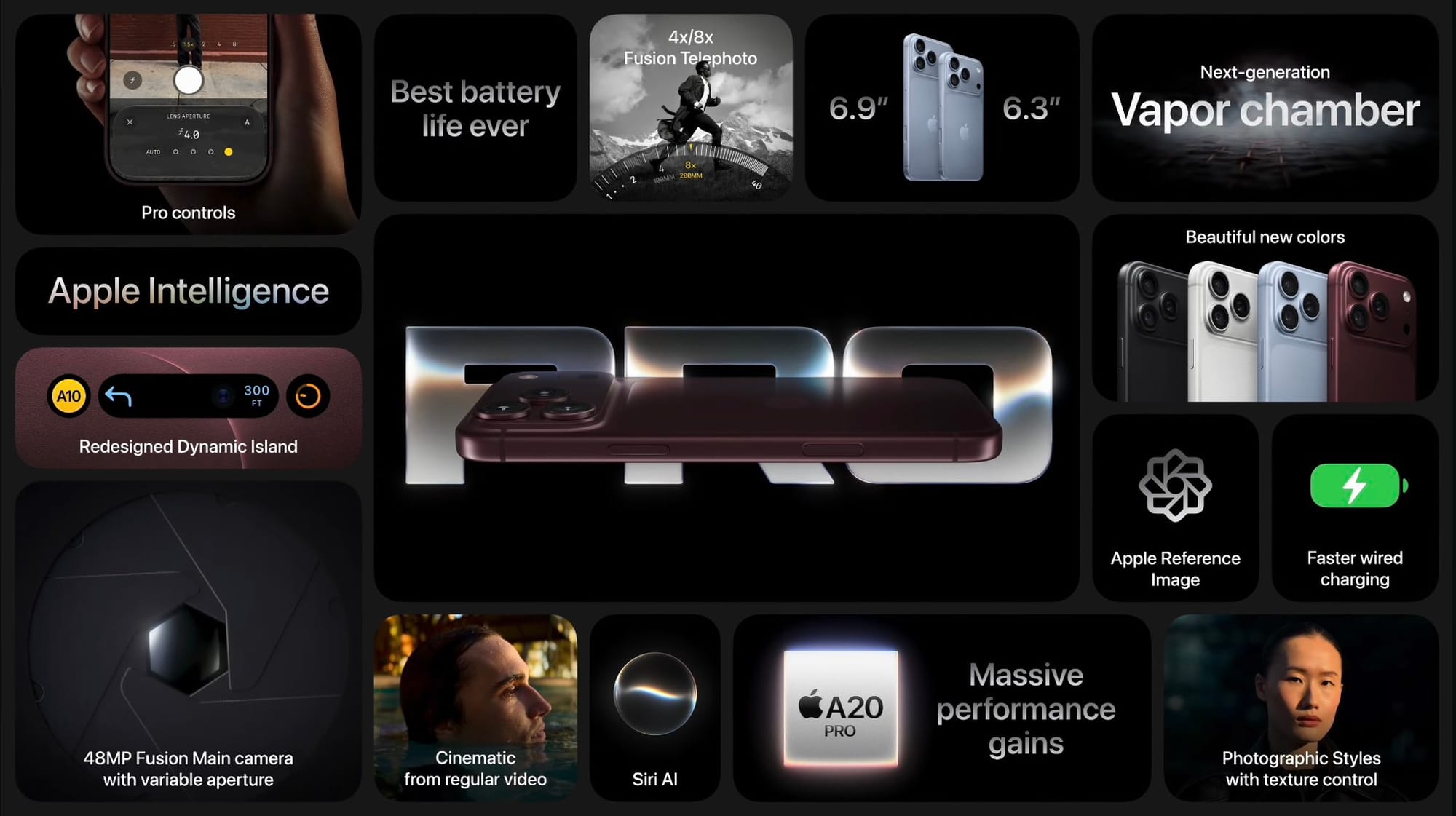
The iPhone 18 Pro starts at $1,199 for 256GB, and the iPhone 18 Pro Max starts at $1,299, both up $100 from last year's iPhone 17 Pro and Pro Max. Storage now runs to a 2TB option for the first time on an iPhone, alongside the usual 256GB, 512GB and 1TB tiers. Pre-orders open Saturday, September 12 at 5 a.m. PT, and both phones ship Friday, September 18 in more than 65 countries, with 20 more following on September 25. iOS 27 arrives as a free update on September 14, ahead of the hardware.
The two phones are effectively the same device in two sizes, a 6.3-inch Pro and a 6.9-inch Pro Max, and share every headline feature below. There is no standard iPhone 18 this year. Apple is running a split release cycle for the 18 generation, holding the base iPhone 18, an iPhone 18e, and a second-generation iPhone Air for a spring 2027 event instead. September belongs entirely to the Pro tier and the Duo.
A20 Pro Chip and Sustained Performance
The chip is the real story: the A20 Pro is Apple's first processor built on a 2-nanometer process, pairing a 6-core CPU with a 7-core GPU that Apple says is up to 40 percent faster than the A19 Pro's. A dual 16-core Neural Engine doubles the AI processing capacity of last year's chip, and Apple paired it with a new vapor chamber attached directly to the silicon that delivers roughly three times the cooling performance of the previous design. That cooling upgrade matters more than it sounds like it should. Sustained performance, the kind that matters for gaming sessions or long video exports rather than benchmark spikes, has been the actual limiting factor on Pro-tier iPhones for several generations, and Apple is clearly building around that complaint rather than just chasing peak numbers.
Variable Aperture Camera and Apple Reference Image
The camera system carries the other headline change. Both phones get a 48MP Fusion main camera with a variable aperture that physically moves between f/1.48 and f/4 using six laser-cut blades, the first time Apple has put a mechanical aperture in an iPhone. The Camera app now exposes manual aperture and shutter speed controls to go with it, which is a meaningfully different pitch than previous "computational everything" iPhone cameras: this is Apple handing photographers a physical dial instead of another algorithm. Apple didn't announce changes to the Ultra Wide or front camera this year, so the upgrade is concentrated entirely in that one lens. New software features ride alongside it: Smart Focus subject tracking, a faster Night mode, Cinematic effects up to 60fps, and 4K Dolby Vision HDR time-lapse.
The feature worth sitting with longer than the rest is Apple Reference Image. Every photo taken on an iPhone 18 Pro or Pro Max now gets an unalterable, verified original stored alongside the editable version in Photos, in effect a digital negative that can confirm what a camera actually captured. Apple's framing during the keynote tied this directly to the AI moment the industry is in: as generated images get harder to distinguish from real ones, having a verified chain of custody for an actual photograph becomes a feature in its own right, not just a nice-to-have. It's a quiet, structural answer to a problem most of the industry is still treating as a detection arms race.
Design, Connectivity and Battery
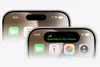
Design changes are smaller but real. The Dynamic Island shrinks and now surfaces up to three Live Activities simultaneously, Face ID is unchanged, and colors shift to Black, Silver, Glacier and Burgundy, with Black returning after the 17 Pro skipped it and Cosmic Orange dropping out of the lineup. Connectivity gets a real upgrade courtesy of the new N1 wireless chip, which adds Wi-Fi 7, Bluetooth 6 and Thread, paired with Apple's second-generation C2 modem that uses 15 percent less energy than the C1X and adds mmWave 5G support in the US. Both phones are eSIM-only in the US, Canada, Japan, Mexico and eight other markets.
Battery life climbs to up to 36 hours of video playback on the Pro and up to 45 hours on the Pro Max, which Apple translates to roughly 30 hours of typical mixed use on a full charge. Wired charging reaches 50 percent in about 15 minutes. Apple also pushed sustainability numbers this year: 40 percent recycled content across both phones overall, and 100 percent recycled cobalt in the battery specifically.
iPhone Duo: Apple's First Foldable
Price, Colors and Release Date
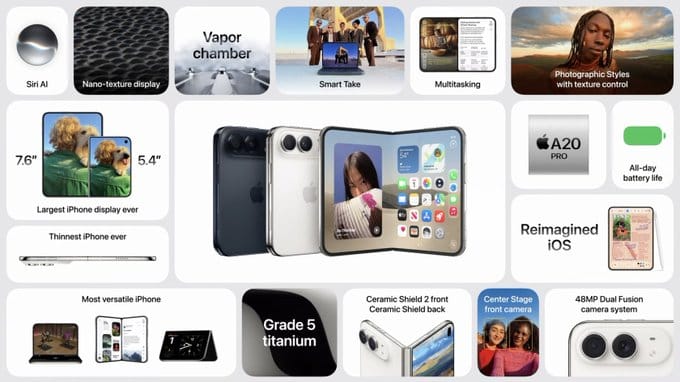
The iPhone Duo is Apple's first folding iPhone, and it arrived exactly the way the internet spent three years insisting it eventually would, minus the part where Apple pretended it wasn't coming. It starts at $1,999 for 256GB, climbing to $2,199 for 512GB, $2,599 for 1TB and $3,199 for 2TB, in two colors: Star White and Night Sky. Pre-orders open Friday, October 16 at 5 a.m. PT, with availability Friday, October 23 in more than 70 countries and regions, followed by 28 more on October 30. That's five weeks behind the iPhone 18 Pro's September 18 ship date, a deliberate gap rather than a delay, and Apple hasn't explained the reasoning beyond the obvious: this is a genuinely new class of hardware, built around parts that don't exist anywhere else in the lineup.
Displays and Build
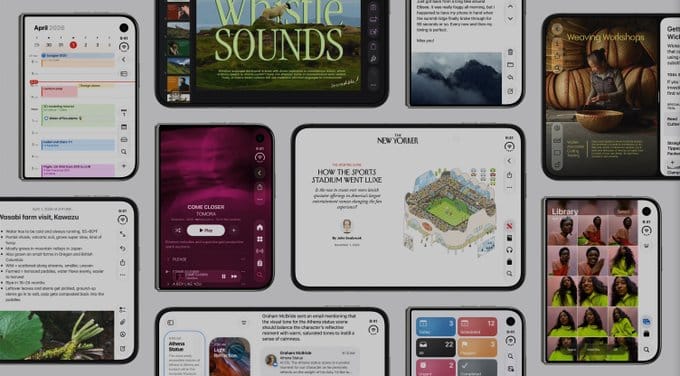
Unfold it and you get a 7.6-inch Super Retina XDR OLED inner display at 1878 by 2670 pixels and 430 ppi. Closed, the outer display measures 5.4 inches at 1398 by 2034 pixels and 460 ppi, functioning as a full standalone iPhone screen rather than a stripped-down cover panel. Both run ProMotion up to 120Hz, with 1000 nits typical brightness and up to 3000 nits peak outdoors. Apple built the device around a passport-style, book-hinge design rather than the wider clamshell some rumors predicted, with a Grade 5 titanium frame, Ceramic Shield front and back, and an IP68 rating that matches the rest of the current iPhone lineup, no small feat for a device with a literal hinge running through the middle of it.
Chip and Security
Under the hood, the Duo runs the same A20 Pro as the 18 Pro line: 6-core CPU, 7-core GPU, dual 16-core Neural Engine. Apple built a custom display engine into that chip specifically to drive two screens simultaneously, which is part of why the Duo couldn't simply borrow last year's silicon. Security runs through Touch ID embedded in the side button rather than Face ID; there's no Face ID hardware on this device at all, a genuine departure from every other current iPhone and one early buyers coming from a Face ID phone will need to adjust to.
Cameras and the Four Duo-Exclusive Features
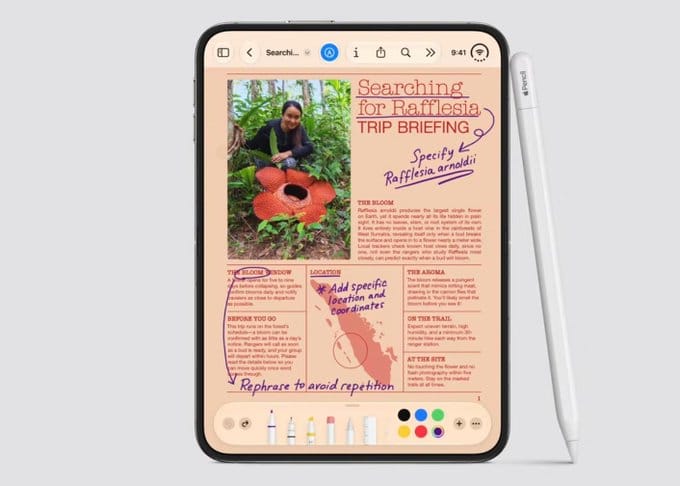
The camera system is dual rather than triple: a 48MP Main at f/1.6 and a 48MP Ultra Wide at f/2.2, with no telephoto lens, making the Duo the only new iPhone this fall without a dedicated zoom. What it has instead, and what nothing else in Apple's lineup has, are four camera features built specifically around the second screen. Smart Take uses on-device AI to wait until everyone in a group shot is actually posed before firing the shutter, paired with a main camera Apple says has zero shutter lag. Duo Preview mirrors the shot onto the outer display so the subject can see the frame in real time, something no single-screen phone can offer. Kid Cue plays animations on that same outer display to hold a child's attention during a photo. Duo FaceTime lets a second person nearby join a call from the outer display, so someone sitting across the table doesn't have to crowd in behind your shoulder. None of the four is coming to the iPhone 18 Pro; Apple has them locked to the Duo's hardware.
Battery Life and Charging
Battery life splits the phone's two batteries, one in each half, and gets a little confusing depending on which state you're measuring. Apple's headline figure is up to 24 hours of typical mixed use, but the video playback numbers tell a more specific story: up to 44 hours with the phone closed, using just the outer display, and up to 31 hours with it open and running the larger inner screen. Wired charging tops out around 60W, a notch below the Pro line's peak charging speed, which is the one real compromise Apple made to fit two batteries and a hinge into something 5.2mm thick open and 11.3mm closed, weighing 254 grams.
Storage, Software and What's Still Unconfirmed
Storage runs 256GB through 2TB, the Duo is eSIM-only worldwide with support for two active lines and more than 500 carriers, and it ships with iOS 27.1 rather than the 27.0 build the Pro line gets on day one, alongside a Camera Control button carrying its own Siri Camera mode. Apple Pencil support over USB-C is coming to the Duo later this year, and Apple is selling a folio case with a built-in kickstand as a launch accessory. Beyond that, Apple has been unusually quiet: no press release for the Duo the way there was for the 18 Pro, just a product page and a tech specs sheet, which means some details, like RAM, remain unconfirmed by Apple directly even after the keynote.
Apple Watch Series 12 and Ultra 4
Apple Watch Series 12 and Ultra 14
Price, Sizes and Availability
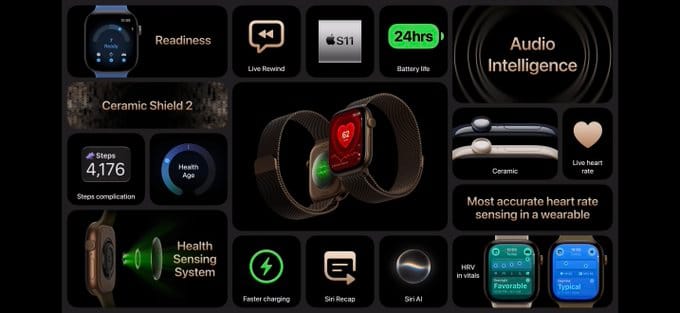
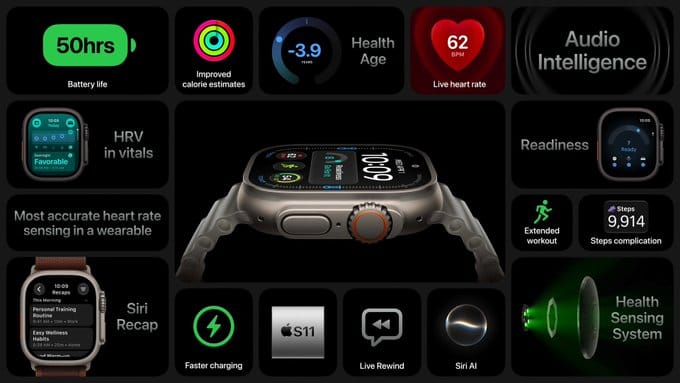
Apple Watch Series 12 starts at $399 for the aluminum case, with titanium at $699 and ceramic at $899, in 42mm and 46mm sizes. Apple Watch Ultra 4 starts at $799 in titanium, in natural or black finishes; Apple hasn't published case size options for it separately from previous generations. Both are available to pre-order now, with retail availability Friday, September 18. Apple's Upgrade lease program prices the Series 12 from $11.99 a month and the Ultra 4 from $24.99 a month, both over 24 months.
Health Sensing System and Readiness
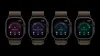
Both watches run the same S11 chip and share the same headline addition: a new Health Sensing System built around upgraded optical and electrical heart sensors capable of continuous background heart rate readings taken every five seconds, all day, rather than the periodic sampling older Apple Watches use. That's a genuinely different cadence than anything Apple has shipped before, and it feeds directly into a new Readiness score that both watches surface. Apple paired the sensor upgrade with two software features worth knowing about: Audio Intelligence, which lets the watch rewind and recall details from a recent conversation, and Sound Recognition, which listens for sirens, alarms and doorbells specifically to help wearers with hearing difficulties catch sounds they might otherwise miss.
Battery, Satellite and What Actually Separates Them
Where the two watches actually diverge is battery and connectivity, not health features. Series 12 runs up to 24 hours of typical use and up to 10 hours during an outdoor workout, with a 15-minute charge buying about 12 hours of use. Ultra 4 stretches that to up to 50 hours of typical use (84 hours in Low Power Mode) and up to 25 hours during an outdoor workout (45 hours in Max Extended Workout mode), with a 15-minute charge covering roughly 18 hours. Ultra 4 also keeps satellite communications, with two years included at purchase, a capability Series 12 doesn't have. If you're buying your first Apple Watch and don't need satellite coverage or the extended battery runway that comes with all-day outdoor tracking, the Health Sensing System and Readiness score, the parts of the keynote Apple actually spent the most time on, are identical on both watches. The $400 gap buys you battery life and satellite, not health capability.
Labs Blood Panel
One new line item worth flagging for anyone planning around this release: Apple added a Labs blood panel option inside the Health app, priced at $119 and available in the US only at launch. It's a small addition relative to the sensor headline, but it extends Apple's health ambitions further into territory that used to require a doctor's order, and it's worth watching how it gets positioned as Apple expands it to more regions.
AirPods 5
Price and Models
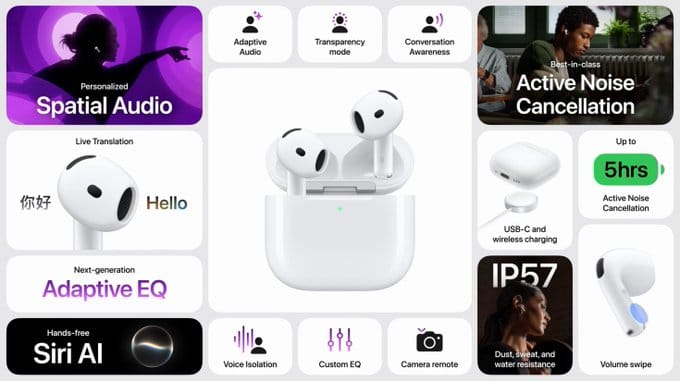
AirPods 5 starts at $129 for the standard model, with a $149 tier that adds a Wireless Charging Case, on-stem swipe volume controls and longer battery life. Both are available to pre-order now in the US and more than 65 other countries and regions, with retail availability Friday, September 18.
Active Noise Cancellation Becomes Standard
The headline change is that Active Noise Cancellation is now standard at the base $129 price, a genuine shift from the AirPods 4 generation, where ANC was reserved for the $179 step-up model. Apple says the open-ear ANC on AirPods 5 removes up to 50 percent more external noise than AirPods 4's ANC did, built on a redesigned acoustic architecture and an updated Adaptive EQ, with a more natural-sounding Transparency mode alongside it. Adaptive Audio automatically blends ANC and Transparency depending on the environment, and Conversation Awareness lowers playback volume the moment the wearer starts talking, both carried over and refined from the previous generation rather than new to this one.
Battery, Case and Software Features
The $149 model with the Wireless Charging Case is rated for up to five hours of listening with ANC enabled and up to 22 hours total with the case, which itself supports Apple Watch chargers, Qi-compatible pads and USB-C. Both models support Siri AI hands-free and Live Translation when paired with a compatible iPhone running Apple Intelligence, and Apple says durability improved across the board with better dust, sweat and water resistance than the outgoing AirPods 4. It's a modest-sounding update on paper, but putting real ANC at the entry price point without raising it is the kind of move that reshapes the value calculation for anyone who was going to buy the cheaper AirPods anyway.





Comments