

Apple Says "Welcome Home" on October 13. Its Home Has Some Catching Up to Do.
Apple has confirmed a date, a place and two words for its October 13 launch. Here is what it has actually said, where its home lineup stands today, and the questions Tuesday needs to answer.

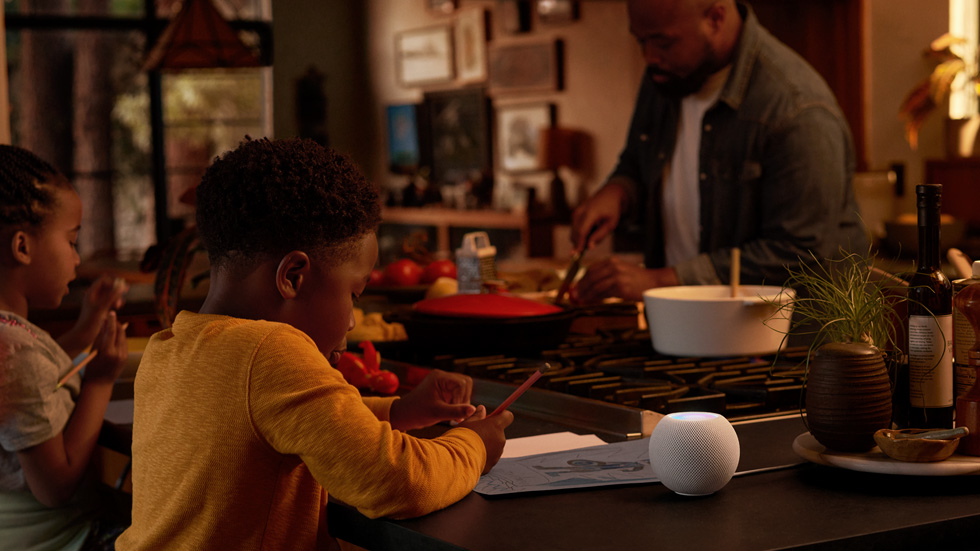
What does Apple mean by home? For most of the last decade the answer has been a $99 speaker, a streaming box that hasn't changed since 2022, and an app that asks you to trust it with your front door lock. On Tuesday, October 13, Apple gets to give a new answer, and so far it has told us only a date, a place and two words.
Greg Joswiak, Apple's head of worldwide marketing, posted the teaser on X: a 17 second video of hands stitching Apple's classic rainbow logo into an embroidery hoop, one stripe at a time, before "Welcome home. October 13." appears underneath. It is a charming little clip, and it is also close to everything Apple has confirmed. Here is what we actually know, where Apple's home lineup stands going into the week, and the questions Tuesday has to answer before anyone should spend money on it.
Welcome home. October 13. pic.twitter.com/ChelGSDOTI
Greg Joswiak (@gregjoz) October 8, 2026
What Apple has confirmed
The launch is set for Tuesday, October 13, at 9 a.m. Eastern, which is 7 a.m. here in Colorado. Apple is calling it an Apple Experience, held in Tribeca in New York, with invitations sent to press and creators. That format matters. There is no keynote from Apple Park on the schedule, and Apple has not announced a livestream, so expect the news to arrive through Apple Newsroom announcements and hands on coverage from the people in the room.
There is a small piece of history in the date, too. Apple introduced the original HomePod mini on October 13, 2020. Six years later to the day, that same $99 speaker is still the newest HomePod mini you can buy.
Where Apple's home stands today
Start with the hardware. The HomePod mini hasn't had a hardware update since 2020. The current Apple TV 4K arrived in October 2022, and on October 9 Apple moved the first Apple TV 4K, the 2017 model, onto its vintage products list. Neither line has been refreshed in the entire Apple Intelligence era.
The software tells the same story from the other direction. When Apple shipped Siri AI on September 14, it landed on iPhone, iPad, Mac and Vision Pro. It did not come to HomePod. As we covered in our tvOS 27 and HomePod Software 27 breakdown, HomePod Software 27 kept the classic Siri, and reporting ahead of the release pointed to current HomePod hardware simply not being built for the new assistant. That leaves the one Apple device designed entirely around talking to it as the one that still can't hold a real conversation.
Underneath both sits the Home app itself. Apple ended support for the previous Home architecture on February 10, 2026, and homes that never upgraded are being prompted or moved over. The new architecture also changed what counts as a home hub: an Apple TV or a HomePod, and no longer an iPad. If your setup quietly depended on an iPad sitting in a kitchen drawer, it has already stopped being your hub.
What Tuesday needs to answer
We are not going to guess at product names or prices here. There has been plenty of reporting on what Apple is preparing, and we will cover whatever is real on Tuesday. What we can do is lay out the questions that decide whether this launch matters for the home you already have.
Does Siri AI finally come home?
This is the question underneath every other one. A new speaker or streaming box that still runs the old Siri would be a speed bump, not a launch. The test is simple. Can you ask the device in your kitchen the same kind of follow up question you can ask your iPhone, and get an answer that understands your context? If yes, Apple's home finally catches up with the rest of its platforms. If not, the hardware is waiting on software again, which is the pattern we described in August when we called the home hub delays Apple's most honest admission about Siri's problems yet.
What happens to the HomePods people already own?
Apple has sold the HomePod mini for six years, and plenty of homes have three or four of them. If the new Siri needs new hardware, owners deserve a clear answer on whether their current speakers keep working as home hubs, AirPlay speakers and Thread border routers, or whether they slowly become second class devices in their own homes. How Apple handles that will say a lot about how it treats the people who bought in early.
Does the Home app get simpler?
Apple's home problem has never been only about Siri. Adding accessories, sharing control with family, and figuring out which device is acting as your hub are all harder than they should be. A launch built around the word home is the right moment to fix setup and management as well as add new things to manage.
What does it cost to get in?
Price has been Apple's quiet strength in the home. A $99 HomePod mini is how millions of people started with HomeKit. If the entry point moves up sharply, Apple risks turning a casual on ramp into a premium purchase while Amazon and Google keep their own speakers cheap.
What to do before Tuesday
If you were about to buy a HomePod mini or an Apple TV 4K, wait a few days. Buying a six year old speaker or a four year old streaming box days before a launch called "Welcome home" is the textbook case for patience, even at a discount.
The more useful thing you can do this weekend is make sure your current setup is in good shape, so whatever Apple announces drops into a home that is ready for it. We put together a step by step guide to getting your Apple Home ready before October 13, from confirming your home architecture to choosing the right home hub and clearing out accessories that stopped responding months ago.
We will have full coverage Tuesday morning: everything Apple announces, what it means for the gear you already own, and whether any of it is worth buying. The most interesting part may be what Apple says about Siri. The home is where Apple's assistant has struggled most visibly for the longest time, and Apple chose to put that word on the invitation.
Read us first
See more TBTL when you search Google
Add Tech Between the Lines as a preferred source and our Apple coverage shows up more often in your Top Stories. It takes one tap, and you can change it anytime.
Prefer TBTL on Google