


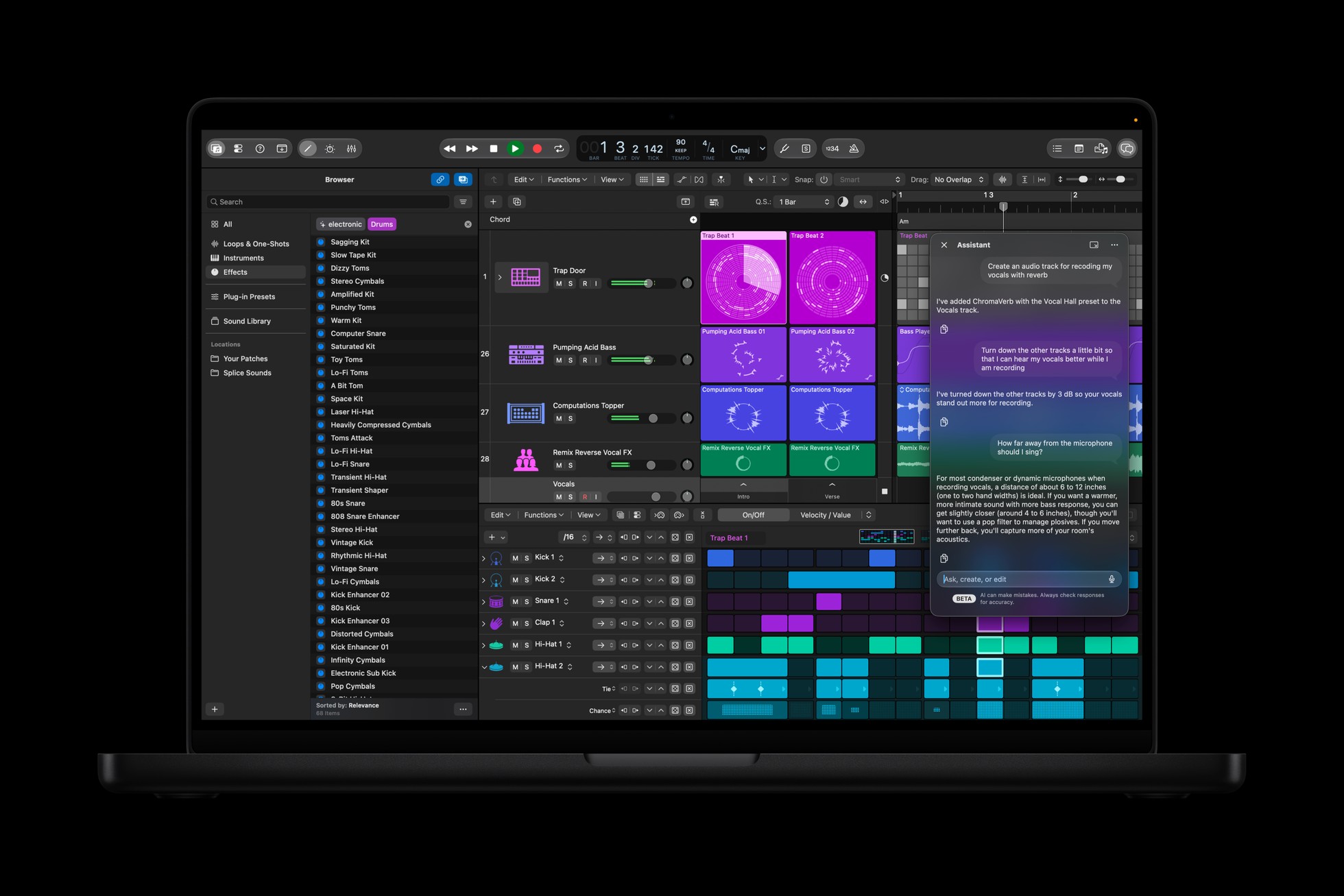


Apple has started selling AI by the pack. Logic Pro 13, which reached the Mac App Store on Thursday, November 5, is the first Apple app with a Buy More Usage button, and the only thing it sells is a $49.99 "intelligence usage pack" for its new AI assistant. The option sits under Logic Pro > Intelligence Features > Show Usage, and 9to5Mac spotted it Monday morning.
In September, Apple's usage limits page said "increased access to such features will be available for a fee," naming features like Siri AI and Image Playground but no price or date. Apple's own earlier statements pointed at iCloud+, the subscription it had already said raises those limits. The first price Apple has actually put on extra AI use turned out to be something else: a one-time top up, sold inside a subscription people already pay for.
That makes Logic Pro 13 the clearest picture yet of how Apple plans to charge for AI. Owners of the one-time version get the new features. Creator Studio subscribers get the assistant, up to a monthly limit. Past that limit, they pay again.
What $50 buys, and what Apple won't say
Apple's support document for Creator Studio's intelligence features, published November 5, sets out the rules. A pack is a one-time purchase that needs an active subscription. Unused usage rolls over from month to month and expires 12 months after you buy it, and the pack only starts counting once you've used up your normal monthly allowance. All sales are final, except where the law requires a refund.
The document doesn't say how much usage $49.99 buys. For Logic, it doesn't give a monthly allowance either, only that the assistant's limit depends on how complex your conversations are. Other Creator Studio features get numbers. Apple promises at least 50 generated images, 250 shapes, 50 Keynote presentations or presenter notes for 700 slides a month, each counted as if you used only that one feature. So a heavy Logic user can see their usage history but can't tell in advance how many conversations a month, or a pack, covers.
Packs also don't work with Family Sharing, even though a Creator Studio subscription can be shared with up to five other people. Only the Apple Account that was signed in to iCloud when you bought the pack can use it, so in a shared plan, each person who hits the limit buys their own. And packs are sold in only eight countries for now: Brazil, Canada, France, Germany, India, Mexico, the UK and the US.
At $49.99, a pack costs nearly as much as four months of Creator Studio at $12.99, and almost 40 percent of the $129 annual plan. It's also exactly what Apple charges for Pixelmator Pro as a one-time purchase.
Why the assistant is the part that costs extra
The assistant is a chat panel inside Logic that can act on your project. Apple's examples include setting up a vocal track from a single request, starting a new song, and refining a project you're working on. It also answers questions about how Logic works. John Voorhees at MacStories, who used it before release, called the assistant one of his favorite features in the update.
Who runs it depends on which Apple page you read. The support document says the Logic assistant is powered by Google Gemini. Apple's October 27 announcement only said it uses a mix of Apple built and third party models, and MacStories reported Apple and OpenAI models. Either way, requests that go to an outside provider carry limited context like your country, device type and language, and Apple says that data isn't linked to your Apple Account and can't be used to train the provider's models. Cloud requests cost money every time someone makes one, and the monthly limit and the pack are how Apple passes that cost along.
The assistant has a longer list of requirements than the rest of the update:
- An Apple Creator Studio subscription. It isn't in the $199.99 one-time version.
- A Mac with Apple silicon running macOS 27 or later.
- An Apple Account with iCloud set up and active.
- US English. Other languages aren't supported yet.
It's also labeled a beta.
How to check your usage
In Logic Pro on the Mac, choose Logic Pro > Intelligence Features > Show Usage. Choose History from there to see what you've used over time, or Buy More Usage to see the pack. Most other Creator Studio apps on the Mac use the same path under their own app menu, and Freeform calls it Show Usage Status. On iPhone and iPad, open the app, tap the More button, tap Intelligence Features, then tap Show Usage Status.
What every Logic Pro owner gets for free
Everything else in Logic Pro 13 lands in the copy you already own, whether you bought it outright or subscribe. The biggest daily change is the browser. Loops, instruments, effect patches and more now live together in one redesigned browser. According to Apple's release notes, as reported by MacRumors, it tags your own and third party sounds automatically, takes plain language searches, finds sounds similar to one you pick, shows your licensed Splice sounds, and can index any folder on your Mac.
Stem Splitter also goes a level deeper on drums. Logic could already pull a finished mix apart into vocals, drums, bass, guitar, piano and other. Version 13 can split the drum stem again into kick, snare, hi-hat, toms, cymbals and other percussion, each on its own track.
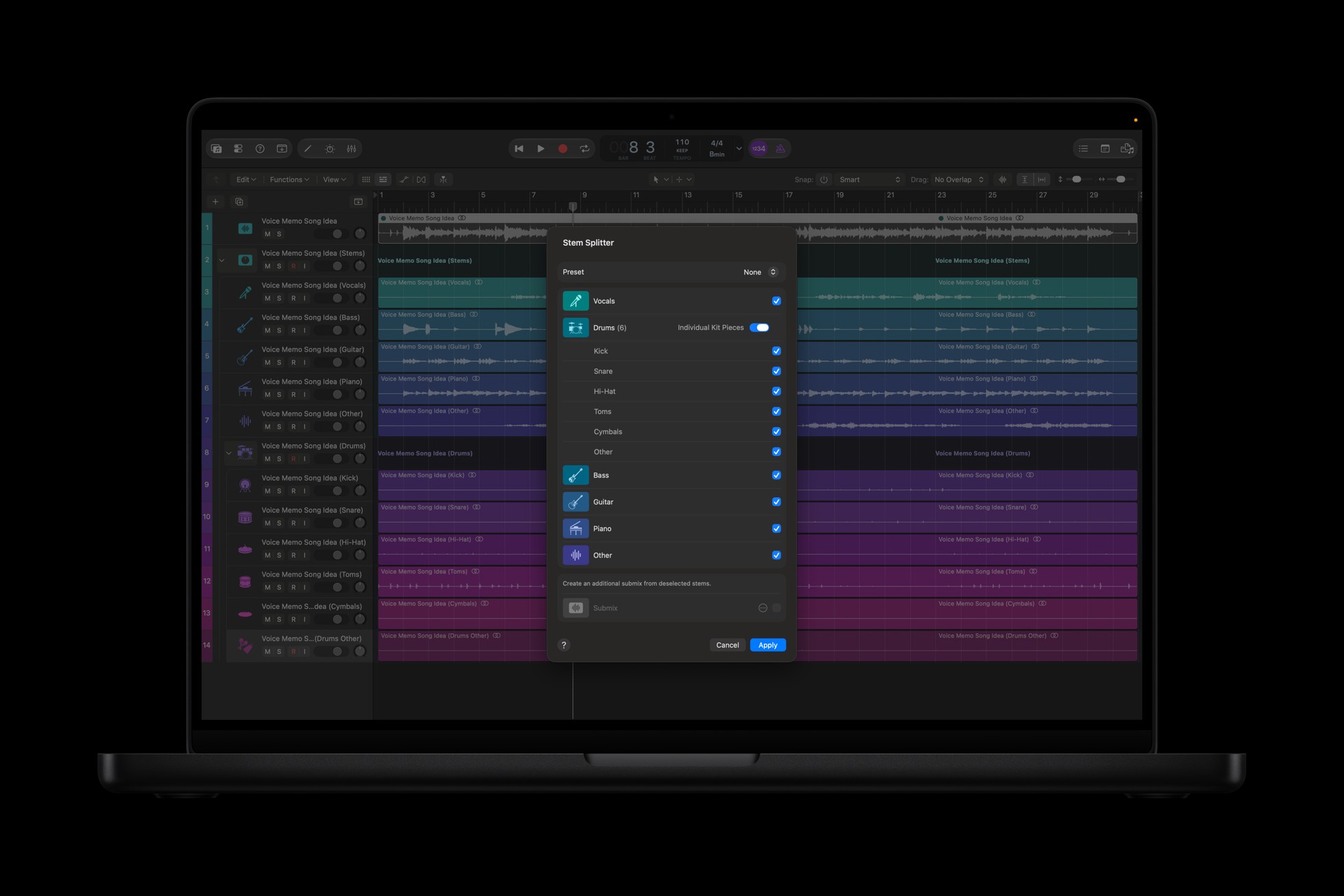
To try it, select an audio region, open Stem Splitter, turn on Individual Kit Pieces for the drums, and click Apply.
The rest is aimed at musicians who perform. Sidecar support turns an iPad into a multi-touch controller for Live Loops, the Step Sequencer, plug-ins, instruments and several mixer channels at once. A new Play Surface window gives you drum and chord pads and a keyboard with velocity, modulation and pitch glide controls that you can play with a mouse, the Mac keyboard or an iPad. The Step Sequencer can now edit, copy and paste a range of steps together, and the whole app picks up Apple's Liquid Glass design. Apple lists a Mac with Apple silicon running macOS 26.1 or later for Logic Pro itself.
The rest of Creator Studio this month
Logic is the first app out of the Creator Studio update Apple announced on October 27. Apple says most of the rest arrives this November as free updates for existing subscribers, without giving dates. Final Cut Pro gets thousands of templates, titles, transitions and effects from MotionVFX, the plug-in maker Apple bought in March, built into the app. Pixelmator Pro adds Generate Fill, which rebuilds a selected part of an image from a written description. On the Mac, Keynote, Pages and Numbers get their Intelligent Assistant, plus Model Context Protocol support on macOS 27 so outside AI tools can read and edit documents in those apps.
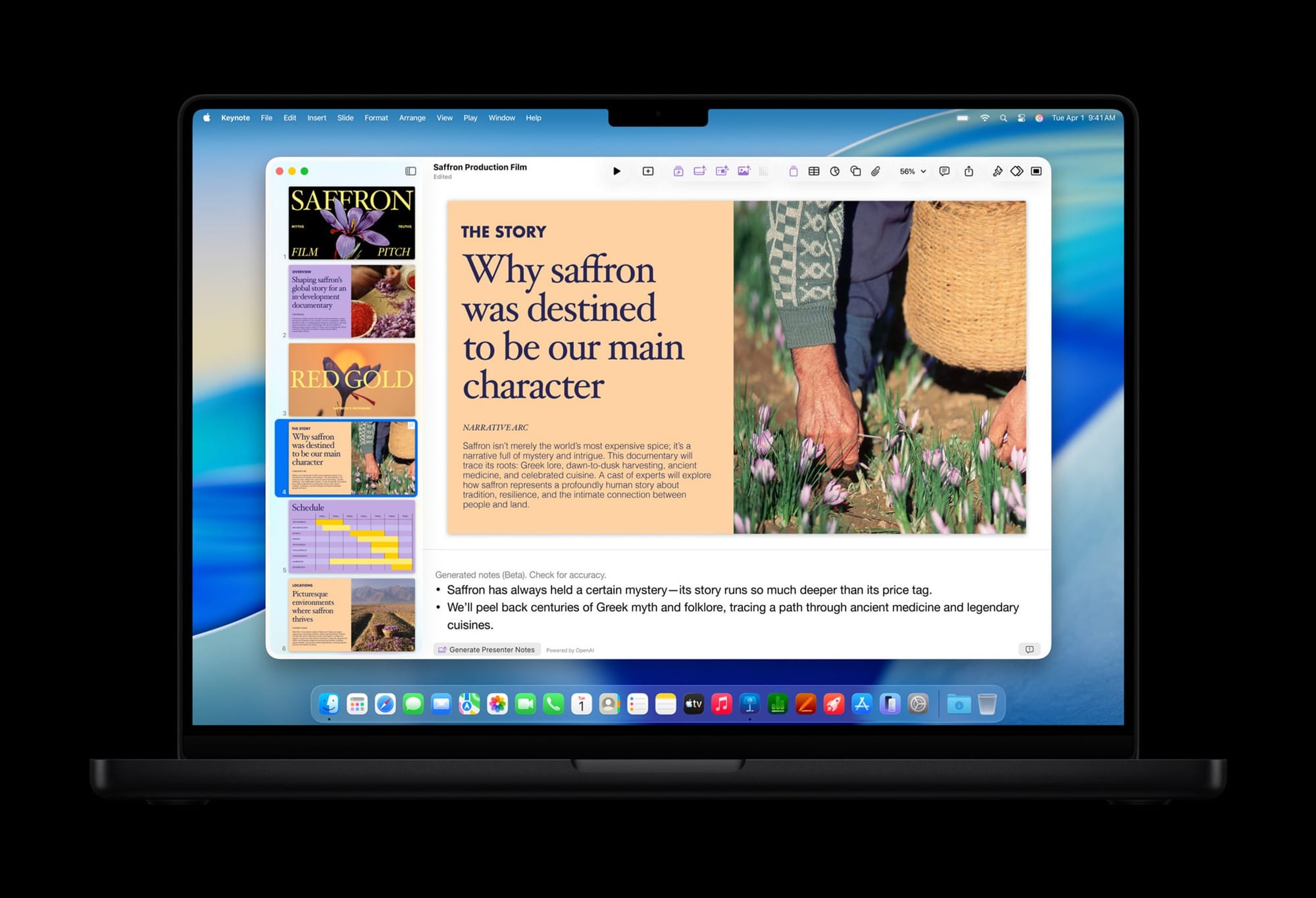
Those apps already have monthly limits on image, shape and presentation generation. Only Logic shows a Buy More Usage option so far, and 9to5Mac expects the packs to reach Final Cut Pro, Pixelmator Pro and the iWork apps as the rest of the update ships.
What it costs, and what it points to
Creator Studio is $12.99 a month or $129 a year in the US, with a one month free trial, and college students and teachers pay $2.99 a month or $29.99 a year. The one-time Mac versions are still for sale: Final Cut Pro is $299.99, Logic Pro $199.99, and Pixelmator Pro, Motion and Compressor $49.99 each. If you only use Logic and don't care about the assistant, buying it outright still makes more sense, since Logic Pro 13 shows owners keep getting real feature updates.
The pack matters past Logic because Apple has already told everyone else the same thing is coming. Siri AI, Image Playground, the Photos editing tools and the cloud models in Shortcuts all have usage limits under Apple's 2027 software releases, and Apple has said more access will cost extra. In June, it described that extra access as part of most iCloud+ plans. Logic Pro 13 shows the other option Apple is willing to use: a fixed allowance, then a one-time purchase that expires after a year and can't be shared with family. If Apple brings that model to Siri, the first thing it will need to fix is the part Logic leaves out: telling people how much a pack actually covers before they pay for one.







Comments