


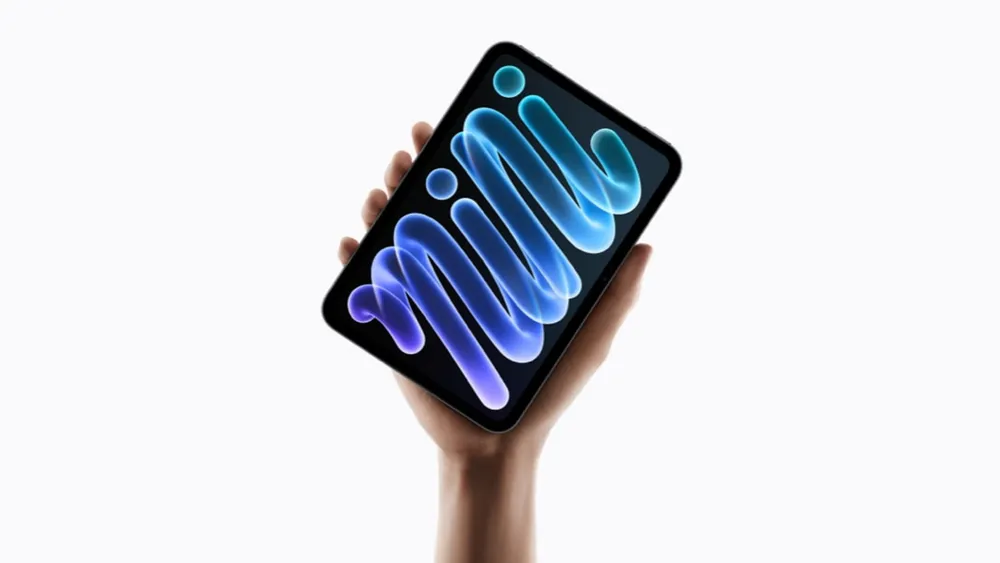


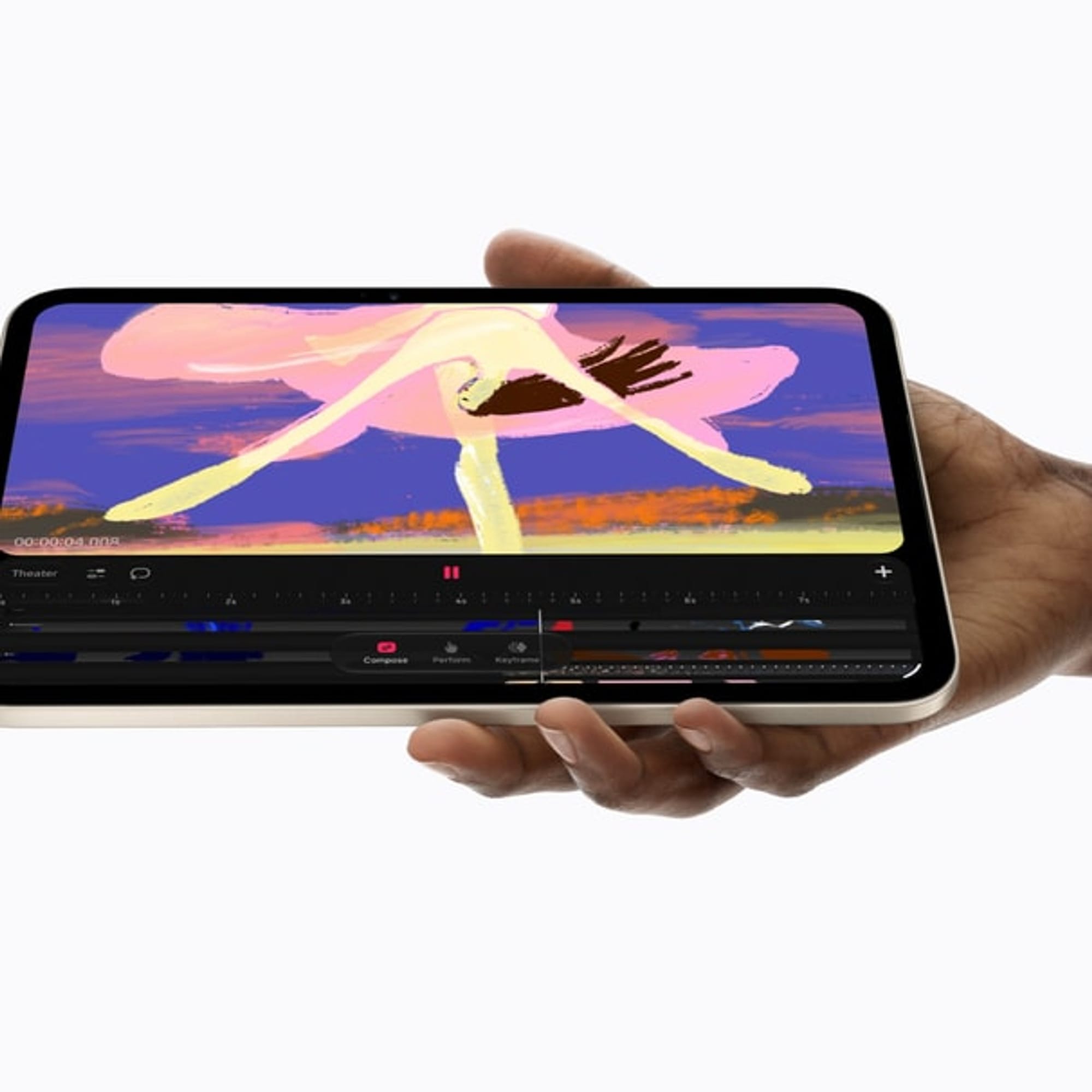
Apple announced a new iPad mini this morning, and its own newsroom headline calls it the biggest update the mini has ever had. That's not marketing stretch this time. The 8.5 inch screen is now OLED, the body is thinner and lighter, the A20 Pro replaces the A17 Pro, the front camera finally moves to the landscape edge, and for the first time an iPad mini is rated IP67 for water and dust.
It starts at $699 for 128GB. Pre-orders open Wednesday, October 28, and it arrives in customers' hands and in Apple Stores on Friday, November 6.
That price is where the excitement gets complicated. The A17 Pro model launched at $499 in 2024 and went up to $599 in June, so the cheapest mini now costs $200 more than it did two years ago. And as we cover below, the $699 model doesn't get the full A20 Pro chip. Only the 512GB model gets the sixth CPU core and Apple's new dual Neural Engine.
An OLED Display in the Same Footprint
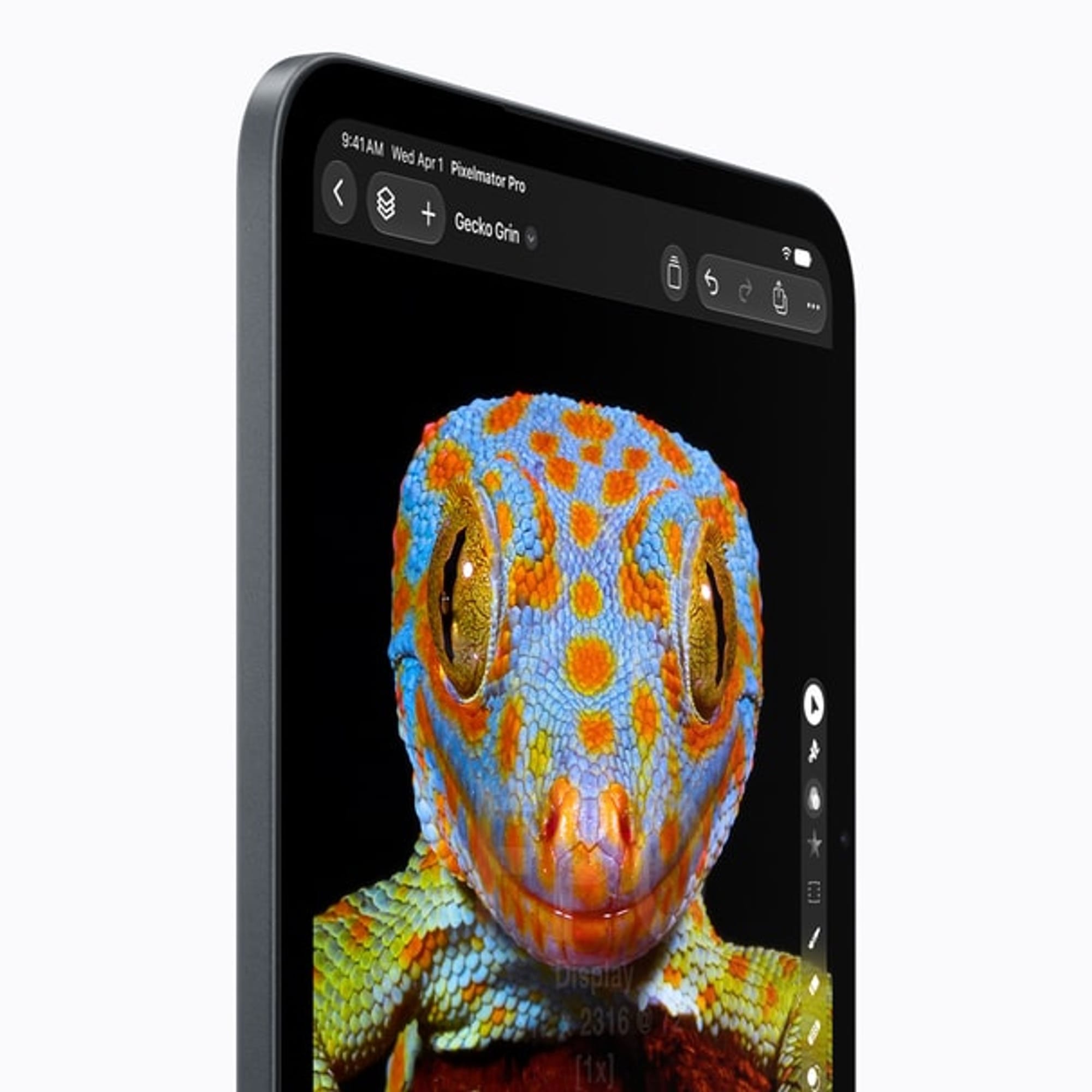
The screen grows from 8.3 to 8.5 inches without the iPad getting any bigger, because the bezels are 24% thinner. It's a Super Retina XDR OLED panel with per pixel lighting, so blacks are actually black, and Apple quotes a 2,000,000:1 contrast ratio. Standard content now reaches 600 nits (up from 500), HDR peaks at 1,200 nits, and the screen can dim all the way down to 1 nit for reading in bed.
There's also a nano-texture glass option for anyone who reads outside or works under harsh lights. It adds $100 and is only offered on the 256GB and 512GB models, with a polishing cloth in the box.
What Apple doesn't mention is ProMotion. Neither the newsroom release nor the specs page lists a refresh rate, which points to the mini staying at 60Hz. On a $699 OLED tablet in 2026, I expect that to be the first complaint once people get one in their hands.
Thinner, Lighter and Finally Water Resistant
The new mini is 5.4mm thick, down from 6.3mm, and the Wi-Fi model weighs 0.56 pounds (255 grams), down from 0.65 pounds. Touch ID stays in the top button and USB-C stays on the bottom.
IP67 is the headline here. Apple rates it for up to 1 meter of water for 30 minutes, with the usual fine print: resistance can wear down over time, liquid damage isn't covered under warranty, and you shouldn't charge it wet. For a tablet that lives in kitchens, cockpits, job sites and coat pockets, it takes away one of the bigger reasons to baby it.
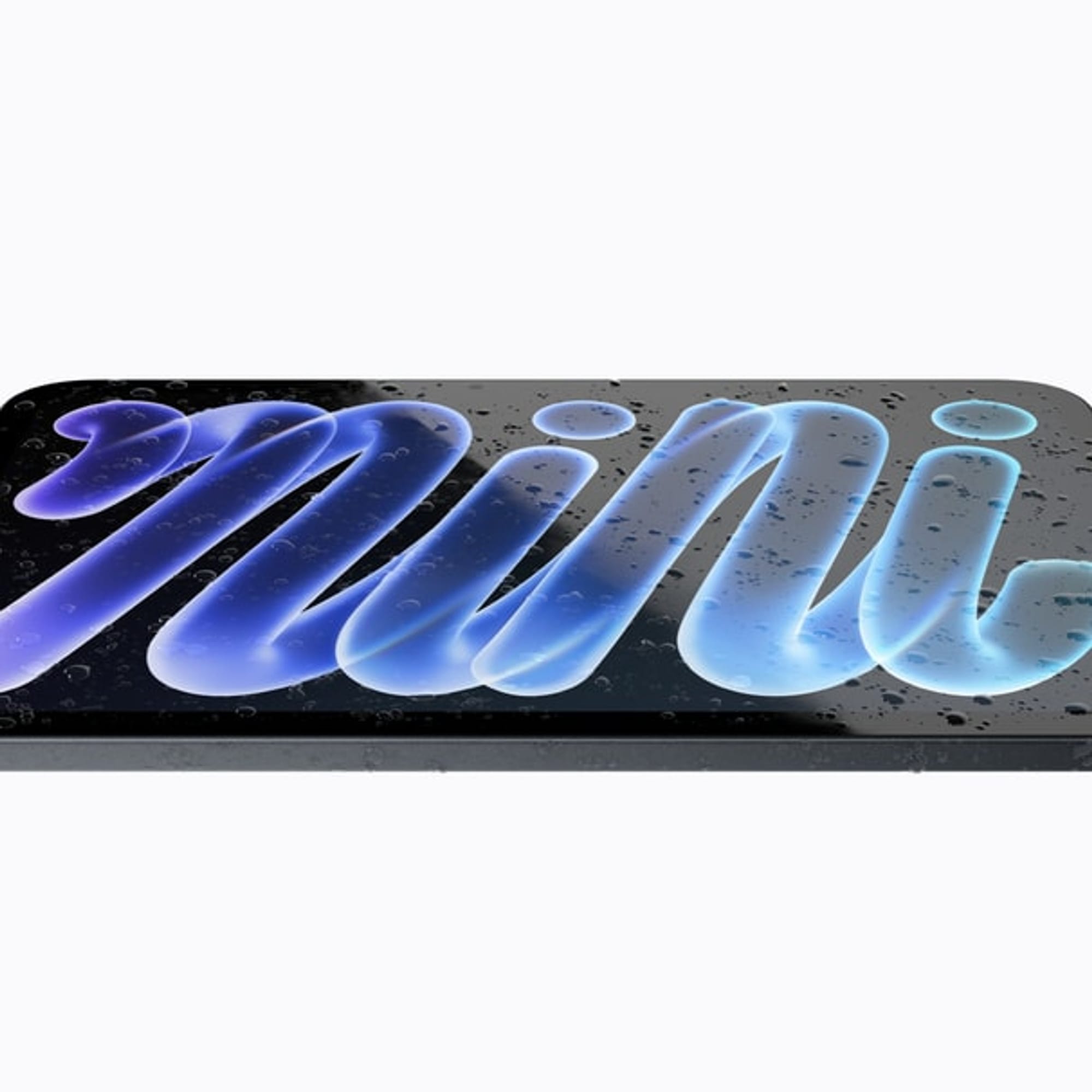
Part of how Apple sealed it is a new speaker system called Acoustic Display. There are no speaker grilles anymore. The woofers play through the display itself, and the tweeters are tucked between the glass and the aluminum enclosure. Apple promises more bass and more volume, which is something we'll want to hear for ourselves.
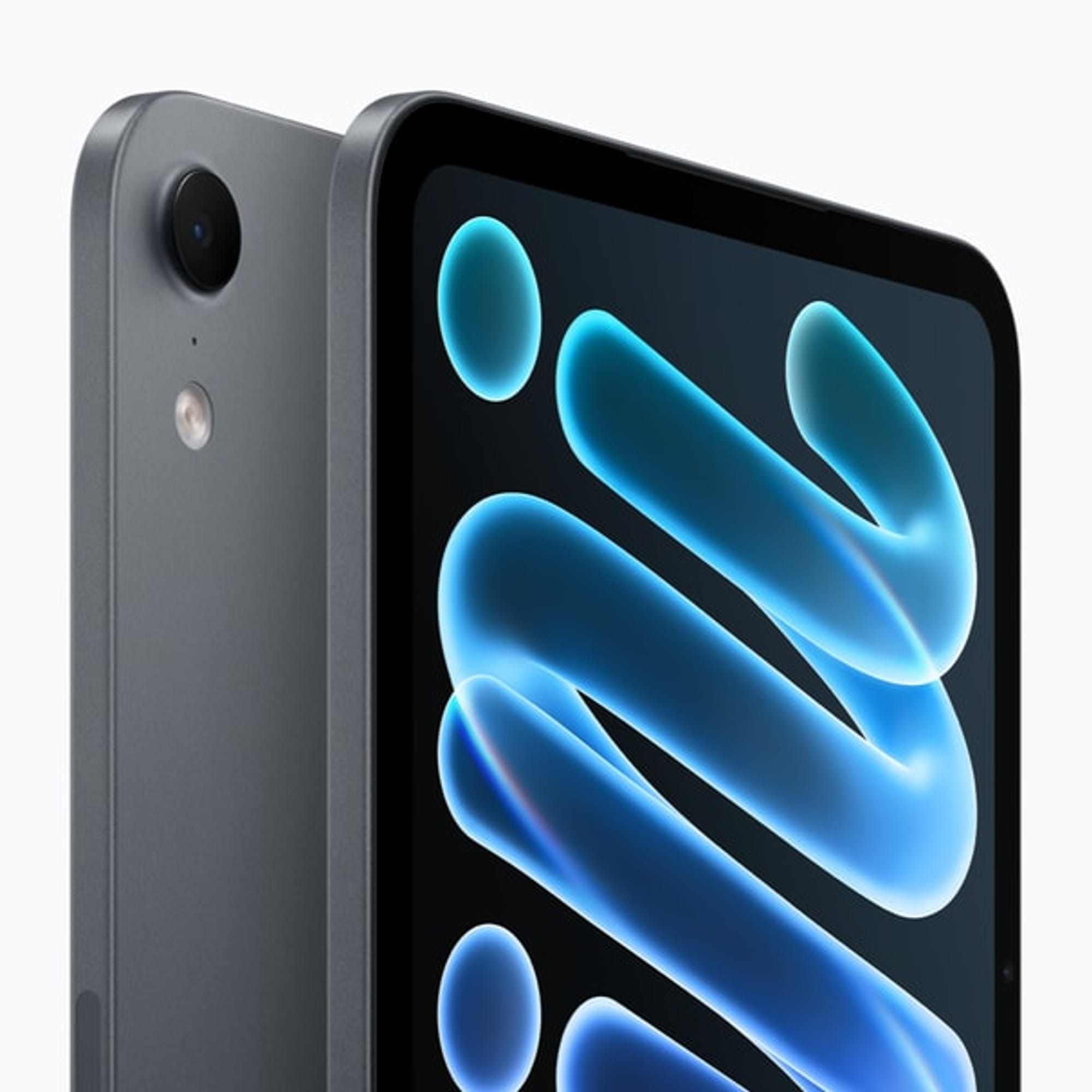
Colors are down to two: a new midnight and starlight. Midnight replaces space gray, and the blue and purple options from the last generation are gone.
The A20 Pro Chip
The A20 Pro is built on a 2 nanometer process with a package Apple says borrows from its M series chips. Compared with the A17 Pro in the last mini, Apple claims up to 60% faster CPU performance, up to 2.7x faster graphics and up to 4.5x faster AI performance, the last one coming from Neural Accelerators built into each of the seven GPU cores. The GPU also supports Dynamic Caching, hardware mesh shading and ray tracing, and unified memory bandwidth more than doubles. Apple doesn't say how much RAM it has.
Only the 512GB Model Gets the Full Chip
This is the part that isn't in Apple's press release, and it matters more than any spec above. The newsroom post describes the A20 Pro with "up to" a 6 core CPU and a dual 16 core Neural Engine. The specs page shows who actually gets that, as 9to5Mac first pointed out:
- 128GB and 256GB: 5 core CPU (2 performance, 3 efficiency), 7 core GPU, a single 16 core Neural Engine (all 16 cores, nothing disabled)
- 512GB: 6 core CPU (2 performance, 4 efficiency), 7 core GPU, a dual 16 core Neural Engine (two full 16 core Neural Engines, 32 cores in total)
Apple has sold binned chips by storage tier before, usually as one fewer CPU or GPU core that most people would never notice. Losing an efficiency core here is in that category. The Neural Engine is the bigger difference, and it's easy to misread. The 128GB and 256GB models aren't missing Neural Engine cores. They get one complete 16 core Neural Engine, the same core count as the A17 Pro. The 512GB model gets two of them. When Apple says the new Neural Engine has double the processing power, that's the 512GB model talking, and the 512GB model starts at $999.
The GPU is the same on every model, so the Neural Accelerators behind Apple's 4.5x AI figure come with the $699 mini too. What the cheaper models give up is that second Neural Engine and the extra headroom it brings for on device Apple Intelligence and Siri AI, the exact workloads Apple spent half of this announcement selling. Today that probably won't show up in daily use. Two or three iPadOS versions from now, when the mini is still in your bag, it might.
If you're buying the mini to keep for years, the 512GB model is the only one with the chip Apple is advertising. If you mostly read, browse and take notes, the 128GB model's binned A20 Pro is still a big jump over the A17 Pro, just a smaller one than the headlines suggest.
Cameras, Battery and Connectivity
The front camera is a 12MP Center Stage camera, and it now sits on the long landscape edge, so you're no longer looking off to the side on FaceTime calls when the mini is in a case or keyboard stand. The 12MP Wide camera on the back carries over with Smart HDR 4, 4K video at up to 60 fps and a new Adaptive True Tone flash.

Battery life is rated the same as before, up to 10 hours of web browsing on Wi-Fi or video playback from an 18.9Wh battery. Fast charging gets you to 50% in about 30 minutes, but only with a 35W or higher adapter. The 20W adapter in the box doesn't qualify.
Apple's N1 chip brings Wi-Fi 7 (up from Wi-Fi 6E), Bluetooth 6 and Thread to every model. Cellular models switch to Apple's C2 modem, which Apple says delivers up to 50% faster cellular data with better efficiency, and they use eSIM.
iPadOS 27 and Siri AI
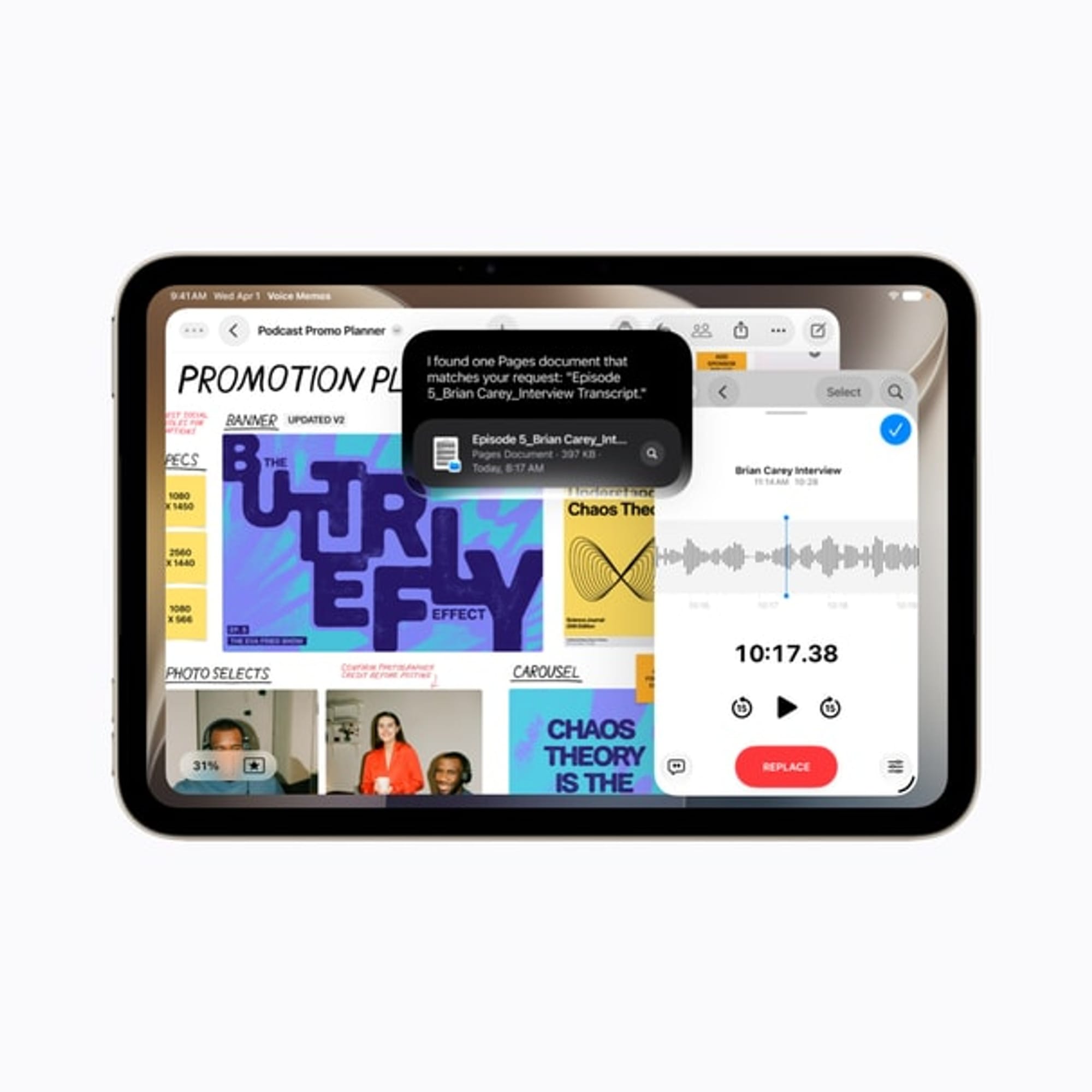
The mini ships with iPadOS 27, which means freely resizable windows, tiling and Exposé on an 8.5 inch screen. Siri AI, still labeled beta, requires iPadOS 27.2 and works in English, French, Japanese, Korean, Portuguese and Spanish. It isn't available in the EU. iPadOS 27.2 also adds extended display mode for an external monitor.
Accessories
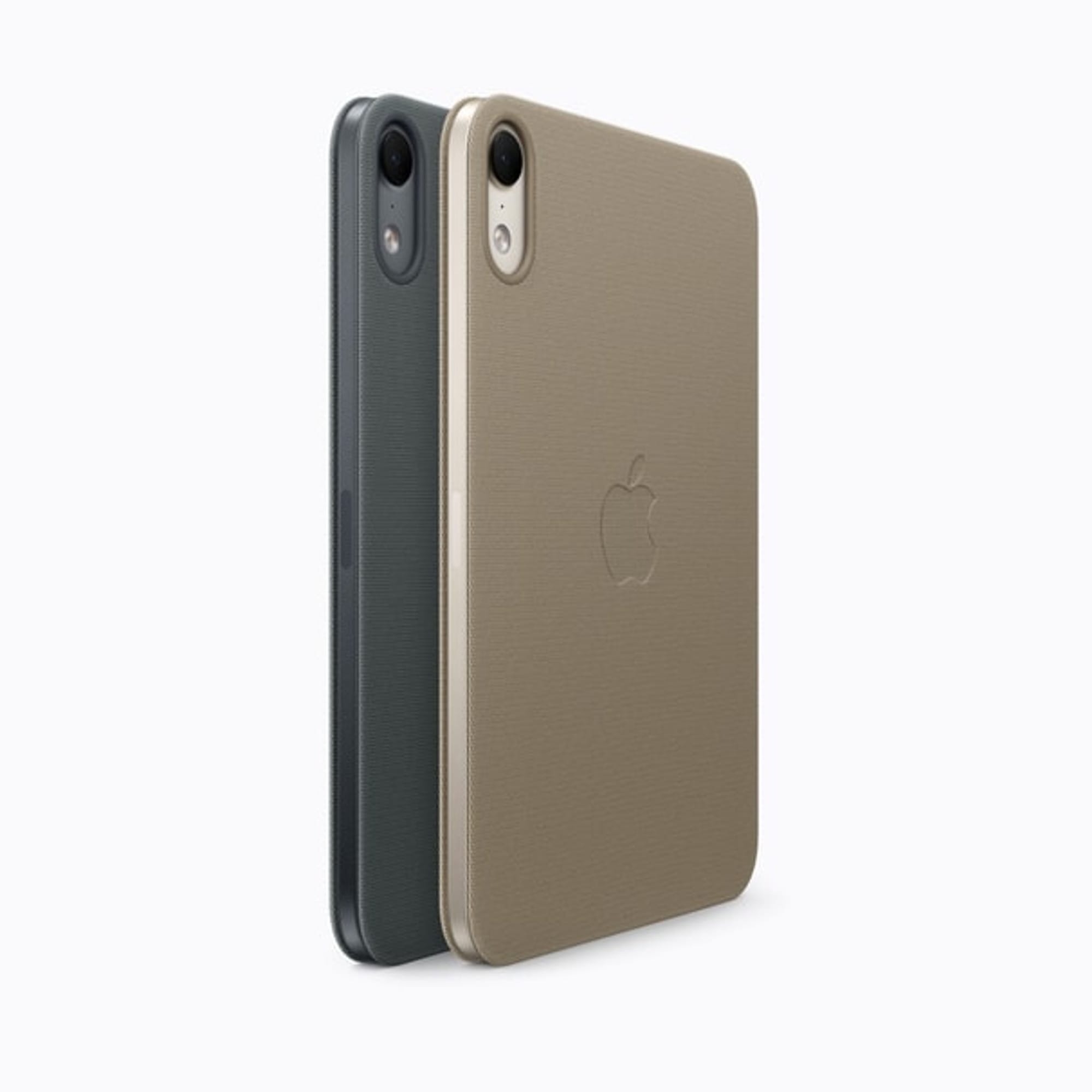
There's a new two panel TechWoven Smart Folio for $79 in navy blue or taupe, with more viewing angles than the old one. Apple Pencil Pro ($129) and Apple Pencil with USB-C ($79) both work. Apple didn't announce a keyboard.
Price and Availability
The Wi-Fi model starts at $699 and the Wi-Fi + Cellular model at $849, both with 128GB. The 512GB model with the full A20 Pro starts at $999. Education pricing starts at $649. Storage comes in 128GB, 256GB and 512GB, with nano-texture glass as a $100 option on the top two tiers.
Pre-orders open Wednesday, October 28 at apple.com and in the Apple Store app in 36 countries and regions, including the US. Orders arrive and the mini hits Apple Stores on Friday, November 6.
The OLED screen, the IP67 rating and the landscape camera fix the things mini owners have complained about for years. The price and the binned chip are the reasons to think before you order. We'll have more once one is on our desk.






Comments